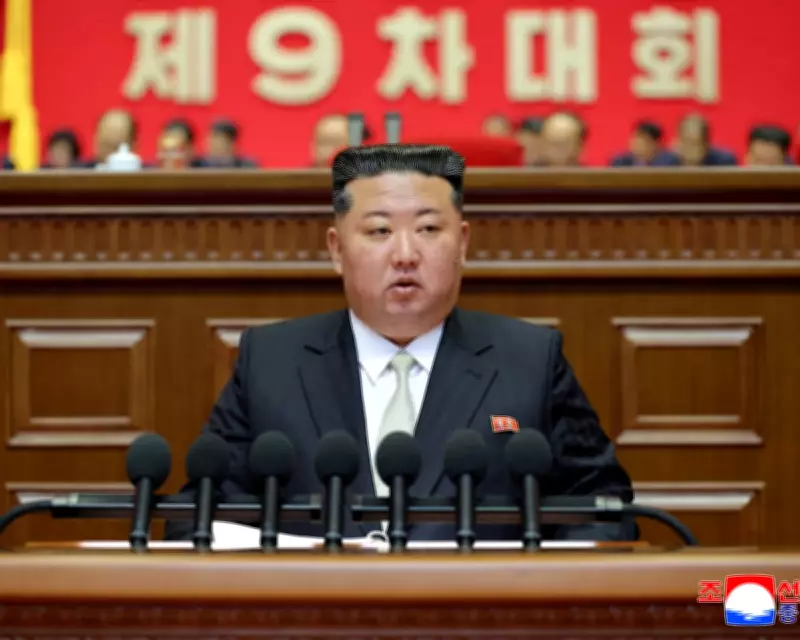
A new report by the Transitional Justice Working Group (TJWG), a human rights NGO based in Seoul, has documented a sharp increase in executions in North Korea following the country's border closure at the onset of the Covid-19 pandemic. The report, which maps 13 years of executions under leader Kim Jong-un, claims that the regime exploited its isolation to escalate killings when international scrutiny diminished.
Key Findings of the Report
The number of documented cases of executions and death sentences increased by 117% in the nearly five years after North Korea sealed its borders in January 2020, compared with an equal period before the closure. The number of people executed or sentenced to death more than tripled during this time.
The report identified 46 execution sites and disclosed coordinates for 40 of them. It documented 144 cases, including 136 execution events involving at least 358 individuals between December 2011, when Kim became leader, and December 2024. Approximately 70% of executions were carried out publicly, with crowds forced to watch.

Methodology and Sources
The report was compiled based on testimony from 265 North Korean defectors who had lived in 51 cities and countries during the 13-year period, as well as information from five North Korea-focused media outlets with sources inside the country.
Exploitation of the Pandemic
North Korea closed its borders to nearly all trade and visitors at the start of the Covid-19 pandemic, isolating itself from the outside world. The TJWG report claims that the regime used this isolation to expand the number of "crimes" that carried the death penalty.
Cases of death sentences or executions linked to the use, introduction, or dissemination of foreign culture and information—including South Korean films, dramas, and music, as well as religious and "superstitious" practices—surged by 250%, becoming the most common capital offences. In contrast, executions and death sentences for murder, previously the most frequent capital crime, fell by 44%.
Echoes of Previous Reports
These findings align with earlier reports citing a rise in punishments, including execution, for watching South Korean TV shows or listening to K-pop. In February, Amnesty International stated that watching global K-drama hits such as Crash Landing on You and Squid Game, or listening to K-pop bands like BTS, could "lead to the most extreme punishments, including death."
Citing testimony from recent defectors, Amnesty said the regime had created "a climate of fear" in which consumption of South Korean culture was treated as a serious crime.
Political Executions on the Rise
The TJWG report also noted a sharp increase in political executions for violating Kim's orders or criticizing the leader, the ruling Workers' Party, or security services. The number of condemned individuals in such cases rose by 600%.
Adaptation to International Pressure
According to the report, the North Korean leadership adapted its approach to capital punishment depending on levels of international pressure. For example, executions declined sharply in the years following UN discussions about referring Kim to the International Criminal Court in The Hague.
The executions also spread geographically during the pandemic. Before Covid, documented executions occurred in eight localities, mostly concentrated in Pyongyang and three north-eastern provinces along the Chinese border. After the border closure, they expanded to 19 localities.
Call for International Action
Ethan Hee-seok Shin, a legal analyst at the TJWG, called on the international community to do more to "deter and punish this crime against humanity" and "hold those responsible to account under international criminal law."
In a press release, the TJWG warned that executions might intensify as the regime prepares for a fourth-generation hereditary succession, with Kim's teenage daughter, understood to be called Ju-ae, being positioned as his heir apparent.
The TJWG plans to present the findings at the World Congress Against the Death Penalty in Paris this summer.