A series of arson attacks on properties linked to UK Prime Minister Keir Starmer was orchestrated by a Russian-speaking individual using the pseudonym “El Money,” a court has heard. Three defendants—Roman Lavrynovych, 22, and Petro Pochynok, 35, both from Ukraine, and Stanislav Carpiuc, 27, a Romanian national—appeared in court, denying charges related to the attacks that occurred in May last year.
Prosecutor Duncan Atkinson KC told the jury that three fires within five days in the same area, all targeting property connected to the prime minister, were “beyond a coincidence.” The incidents included a fire at a house in north London linked to Starmer, another at a property where he previously lived, and a blaze involving a car that once belonged to him.
Lavrynovych faces three counts of arson with intent to endanger life or being reckless as to whether life would be endangered. Pochynok and Carpiuc are charged with conspiracy to commit arson. All three deny the allegations. It is alleged that the men, who have links to Ukraine, were offered payment by “El Money” to carry out the attacks.

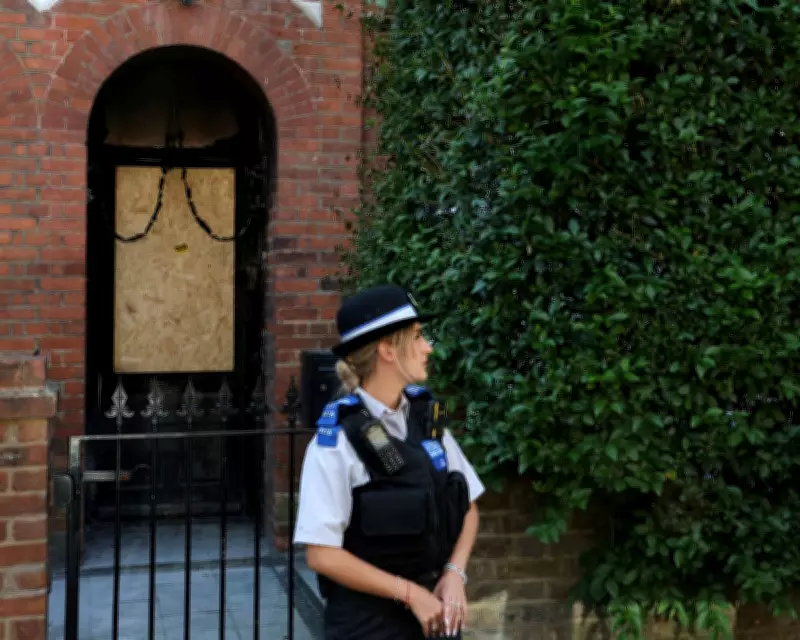
The first fire occurred on 8 May, when a Toyota RAV4, formerly owned by Starmer and sold to a neighbor, was set ablaze. On 11 May, a fire was started at the front door of a property in Islington, north London, which Starmer had previously managed. The third fire took place in the early hours of 12 May outside the Kentish Town home where Starmer lived before moving into Downing Street, and where his sister-in-law was residing at the time.
Atkinson instructed jurors that it was not their role to determine who “El Money” was or his motives for coordinating the defendants’ actions. He also stated that the jury did not need to consider what motivated the defendants to commit the arson attacks. “It does not matter whether they knew that the property they were targeting was connected to the prime minister or whether that formed part of their motivation,” he said.
Evidence presented included videos and images of the burning Toyota RAV4 and one of the targeted addresses. Atkinson emphasized that the evidence showed “no coincidence” but rather planned and directed acts of arson, with participants promised payment. The court heard that over 320 messages dating back to September 2024 were exchanged between Lavrynovych and “El Money,” who communicated in Russian, while the defendants used Ukrainian.
CCTV footage showed Lavrynovych purchasing white spirit in south-east London two days before the Toyota was set on fire. Atkinson highlighted the danger posed by the fires, set “in the dead of night” when occupants were likely asleep. “Why else would you set fire to the front door, blocking the residents’ escape?” he asked.
The trial is expected to continue until the end of May.