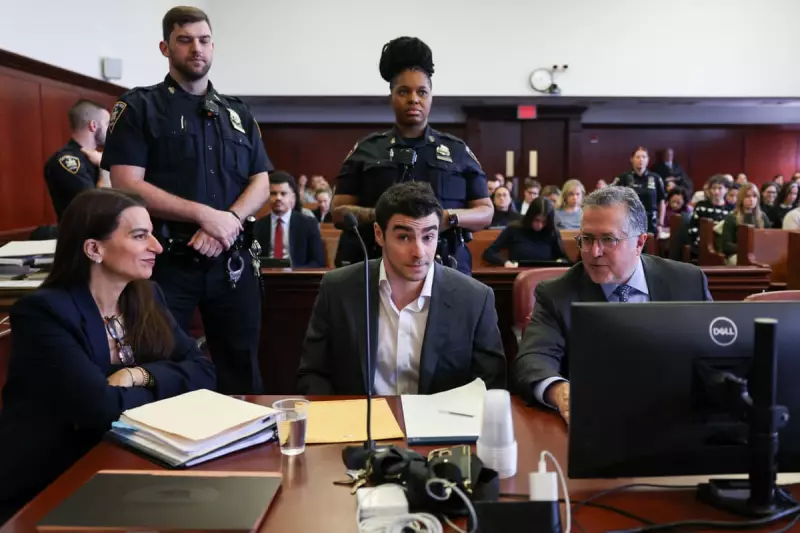
Last week's court proceedings for accused killer Luigi Mangione served as a dramatic curtain-raiser for one of the most anticipated criminal trials in recent American history. The hearings, held in Manhattan supreme court, centred on whether evidence was gathered legally following Mangione's arrest for the fatal shooting of UnitedHealthcare CEO Brian Thompson.
A Case That Captivates a Nation
The evidentiary hearing on 4 December 2024 provided a potent taste of the complex narrative awaiting a full jury. The case against Mangione transcends a simple murder allegation, weaving together intense social commentary on the US for-profit healthcare industry, stark wealth inequality, and the nation's enduring crisis of gun violence.
Mangione stands accused of brazenly shooting Thompson as the executive walked on a Manhattan sidewalk. While the killing triggered a major police manhunt, it also sparked widespread public debate, with some portraying Mangione as a folk hero striking back against a deeply unpopular healthcare system.

Key Testimony and Controversial Moments
Testimony during the hearing revealed intricate details of the investigation. Emily States, a 911 coordinator from Blair County, Pennsylvania, explained how community suspicion led authorities to a local McDonald's. There, a customer in a black jacket, khaki beanie, and medical mask aroused attention.
Officer Joseph Detwiler of the Altoona police stated the mask was a critical identifier in an area where face coverings are uncommon, remarking, "We don't wear masks. We have antibodies." This detail highlighted the lingering cultural divides from the Covid-19 pandemic.
Further testimony from prison guard Tomas Rivers revealed that Mangione was held under unusually tight security at a state prison to avoid "an Epstein-style situation," a direct reference to the conspiracy-laden death of financier Jeffrey Epstein.
Press Freedom Under Scrutiny
The hearings also underscored growing tensions with the press. In a disturbing incident, a veteran female reporter was forcibly ejected by court officers after standing to request a hearing on the sealing of evidence—a standard legal practice. Judge Gregory Carro did not address the forceful removal, though he later consented to release some evidence following pushback from journalists.
This clash occurred as Carro sided with Mangione's defence team, led by attorneys Karen Friedman Agnifilo and Marc Agnifilo, in sealing certain materials until trial. The defence is arguing police needed a warrant to search Mangione's backpack and that he should have been read his rights earlier.
Legal experts note such procedural battles are a hallmark of the American adversarial system. Chris Slobogin, a law professor at Vanderbilt University, explained, "There's huge incentives for defence attorneys to raise issues about police conduct during arrest and interrogation. Prosecution needs to show factual guilt using only evidence that was obtained legally."
Meanwhile, law enforcement officials, including NYPD Commissioner Jessica Tisch, have condemned any glorification of the crime, stating plainly, "We don't celebrate murders." They report that Thompson's killing sown fear among business leaders, who faced a wave of online threats.
With Mangione pleading not guilty to all state and federal charges, last week's hearing confirmed that his trial will be about much more than one man's alleged actions. It is poised to become a national referendum on some of America's most profound and divisive social fissures.