
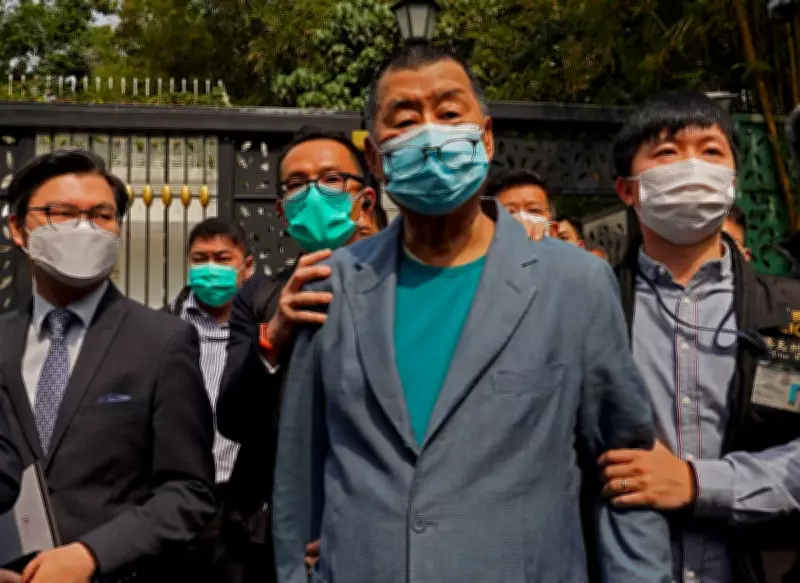
The long-running legal saga surrounding Hong Kong media tycoon Jimmy Lai reaches a critical juncture on Monday as the prominent pro-democracy figure faces sentencing in the financial hub's most high-profile national security case. The 78-year-old founder of the now-defunct Apple Daily newspaper, who was first arrested at his home in April 2020, stands convicted of serious charges that could result in life imprisonment.
Charges and Potential Penalties
Lai's sentencing follows his December conviction on two counts of conspiracy to collude with foreign forces and one count of publishing seditious materials. The prosecution successfully argued that he acted as a "mastermind" in coordinating with foreign activists, politicians, and other entities to solicit sanctions against both Hong Kong and China.
Under Hong Kong's national security law sentencing guidelines, offences deemed of a "grave nature" fall within the most severe penalty band, carrying potential imprisonment terms ranging from ten years to life. This development represents a significant blow to press freedom advocates who have closely monitored the case since Lai's initial detention nearly five years ago.
International Reaction and Health Concerns
The treatment of Jimmy Lai has drawn criticism from global leaders across the political spectrum. British Prime Minister Keir Starmer reportedly raised Lai's case in detail during a meeting with Chinese leader Xi Jinping last month, while former US President Donald Trump had previously discussed the matter with Xi during an October meeting.
Several Western diplomats have indicated that negotiations for Lai's potential release would likely commence following sentencing, particularly if he chooses to appeal the verdict. The British national, whose citizenship has complicated diplomatic discussions, has consistently denied all charges against him, declaring himself a "political prisoner" facing persecution from Beijing.
Beyond the political dimensions, serious concerns have emerged regarding Lai's physical wellbeing. His family, legal representatives, supporters, and former colleagues have warned that his existing health conditions—including heart palpitations and high blood pressure—could prove fatal if he receives a lengthy prison sentence.
Broader Context and Additional Defendants
Lai's case unfolds against the backdrop of Hong Kong's years-long national security crackdown, which intensified following the mass pro-democracy protests that swept the territory in 2019. Beijing maintains that Lai has received a fair trial and that all individuals are treated equally under the national security legislation that authorities credit with restoring order to the city.
The sentencing hearing will not only determine Lai's fate but also that of eight additional defendants. Six former senior Apple Daily staff members, alongside one activist and a paralegal, will receive their sentences concurrently, marking one of the most comprehensive legal actions against media professionals in recent Hong Kong history.
Outside the courthouse, dozens of supporters have maintained vigil for days ahead of the sentencing, with some bringing sleeping bags and camping equipment. Simon Ng, a 65-year-old supporter waiting in line, expressed particular concern about Lai's health, stating: "I worry about his health most. I hope he and his family can be at peace."
Press freedom organizations continue to voice strong objections to the proceedings. Beh Lih Yi, Asia-Pacific director at the Committee to Protect Journalists, characterized the trial as "nothing but a charade from the start" that demonstrates "total contempt for Hong Kong laws that are supposed to protect press freedom."
As Hong Kong's legal system prepares to deliver its judgment, the international community watches closely, recognizing that the outcome will have significant implications for media freedom, political expression, and the implementation of national security legislation in the semi-autonomous territory.




