Survivors of Jeffrey Epstein's sex trafficking network are finding themselves increasingly caught in the crossfire of America's bitter political divisions, even as they achieve significant victories in their quest for transparency and justice.
The Capitol Showdown
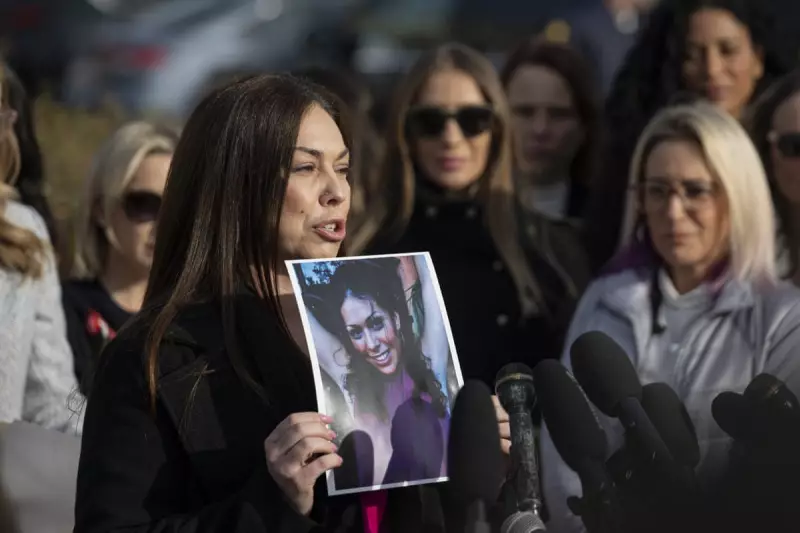
Last week witnessed a remarkable scene at the US Capitol as more than a dozen Epstein survivors gathered to advocate for the Epstein Files Transparency Act. The women held photographs of their younger selves and recited their ages when they first encountered the disgraced financier, creating a powerful visual testament to the lasting impact of their trauma.
The measure passed both houses of Congress and was swiftly signed into law by President Trump, compelling the Justice Department to make all unclassified records, documents, and communications related to Epstein and his accomplice Ghislaine Maxwell publicly available within 30 days.

Political Gamesmanship Overshadows Victim Advocacy
Despite this legislative victory, many survivors remain deeply skeptical about the political motivations behind the sudden bipartisan support. Haley Robson, one of the survivors who spoke at the Capitol press conference, expressed her doubts clearly: "I can't help but to be skeptical of what the agenda is. So with that being said, I want to relay this message to you: I am traumatized. I am not stupid."
The political drama intensified when President Trump, facing rebellion from prominent Republican representatives including Marjorie Taylor Greene, Lauren Boebert, and Nancy Mace, reversed his initial opposition to the document release. He quickly returned to framing the issue as primarily damaging to Democrats, claiming "The Democrats were Epstein's friends, all of them. And it's a hoax, the whole thing is a hoax."
Neither Party Earns Trust of Survivors
Wendy Murphy, a former sex crimes prosecutor and professor of sexual violence law at New England Law Boston, articulated the growing sentiment among advocates that neither political party genuinely prioritises victims' interests. "All you have to do is close your eyes, wake up, the wind blows in the other direction, and suddenly it's the other party that claims to the party of women that cares about abuse," Murphy observed.
She emphasised that the problem of sexual exploitation transcends political boundaries, stating: "There is zero consistency because we know it's across party lines where the abuse comes from. This is really a male problem and not party or political problem. Neither party actually cares about women and neither party actually cares about victims."
Epstein survivor Rina Oh, who attended the Capitol gathering, echoed this sentiment of political alienation: "I feel stuck in the middle. Everyone is pulling me from each side and I refuse to side with anyone. I just want criminals who prey on children brought to justice, and that's apolitical, because I don't think predators pick out victims based on what political party they belong to."
Historical Precedent and Future Concerns
Murphy pointed to historical examples like the Anita Hill hearings, where Democrats under committee chair Joe Biden worked to discredit Hill during Clarence Thomas's Supreme Court confirmation hearings in 1991, as evidence that mistreatment of women crosses party lines.
She also expressed skepticism about the upcoming document release, predicting that "the odds of the public getting what it thinks it's getting are effectively zero." Murphy suggested that the continued political manipulation of the Epstein case serves to obscure what might really be happening behind the scenes, leaving the public potentially disillusioned with the entire process.
As the 30-day deadline for document release approaches, the survivors' movement finds itself navigating increasingly treacherous political waters, where their quest for truth and accountability risks being overshadowed by partisan power struggles and competing political agendas.