
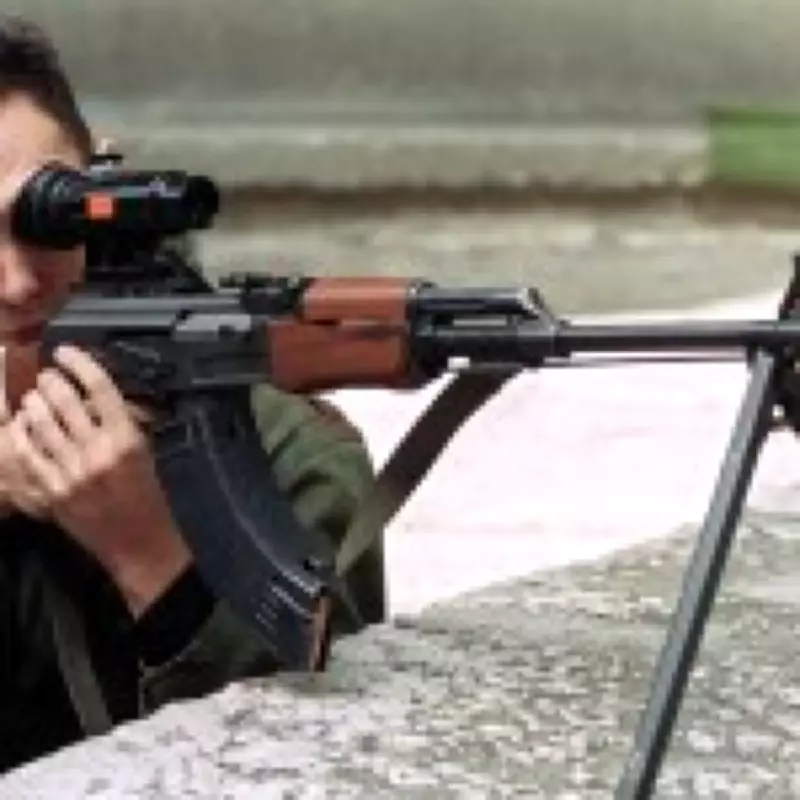
Prosecutors in Croatia have opened an investigation into two tourists accused of taking part in a so-called 'human safari' that resulted in the deaths of thousands of innocent Bosnians during the Siege of Sarajevo in the 1990s. The allegations suggest that European tourists paid to shoot at civilians in the war-torn city.
Background of the Investigation
In November, officials in Milan launched an investigation into Italian tourists who allegedly paid £70,000 to join these sickening 'safaris.' Now, two individuals in Croatia are also under scrutiny. The Croatian justice ministry confirmed: 'An investigation was opened on April 25 against an Austrian citizen and another as-yet-unidentified individual in connection with possible participation in so-called ‘sniper tours’ in Sarajevo during the Bosnian War.'
New Evidence Emerges
Last month, journalist Domagoj Margetic released an interview with a former Bosnian Serb army major, who claimed that an Austrian man, using the name 'Grof' and later identified as 'Sebastian,' participated in the tours in late 1992 and 1993. The major added, 'I have also been told that Serbian soldiers at Sarajevo checkpoints remember hunters showing Austrian passports.'
Nationals from Italy, Croatia, the United Kingdom, France, Spain, Russia, and Germany have been accused of attending these 'tours.' Alma Zadic, a Bosnian-born member of the Austrian Green Party and former justice minister, condemned the allegations: 'The idea that people may have paid money to deliberately shoot at civilians — even children — is almost unimaginable in its cruelty. Such acts represent a level of contempt for humanity that leaves one speechless. The victims and their relatives have a right to truth, justice and clarification.'
The Siege of Sarajevo
During the siege, sniper fire was so rampant that two main streets, Ulica Zmaja od Bosne and Meša Selimović Boulevard, were dubbed 'sniper alley.' The city's electric, gas, and water supplies were cut off, leaving residents without essential infrastructure. The siege ended in 1995, with 13,952 people dead, including 5,434 civilians.
War Crimes Convictions
Former Bosnian Serb political leader Radovan Karadzic and commander Stanislav Galic were both found guilty of war crimes and crimes against humanity by the Hague tribunal. Both received life sentences; Karadzic is serving his sentence in the UK, while Galic was transferred to Germany.




