Brenton Tarrant, the Australian white supremacist who murdered 51 Muslim worshippers at two mosques in Christchurch in 2019, has been prevented from appealing against his guilty pleas. One of New Zealand’s highest courts ruled his bid was “utterly devoid of merit”.
Tarrant, responsible for the worst mass shooting in New Zealand’s history, asked the court of appeal in February to allow him to appeal his guilty pleas. He claimed harsh prison conditions had affected his mental health and compelled him to admit to the crimes.
In a decision released on Thursday, the court stated it did not accept Tarrant’s evidence about his mental state, which was inconsistent with detailed observations from prison authorities, mental health professionals, and trial lawyers. The court noted, “He endeavoured to mislead us about his state of mind in a weak attempt to advance an appeal in circumstances where all other evidence demonstrated that he made an informed and totally rational decision to plead guilty.”

The court further declared that Tarrant was not coerced or pressured in any way to plead guilty. “The evidence overwhelmingly demonstrates that he was not suffering any significant psychological impacts as a result of his prison conditions at the time he pleaded guilty.”
Tarrant also failed to adequately explain the delay in filing his notice of appeal, despite having access to lawyers. The court concluded that “Mr Tarrant’s proposed appeal is utterly devoid of merit.”
Tarrant pleaded guilty in March 2020 to 51 counts of murder, 40 counts of attempted murder, and a terrorism charge, after initially indicating he would defend the charges. In August 2020, he became the first person in New Zealand to be sentenced to life in prison without the possibility of parole.
In 2022, he filed an appeal at the court of appeal for both his convictions and sentence. The court first had to consider whether the appeal could proceed, as it was filed outside the legislated time frame. During a week-long hearing starting 9 February, Tarrant told the panel of three judges that his mental health had deteriorated due to solitary confinement, limited reading material, and minimal contact with other prisoners. He claimed he was suffering “nervous exhaustion” when he entered his guilty pleas and felt there was “little else I could do” just months before his trial.
Tarrant, a self-declared white supremacist, said he had masked his mental illness partly due to the “political movement I’m a part of” and made a late application because he lacked necessary information. His former lawyers, psychologists, and prison staff gave evidence challenging his claims of mental distress and harsh conditions. Experts had ruled Tarrant was fit to enter pleas.
Crown lawyer Barnaby Hawes told the court that Tarrant was “an unreliable witness and his narrative should be treated with caution.” He added that evidence of guilt, including livestreaming the attacks, was so overwhelming that a guilty verdict would be assured if the case went to trial again.
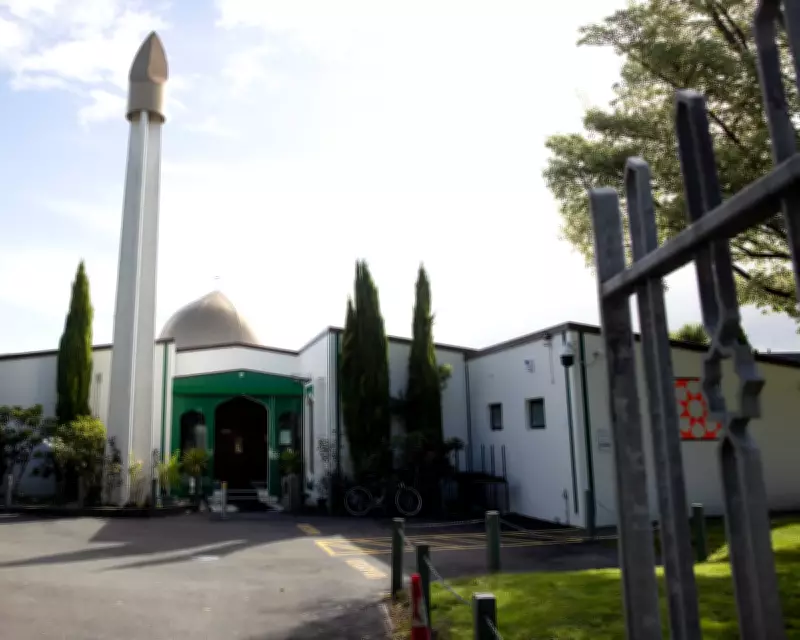
Tarrant moved to New Zealand in 2017 planning a white supremacist attack. He planned the mass shooting for months, conducted reconnaissance at the mosques, distributed a manifesto expressing racist views, and live-streamed part of the assault on Facebook. After the attack, Prime Minister Jacinda Ardern’s government banned military-style semi-automatic rifles and created a firearms registry.
An inquiry into the attacks, the largest coronial investigation in New Zealand, is still ongoing. In October 2025, the high court left the door open for Tarrant to be called as a witness despite objections from survivors and victims’ families.