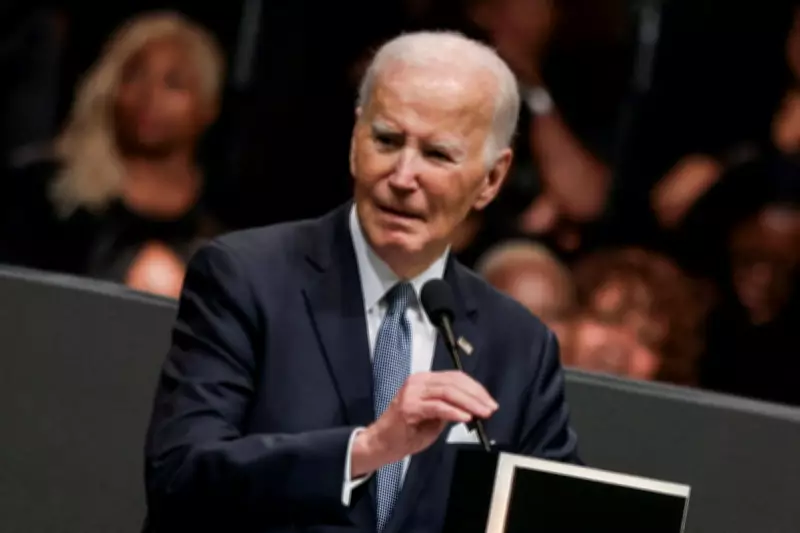
Former President Joe Biden has filed a lawsuit to prevent the Justice Department from releasing transcripts and audio recordings of interviews that revealed his frequent memory lapses and contributed to the collapse of his 2024 re-election campaign. The legal action, lodged Tuesday in federal court in Washington, D.C., seeks to block the disclosure of materials tied to a special counsel investigation into Biden's handling of classified documents.
Background of the Case
The recordings in question date back to 2016 and 2017, when Biden was interviewed by Mark Zwonitzer, the author who collaborated with him on two memoirs. These conversations later came into the possession of Robert Hur, a Republican-appointed special counsel tasked with investigating whether Biden improperly retained classified documents after serving as vice president. Hur spent five hours interviewing Biden and concluded in a 2024 report to Congress that no criminal charges were warranted, but he described the then-81-year-old president as 'a sympathetic, well-meaning, elderly man with a poor memory.'
Biden's Privacy Concerns
In the lawsuit, Biden's attorneys argue that releasing the recordings would constitute an 'unwarranted invasion of President Biden's privacy.' They emphasize that every American, including former vice presidents, has a right to privacy in personal conversations held within their own homes. The Justice Department, they contend, bears a special responsibility to protect such private information obtained through a criminal investigation.

The lawsuit aims to halt the department from handing over the materials to the Republican-controlled House Judiciary Committee and the conservative Heritage Foundation. The department had previously fought to keep the transcripts and recordings secret but has now moved to release them.
Political Ramifications
Biden withdrew from the 2024 election after persistent questions about his age and mental fitness, endorsing Kamala Harris, who ultimately lost the general election. The Hur report, which highlighted Biden's memory lapses, significantly damaged his campaign. In his report, Hur found that Biden 'willfully retained and disclosed classified materials after his vice presidency when he was a private citizen,' including documents about military and foreign policy in Afghanistan, but declined to pursue charges.
Biden has publicly pushed back on Hur's characterization of his memory, stating, 'My memory is fine,' and noting that his interview occurred shortly after the October 7, 2023, Hamas attack on Israel, when he was managing an international crisis.
Republican Criticism and Legal Battles
Republicans have accused Biden of receiving preferential treatment from his own Justice Department, contrasting his case with that of Donald Trump, who was investigated for similar offenses. Trump was charged by special counsel Jack Smith, but the case was dismissed by a Florida judge he appointed. In February, that judge blocked the Justice Department from publishing Smith's report on the investigation.
The House voted in 2024 to hold Attorney General Merrick Garland in contempt of Congress for refusing to turn over the audio of Biden's interview, after the White House asserted executive privilege to shield it. A portion of the audio was leaked last year.
Biden's Defense
While Biden has insisted he took classified information seriously, the transcript of his interview shows he was occasionally vague about dates and details and unfamiliar with the paper trail for some sensitive documents. Democrats have stressed Biden's cooperation with the investigation, in contrast to Trump's alleged refusal to return classified documents requested by the National Archives.
The Associated Press contributed to this report.