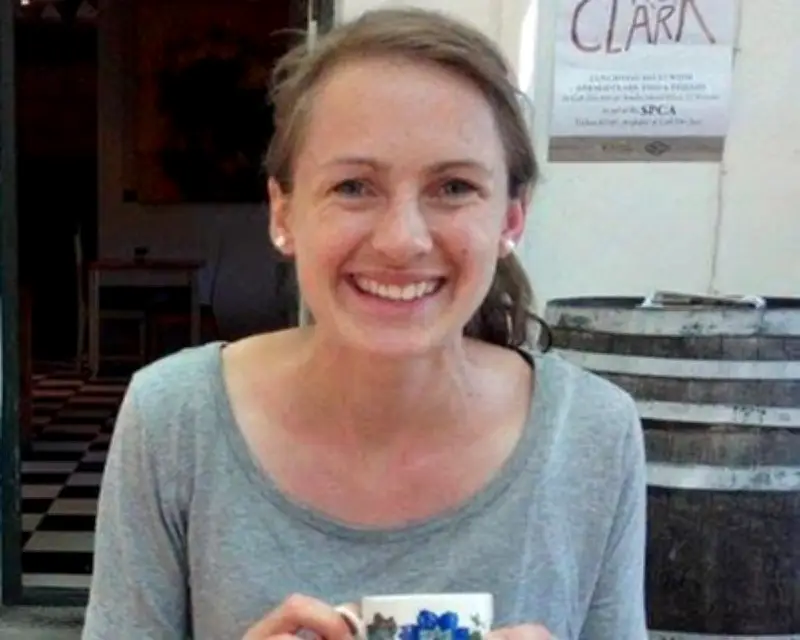
Greek authorities have arrested a 26-year-old Afghan national in connection with the death of Elisabeth-Jane Ross, a 38-year-old Scottish charity worker whose body was discovered in a suitcase inside an abandoned building in central Athens. The suspect allegedly confessed to the crime, according to police sources, and is expected to face charges including intentional homicide, robbery, and weapons violations.
Discovery and investigation
Ross's body was found on 18 July by a homeless man in a derelict, rubbish-strewn building in the Kypseli district, which had once served as a car park. Wrapped in cloth and placed inside a suitcase, the body was in an advanced state of decomposition. Investigators believe Ross died between five and seven days before her body was found, and initial postmortem examinations proved inconclusive due to the condition of the remains.
The suspect was brought in for questioning by Greece's homicide division on 30 July, two days after Ross's body was publicly identified. A police statement released on Sunday said: "A criminal file has been opened against a 26-year-old foreign national for intentional homicide, robbery and violation of the law [regarding] weapons." Security officials noted that "various arms – some real, some fake" were discovered at the suspect's home, also located in the Kypseli area.
Key evidence and confession
According to police, the suspect's alleged use of Ross's credit cards played a pivotal role in his identification. "He was caught on camera withdrawing money with the cards from various ATMs," a source told the Guardian. "The credit cards belonged to Ms Ross. That played a big role in leading us to him." Investigators also analyzed CCTV footage and digital evidence, which proved the suspect's involvement in placing the body in the suitcase and transporting it to the abandoned site.
The suspect reportedly confessed to his actions during questioning. Greek media quoted him as telling police that he discovered Ross's lifeless body in the bathroom of her rented apartment in the Exarchia district. The cause of death remains unknown, and authorities have fast-tracked toxicological tests and analysis of vital organ tissues to determine whether she died of natural causes or foul play.
Victim's background and timeline
Ross, a charity worker with strong ties to Greece's nonprofit sector, was the daughter of a prominent lawyer in Edinburgh, where she also lived. She arrived in Greece on 26 June and stayed with friends in Keratsini, a suburb near the port of Piraeus, for two weeks. She then rented an apartment in Exarchia, where she was staying when she died. Her "dispersed movements" in the days before her death complicated the investigation, police said.
Adding to the mystery, Ross's mobile phone was used until the time her body was publicly identified last week. Police described text messages sent to her father and family members as deliberately misleading, with messages speaking of her "need to be alone."
International cooperation and tributes
Greek authorities worked closely with the UK's National Crime Agency (NCA) and Police Scotland throughout the investigation. The UK Foreign Office said: "Our thoughts are with Elisabeth's family during this difficult time. We are providing consular support and are in contact with the local authorities." A Police Scotland spokesperson added: "We are aware of the death of a Scottish woman in Athens and are liaising with authorities in Greece. Officers are providing support to her family in Scotland."
Tributes have poured in for Ross, with flowers left at the site in Kypseli. One note read: "Here lies an angel." A friend in Edinburgh echoed that sentiment, saying: "We have lost an angel, an angel full of innocence and goodness who only wanted to help people wherever she went." Grigoris Leon, who heads the Hellenic Society of Forensic Medicine, told the Guardian that examination of the lungs and eyes would help provide answers and determine "whether she had died a natural death."