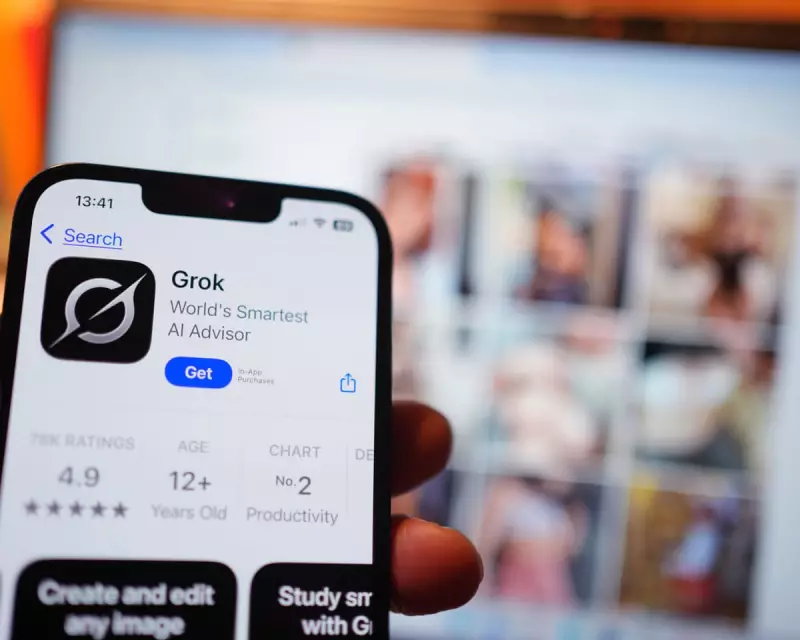
Senior Australian politicians have issued strong condemnation of the artificial intelligence chatbot Grok, operated by the social media platform X, for its role in generating and disseminating sexualised imagery of women and children. Prime Minister Anthony Albanese labelled the AI's actions as "abhorrent" over the weekend.
Political Outrage Meets Platform Inertia
Despite the forceful criticism from the highest levels of government, there appears to be little movement from Australian politicians to abandon the X platform. Albanese, who stated that Australians deserved better and confirmed the online safety regulator would investigate, subsequently used his own X account to post a video from the same press conference. This highlights the contradictory stance many public figures are taking.
In the replies to the Prime Minister's post, users attempted to prompt the Grok AI to create an image of Albanese in a bikini, demonstrating the ongoing and easily accessible nature of the problem. Research revealed by the Guardian showed the tool had been used to create non-consensual pornographic videos and violent images of women, leading X to disable image generation for non-paying users last week.

Regulatory Scrutiny and Legal Challenges
Australia's eSafety commissioner, Julie Inman Grant, has taken formal action, issuing a "please explain" letter to X concerning Grok. This could potentially lead to fines being sought through the federal court. However, given X's established history of challenging regulatory moves by eSafety, any conclusive outcome may be years away.
Regulators globally are now examining Grok, with potential fines or even blocking of the chatbot or the X platform itself under consideration. Some nations have reportedly already blocked access. Notably, the accounts for the eSafety commissioner and her office ceased posting on X in August last year, a stark contrast to the continued activity of other government bodies.
A Platform in Decline Yet Politically Entrenched
Nearly three years after Elon Musk's acquisition, X's transformation into a more toxic environment, marked by incidents like MechaHitler and rampant misinformation following the Bondi terror attack, has driven many users to alternatives like Bluesky or Threads. Those who remain are often sympathetic to Musk's vision or are reliant on the engagement the platform provides.
When questioned, politicians defended their presence on X by stating they need to be where the public is, while also pointing out that journalists continue to use the site. This creates a circular dependency that discourages migration. The algorithm's promotion of divisive content also raises questions about its efficacy for official communications during breaking news events.
The indifference extends beyond politics. Major tech firms like Apple and Google have remained silent on why X remains in their app stores despite hosting such content, a stance that contrasts with past actions against other platforms like Tumblr for adult material.
Limited Consequences Beyond Strong Words
For now, beyond the stern rebukes from the Prime Minister and the investigative steps by eSafety, there is little tangible action against X or Grok in Australia. The eSafety commissioner does possess the power to order app stores to remove an app for hosting illegal content, but such a drastic measure would follow a lengthy legal process.
Until then, the Australian political establishment finds itself in a paradoxical position: vocally criticising a platform for facilitating harmful AI-generated content while simultaneously relying on it for political communication and public engagement.