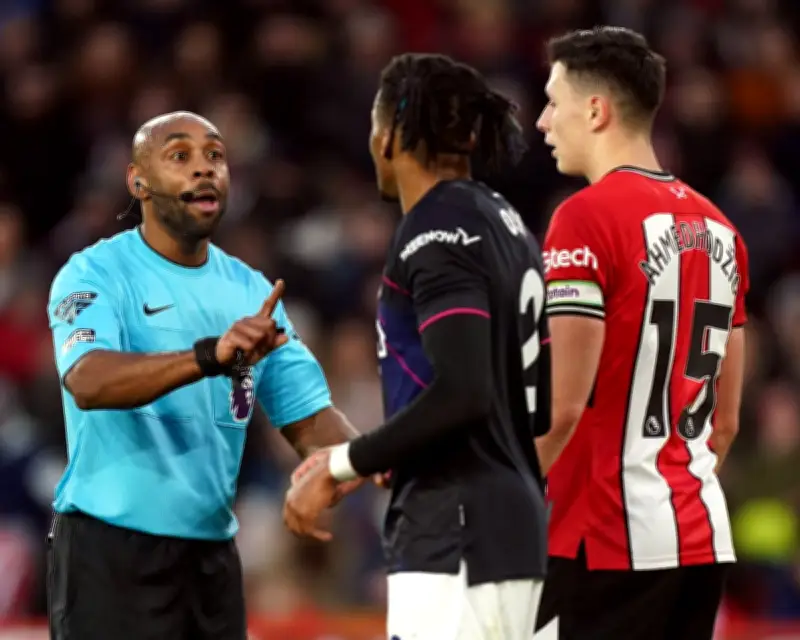
Howard Webb, England's chief refereeing officer, has pledged to continue expanding the talent pool of match officials from under-represented communities in English football's officiating pathway, pushing back against a wider backlash against diversity initiatives. Speaking at a conference held by Bamref, an advocacy group for Black, Asian and mixed-heritage officials, Webb told the Guardian that the Professional Referees' Body's diversity drive fosters healthy competition. 'We're doing it to increase the quality of the officials working at the higher end of the game,' he said, insisting the decisions are 'born out of quality, rather than any other aspect'.
Structural changes to officiating pathway
In June, the newly named Professional Referees' Body (Pro Ref), formerly Professional Game Match Officials, announced the merger of Select Group 1, 2 and its supplementary list into a single Professional Referee Group for the men's professional game. This group will largely service the Premier League and the Championship from the start of the 2026-27 season. Pro Ref stated the merger would create flexibility in appointments and help recognise a wider variety of talented match officials as part of the organisation's new direction.
Rejecting tokenism claims
Webb argued that the visibility of refereeing makes tokenism impossible. 'If you are not good enough to officiate in the Premier League you will be found out really quickly. There's no real hiding places,' he said. He added that a more diverse talent pool is 'much more likely to bring higher levels of quality, greater choice, greater competition, and ultimately raising standards for all'. This stance comes despite pressure from figures like Reform UK's Suella Braverman, who in March wrote to the Football Association demanding it scrap a target for a quarter of England men's coaching staff to come from minority ethnic backgrounds by 2028, calling it 'utter woke nonsense'. The FA defended the target as part of its commitment to reflecting the game's diversity.

Historic milestones and ongoing challenges
Farai Hallam became the third Black referee to officiate in the Premier League, following Uriah Rennie and Sam Allison. In a defining moment, Hallam waved away a penalty claim for Manchester City against Wolves in January, rejecting the video assistant referee's advice. Danielle Every, Pro Ref's chief operating officer, noted a shift in attitudes since structural changes were introduced. 'I genuinely feel that there is more acceptance and understanding of why these interventions are important,' she said, pointing to data showing zero Black representation among Premier League officials in 2022.
New talent identification model
Pro Ref is overhauling how it identifies talent, moving away from the traditional observer system—where officials were marked out of 10 after every match—towards a coaching-led model built around a new 'matchday performance developer' role. This model will be rolled out in League One, League Two, and the women's professional game. In the Premier League and Championship, the key match incidents panel will remain as a primary layer of accountability. Webb said the old system was 'very rigid and restrictive', leading to 'some really good officials being left behind'. The change, he said, will help surface talent from under-represented groups earlier.
Retention and support for minority officials
Aji Ajibola, who co-founded Bamref in 2019, welcomed progress on numbers but warned it counts for little without sustained backing once officials are inside the system. 'We now have a duty of care to those that we're bringing into officiating, to make them feel safe,' he said, describing plans for wraparound support covering mental health and wellbeing alongside coaching and mentoring. 'We've got expertise in our community, which then creates opportunities for us to get into other areas of the game,' he said, framing retention as the next front in the campaign.

Akil Howson, inducted into the Bamref Hall of Fame after becoming the first Black official in an FA Cup final, echoed the tension between visible progress and lived experience. 'Broken down the barrier finally after 158 years and now hopefully that door will never be shut again,' he said. Howson, entering his fourth season as a Premier League official, added: 'I still go to some of my meetings and I'm the only Black person. It's getting better, but it's frustrating because it's not where it could really be.' On his induction, he highlighted the importance of visibility and representation for those coming through behind him.