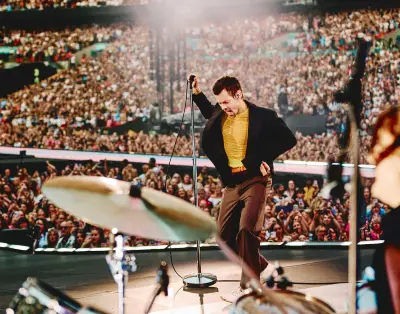
Amid the relentless push for optimisation in modern life, critic and novelist Joseph Earp has turned to classical music as a source of profound uplift, finding in composers like Sibelius and Schnittke a timeless reminder of human transcendence. Earp, whose latest book is Painting Portraits of Everyone I’ve Ever Dated, describes how the music of Jean Sibelius’s Fifth Symphony, particularly its third movement, regularly moves him to tears, evoking the image of birds taking flight near the composer’s Finnish home.
Escaping the Optimisation Arms Race
Earp argues that contemporary society is trapped in a “progress arms race,” where everything is seen as perfectable. This mindset, he suggests, is amplified by the AI industry’s promises of efficiency, but has infiltrated every aspect of life. He points to trends like listening to podcasts at double speed, biohacking for mental clarity, and optimising sleep, all of which contribute to a sense that nothing is ever good enough as it is.
This relentless pursuit of progress has pushed Earp in the opposite direction. Exhausted by art marketed with buzzwords and posed as diagnoses for problems he feels too fatigued to care about, he has retreated into the annals of classical music. His love for the genre has grown into an obsession over the past year, leading him to cook dinner to the atonal textures of Morton Feldman and run to Steve Reich’s Radio Rewrite, whose repetitive rhythms he finds beneficial for pacing.

Timeless Connections Through Music
Earp finds immense uplift in classical compositions, noting that listening to Gustav Mahler’s Fifth Symphony, an agonised exploration of mortality, reminds him that humans have always transcended daily life with little more than wood, string, a baton, and their voices. He emphasises that Mahler was not so different from us, a realisation that brings stunning clarity.
A recent experience with the Australian Chamber Orchestra reinforced this connection. The orchestra performed works by Alfred Schnittke, a composer plagued by poor health and targeted by Soviet bureaucracy. Earp knew little about Schnittke before the performance, but by the end, he felt he knew everything, as the composer’s anxiety about bodily frailty and age permeated every note. The performance, Earp says, did what all art should do: it reached out wordlessly and insisted on the ugliness and beauty of human experience, offering transcendence in capturing both.
Sibelius’s Swans and the Unchangeable Human Core
Central to Earp’s reflection is a specific moment in Sibelius’s Fifth Symphony, where the composer mimics the sound of birds taking flight. Above swirling strings, a sudden peal of brass sounds out, evoking wings uplifted and moving heavenward. This passage regularly brings Earp to tears, not only for the music itself but for the image of Sibelius watching the skies, wowed by the birds, and seeking to turn them into song. It reminds him that while our lives have become complicated and entangled, they have not fundamentally altered.
Earp concludes that even if technology threatens to overwhelm us, it cannot erode a deep bedrock inside us—something intangible and untouchable that emerges when we step outside and watch birds take flight. That, he suggests, is our humanity itself. Despite his self-described insufferability, his retreat into classical music has left him immensely and profoundly uplifted.