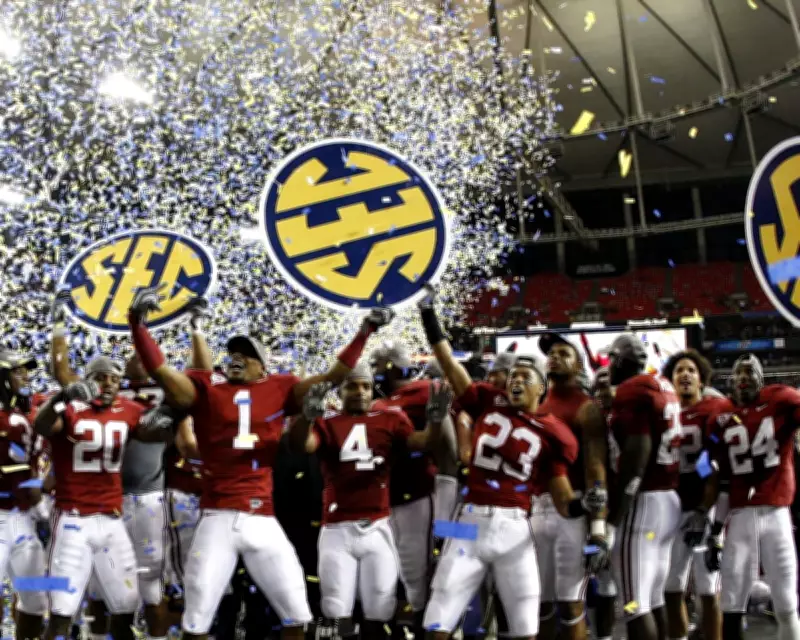
The NAACP has issued a call for Black athletes to boycott programs in the Southeastern Conference (SEC), the most powerful football conference in the United States. This move comes as part of a broader response to what the organization describes as a comprehensive assault on Black rights from all branches of government and corporate America.
The Political and Judicial Assault on Black America
The assault originates from the highest levels of government. The president has signaled a belief that white people are the true victims of racial discrimination, codifying policies that undermine diversity initiatives. The Supreme Court gutted the Voting Rights Act of 1965, arguing that protecting Black voting rights is discriminatory. State and federal legislatures are pushing redistricting efforts that threaten to erase decades of Black political representation, reminiscent of segregationist laws passed in 1902.
Corporate Complicity
Corporations have followed suit, reducing or eliminating diversity hiring initiatives. From sports to retail, anti-Black hostility is as aggressive as it has been in 75 years.

The NAACP's Sports Boycott Strategy
The NAACP is targeting the SEC, a conference that generates immense cultural and economic value from Black athletic talent. By calling for a boycott, the organization aims to leverage the economic power of Black athletes. Historically, boycotts have worked: in 2015, University of Missouri football players' threat to boycott led to the resignation of the school's president. In the 1960s, the exodus of Black talent forced southern universities to integrate.
Black Athletes' Power Today
Black college athletes now have more power than ever, with name, image, and likeness (NIL) deals and the transfer portal allowing them to change schools without penalty. A boycott of SEC schools in states like Florida, Louisiana, South Carolina, Alabama, Tennessee, and Texas would have an immediate impact. The NFL, with a 70% Black workforce, recently awarded Tennessee the 2030 Super Bowl.
The Role of Sports Media
Sports media has largely silenced the Black political voice, reducing athletes to entertainers. ESPN covered the NAACP boycott briefly, but the story quickly disappeared. The industry benefits from convincing Black athletes that their only value is to play and be grateful.
A Call to Action
The NAACP urges Black athletes and their parents to recognize their power. They are inextricably linked to the future of Black America. As an economic bloc, they can shift the fortunes of institutions. There is plenty of money in sports; if Alabama or LSU can pay a wide receiver, so can Oregon, USC, or Michigan.
After a decade of activism in the 2010s, athletes have been largely silent since the 2020 Floyd protests. They did not mobilize after January 6, even though the insurrectionists represented the same base that criticized anthem protests. The anti-Blackness has only intensified. Now, a new generation is asked to pay their share—because they have received the benefits of those who fought before them.