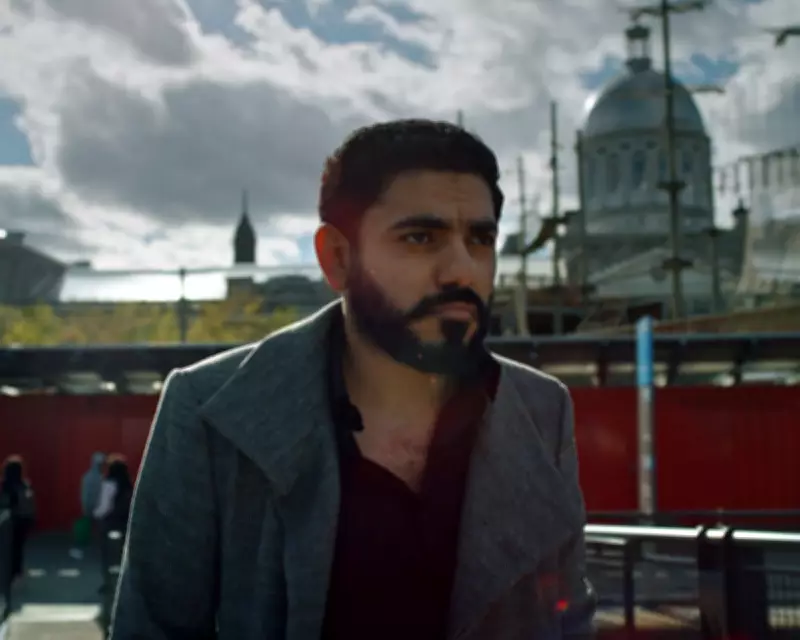
Major US social media companies, including Meta’s Facebook and Instagram, have blocked the accounts of Saudi Arabian dissidents, making them invisible inside the kingdom after orders from Saudi authorities. Those affected include Abdullah Alaoudh, a US-based activist and vocal critic of Saudi human rights violations, and Omar Abdulaziz, a Canada- and UK-based activist who collaborated with Jamal Khashoggi before his murder in 2018.
Meta’s Actions and Transparency
According to the advocacy group American Committee for Middle East Rights (ACMER), at least seven accounts were blocked by Meta at the end of April, including those of two American citizens and two individuals based in Europe. Alaoudh, ACMER’s senior policy adviser, stated: “Meta is effectively doing Saudi Arabia’s dirty work against Americans living in the United States. When a company geo-blocks accounts on behalf of a government with a documented record of silencing dissent, it becomes an instrument of repression. Meta should push back.”
Meta did not respond to the “dirty work” claim but provided a statement to the Guardian, explaining that when content is reported as violating local law but not the company’s own community standards, it may restrict the content’s availability in the country where it is alleged to be unlawful. The company added that in most cases, it informs affected users which state authorities sent the requests. Meta operates a public transparency centre, where it acknowledges that Saudi authorities contacted the company and sought restrictions on 144 Instagram accounts, Facebook pages, and Facebook profiles during April. The site also shows that Meta restricted access to 108 “items”.

Snapchat’s Response Differs
Interviews with targeted dissidents suggest that the companies approached by Saudi authorities did not all respond in the same way. While Meta alerted users that their content was being blocked due to “a local legal requirement, or a request from a government”, Snapchat appears to have slowed or removed accounts in Saudi Arabia—including one used by Abdulaziz—without notifying the account owners. It is unclear how many Snapchat accounts were affected, and Snap Inc. declined to comment.
X’s Handling of Requests
At least two users of X (formerly Twitter), owned by Elon Musk, received letters informing them that the platform had received a request from the Saudi communications, space and technology commission claiming their accounts violated Saudi laws. A Saudi decree attached to the letters stated that the accounts transmitted material that “infringes on public order, religious values, public morals, or the sanctity of private life”. X told users including Abdulaziz that it had not taken any action on the reported content yet, writing that the company “strongly believes in defending and respecting the voice of our users”. It then urged addressees to seek legal advice or delete the relevant content voluntarily. X did not respond to a request for comment.
Dissidents’ Concerns
Abdulaziz told the Guardian: “I think this is just the introduction to a massive crackdown by the Saudi government to mute opposition. It could go as far as committing atrocities, just like they did with the murder of Jamal Khashoggi.” The Saudi government did not respond to a request for comment, sent through the Saudi embassy in Washington.

Broader Implications
Other accounts targeted include those of individuals linked to the London-based human rights organisation ALQST, including its founder, Yahya Assiri. ALQST stated that the requests from Saudi Arabia do not represent a neutral legal process but instead expose how authoritarian censorship can be dressed up as procedure. Dr Maryam Aldossari, an ALQST board member, said: “These [account holders] are not dangerous actors; they are people documenting abuses, challenging state propaganda and giving voice to Saudis inside the country who cannot speak freely. Blocking these accounts would not protect public safety, it would project authoritarian power from scrutiny. X cannot hide behind vague references to ‘local legal requirements’ when those laws are routinely used to criminalise peaceful dissent. This is how authoritarian censorship travels: through legal notices, platform pressure and the attempted outsourcing of repression to global technology companies.”
This article was amended on 22 May 2026 to correct an earlier version that wrongly stated X was blocking dissidents’ accounts.