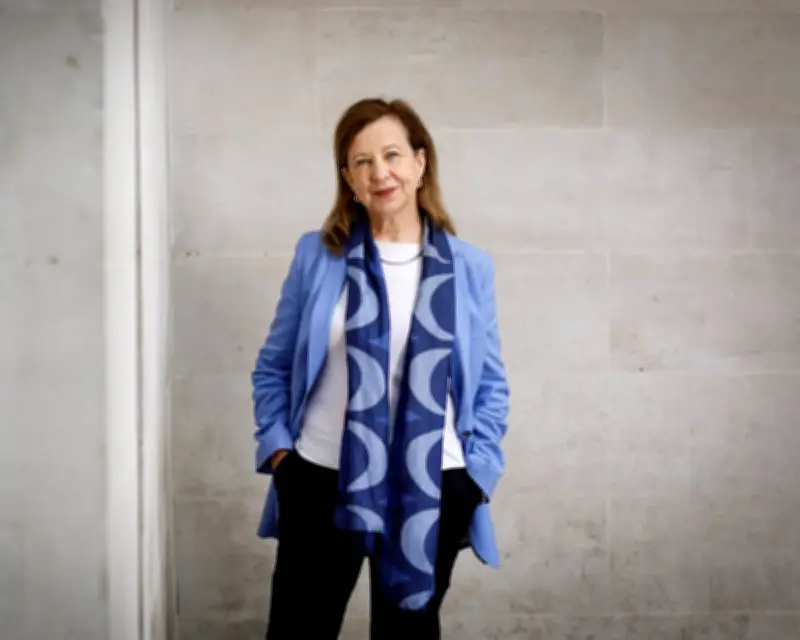
Lyse Doucet, the BBC's chief international correspondent, has been awarded the Women's prize for nonfiction for her book The Finest Hotel in Kabul. While the prize recognizes a remarkable work of reportage and history, Doucet is more focused on what it might do for Afghanistan, the country that inspired it.
Afghanistan's Slip from Headlines
"Afghanistan has largely slipped from the headlines," Doucet says. "Perhaps this win will bring some attention to the country. None of us should be ready to accept a situation in which we live in a world where there is a country where girls cannot be educated after they're 16, where women cannot go to university, where women are barred from so many jobs. This is something we should all be angry about."
A Hotel as a Lens for History
Doucet first checked into Kabul's Intercontinental Hotel on Christmas Day 1988, as Soviet troops were withdrawing from Afghanistan. She expected to stay briefly but remained for almost a year, and the hotel became her first Afghan home. More than three decades later, it became the subject of her first book. The Intercontinental Hotel, built by the British in the late 1960s, was once a symbol of a different Afghanistan. In the 1960s and 70s, Kabul was known as the "Paris of the east," a vibrant hub of fashion, jazz, miniskirts, and apres-ski resorts. Afghan pop star Ahmad Zahir performed at the hotel, and Gloria Gaynor was a guest. As political upheaval followed, the hotel remained open. "Politics, like hotel guests, checked in and out," Doucet writes.

The People at the Heart
The hotel staff who remained through those changes are at the center of her story: Hazrat, the housekeeper who worked there from the hotel's opening; Abida, the hotel's first female chef; Amanullah, the engineer; and Malalai, one of the first female waiters. "I have to pay tribute to the Afghans who helped me and spoke to me for the book, because in Afghanistan even sharing stories can have risks," Doucet says.
The Fall of Kabul
Doucet's book opens with the fall of Kabul in August 2021 and the disastrous American withdrawal. She recalls watching the evacuation from the airport: military transport planes, helicopters, and Afghans carrying only one bag as they fled. "There was this fear at the end. People kept talking about Vietnam – that image of the people clinging to the last helicopter rising from the roof of the embassy in Saigon," she says. "In fact, it was a hundred times worse – Afghans racing to the airport, clinging to the underbelly of planes. It's been a really traumatizing experience."
Taliban's Draconian Measures
Since returning to power, the Taliban have systematically erased women from public life. Girls have been banned from secondary education and university, women have been forced out of workplaces and banned from public spaces, and strict adherence to the burqa is required. Last month, an official decree was passed effectively legally recognizing child marriage. Just this week, a rare protest in Herat against arrests of women accused of violating hijab rules ended with two people killed, including a child. "Five years in and it is getting worse. It is a stain on our world," Doucet says. "But the courage of Afghan women is extraordinary."
Barriers Beyond Borders
Doucet is frustrated that barriers facing Afghan women go beyond those inside the country. "There are Afghan women getting scholarships, but there are no visas now to allow Afghan women to come and study in Britain and in many other places," she says. "They are meeting obstacles everywhere. We live very privileged lives here, and it's not our privilege to give up on Afghans." People who were prominent in Afghanistan – activists, world-class journalists – find themselves having to start again from scratch. "It's something none of us would want to do," she adds.

Not All Was for Nothing
Doucet believes the world must not dismiss the achievements of the post-2001 period. "People often say: what did 20 years of international engagement achieve? Was it all for nothing? I always say it wasn't for nothing. There were many mistakes, but that period helped create the most educated, the most connected generation in Afghan history," she says. "When you see girls saying: 'I want to get online, can you help me get a scholarship, can you help me get some kind of education?' … They know their rights now."
Engagement with Taliban
This month, for the first time, the EU is preparing talks with Taliban representatives in Brussels, despite concerns that engagement risks legitimizing a bloody regime. Doucet is cautious about prescribing a solution. "I'm a BBC journalist," she says. "My job is to explain, not advocate. But [some] mediators would say that it's better to negotiate than isolate. The only change is going to have to come from within the Taliban."
Hope as the Last to Die
For now, there is little sign of change in Afghanistan. But Doucet is reluctant to surrender the quality Afghans themselves prize above all others. "Afghans always used to say: the last to die is hope," she says. "Afghanistan has possibly lived through every political system the world has tried – the thread through Afghan history is that nothing lasts forever."