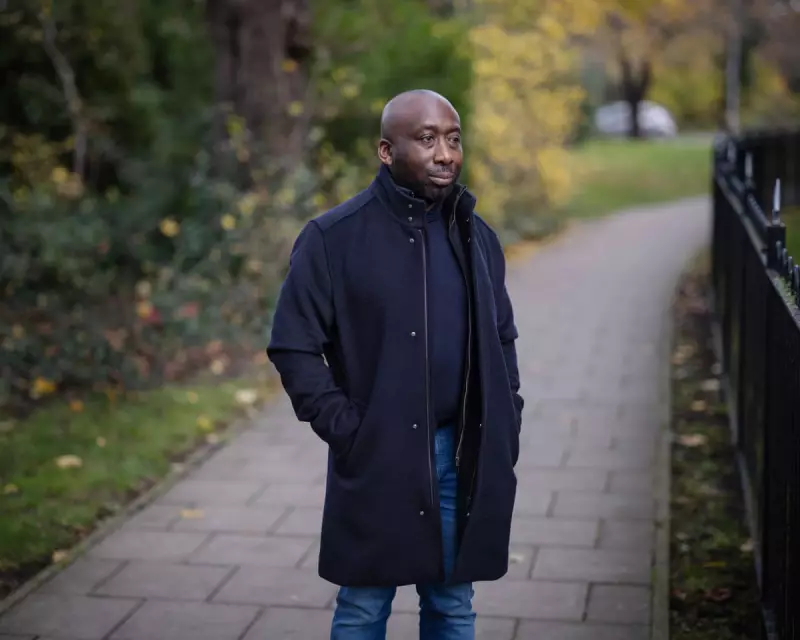
A former pupil of the prestigious Dulwich College has publicly detailed alleged racist bullying he suffered at the hands of Nigel Farage during their overlapping time at the south-east London school in the early 1980s. Yinka Bankole, who attended the school for a year aged nine, says the memory of the Reform UK leader's "look of hatred" has stayed with him for over four decades.
A Childhood Memory Etched in Pain
Bankole states that the incident occurred during the 1980-81 academic year. He recalls that Farage, then around 17 years old and towering over him, approached him in the lower-school playground. After asking the young boy where he was from, Farage allegedly responded with the phrase, "That's the way back to Africa," accompanied by a hand gesture pointing into the distance.
"Once my existence as a target was established, he would wait at the lower school gate, where I was dropped off for school, so as to repeat the vulgarity," Bankole writes. He challenges Farage's recent attempts to categorise such behaviour as "malicious or non-malicious," stating that the experience "certainly felt malicious to me."

The Trigger to Speak Out
Bankole explains that he decided to break his long silence after watching Farage's press conference on Thursday, where the politician responded to racism allegations from his youth by criticising broadcasters for airing content from comedian Bernard Manning and the fictional bigot Alf Garnett in the 1970s.
Bankole, the son of Nigerian immigrants who arrived in the UK in the 1950s, describes Farage's defence as "the most amazingly disingenuous example" of biblical deflection. He says this was the final straw that compelled him, a typically private person, to share his story.
He directly counters Farage's suggestion that it is inconceivable to remember events from so long ago. "I would simply ask: can a victim of such abuse ever forget? I know I haven't forgotten," he states, adding that he still recognises Farage's distinctive walk from television appearances.
A Chilling 'What If' and a Legacy of Tolerance
Bankole reflects that he left Dulwich College after just one year due to high fees and a family relocation. He expresses a profound sense of relief at this timing. "The thought terrifies me of what could have happened if I was there the following year when the bully would have had even more authority," he writes, alluding to Farage's later role as a school prefect.
He dedicates his account to his late mother, who died this year, and her peaceful, tolerant attitude—a common trait, he notes, among immigrants. While he had begun writing a private memoir, the sight of an alleged perpetrator "denying or dismissing hurt" became a trigger to speak publicly.
Bankole's testimony adds a personal, powerful voice to the ongoing scrutiny of Nigel Farage's past conduct and his current political stance, challenging the narrative that such childhood actions can or should be easily dismissed.