A former pupil of the prestigious Dulwich College in south-east London has publicly accused Nigel Farage of directing racist abuse towards him when they were both students at the school in the early 1980s.
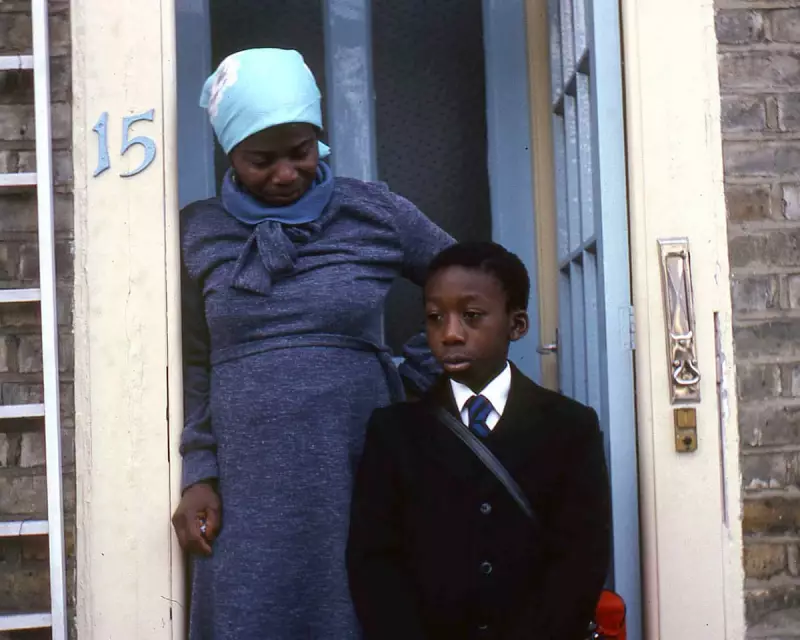
Yinka Bankole, now 54 and an engineer, claims a 17-year-old Farage singled him out, telling him "that's the way back to Africa" while gesturing dismissively. Bankole, who was just nine years old at the time, says he decided to put his name to the story after watching the Reform UK leader's press conference on Thursday, where Farage denied ever being racist or antisemitic with "malice".
The Alleged Incident and Its Aftermath
Bankole, whose parents moved to the UK from Nigeria in the 1950s, attended Dulwich College for one year between 1980 and 1981. He recalls that after a period of time, Farage and at least one other older student spotted him in the lower-school playground.

"He towered over me. 'Where are you from?' he asked," Bankole stated. "Within seconds of offering my rather confused and sputtering answers, he had a clear response: 'That's the way back to Africa', with an accompanying hand gesture pointing towards a place far away."
Bankole alleges that once his "existence as a target was established", Farage would wait at the lower-school gate where he was dropped off to repeat the vulgarity. He says he will always remember the "look of hatred he had for me, seemingly simply for existing".
Farage's Response and the Growing Number of Allegations
In response to a Guardian investigation, Farage has offered shifting explanations. He has admitted he may have said things in 'banter' over four decades ago that could be viewed as bigoted today, but has denied saying anything racist or antisemitic "directly" to an individual or "with intent" to hurt.
At Thursday's press conference, he focused his ire on the BBC and ITV, accusing them of hypocrisy, rather than directly addressing the specific claims. Bankole is one of 28 former contemporaries from Dulwich College who claim to have witnessed offensive racist or antisemitic behaviour by Farage during his school days.
Bankole, who stresses he is not a member of any political party and has voted for multiple parties, expressed frustration at Farage's suggestion that such old events are hard to recall. "I would simply ask: can a victim of such abuse ever forget? I know I haven't forgotten," he said.
A Lasting Impact and a Political Reckoning
Reflecting on the experience, Bankole described Farage's recent attempts to contextualise the alleged behaviour as "the most amazingly disingenuous example" of deflection, calling it "the final straw" that compelled him to speak publicly.
He also voiced concern about the prospect of someone with this alleged history wielding significant political authority. "The thought terrifies me of what could have happened if I was there the following year when the bully would have had even more authority," Bankole said. "The prospect of him having infinitely more of that in a few years' time is truly a chilling thought."
A lawyer for Reform UK has previously "categorically denied" that Farage ever engaged in racist or antisemitic behaviour. The allegations continue to cast a shadow over the Reform leader's campaign, prompting calls from Holocaust survivors for an apology and igniting a fierce debate about historical conduct and political accountability.