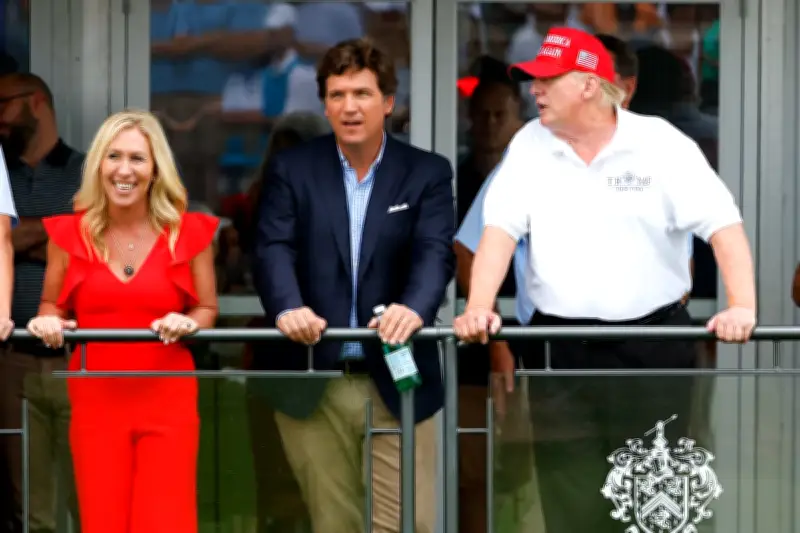
Tucker Carlson and Marjorie Taylor Greene, once staunch allies of Donald Trump, have announced their departure from the Republican party. Their exit stems from Trump's military engagement with Iran and what they perceive as a prioritization of foreign policy over domestic issues like inflation and high gas prices. Both have stated they will not support Democrats, but their defection underscores serious fractures within the GOP that could weaken its performance in the midterm elections and beyond.
Feud with Trump and Accusations of Antisemitism
The Republican establishment has dismissed Carlson and Greene as malcontents, with Trump calling Greene a traitor and Carlson a “low-IQ person.” Greene, the first Republican member of Congress to label Israel's actions in Gaza as a “genocide,” and Carlson, who accused Trump of betraying Americans by letting Israel push him into war with Iran, have faced accusations of antisemitism. Carlson's recent interview with white nationalist influencer Nick Fuentes has fueled these allegations, which he denies.
Potential 2028 Presidential Contenders
Despite Greene's controversial statements—such as her attacks on “Nancy Pelosi's gazpacho police”—both figures are considered potential candidates for the 2028 presidential election. Their influence lies within the “America First” faction of the Republican Party, distinct from Trump's Maga faction. While Trump previously united these groups, they represent divergent worldviews rooted in different eras of American conservatism.

Historical Roots of America First and Maga
The America First Committee, active in 1940-1941, opposed US entry into World War II and was associated with populist nationalism and antisemitism. Trump revived the “America First” label in 2016, tapping into fears of foreign entanglements and immigration. Carlson articulates this isolationist stance, feeling betrayed by Trump's Iran war. In contrast, Trump's “Make America Great Again” slogan evokes the Gilded Age and post-WWII era, emphasizing American imperialism and dominance. A 2024 survey found about 70% of Republicans believe America's culture has worsened since the 1950s, compared to 30% of Democrats.
Factional Divisions and Future Prospects
Carlson expressed confusion about Maga, stating in a podcast, “I think there was a strong latent desire... but it was imprecise by design.” Trump's charismatic incoherence and traditional Republican advisers in his first term bridged the gap between factions. However, no 2028 candidate—likely including JD Vance—can replicate this unity. Carlson warned, “If I'm out, then I think a lot of other people are out.” Disillusioned America First supporters may skip midterm elections, especially if Middle East instability hurts the economy. Carlson or Greene could attempt to reclaim the GOP or form a third party, but shared opposition to the left may keep Republicans together despite disagreements.