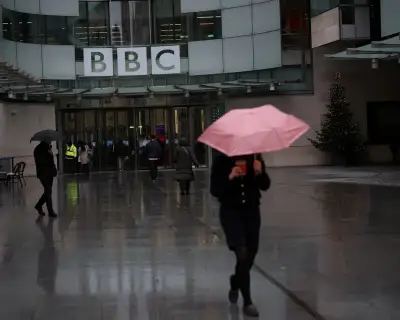
BBC staff have been told their bosses will forgo a pay rise this year, but many fear the freeze will lead to a meager increase for the rank and file, who have been urged to be realistic about the outcome of union negotiations.
Employees have been informed that the corporation's executive committee, comprising its 12 highest-paid bosses including the director general, who collectively earned nearly £5 million last year, will have their pay frozen amid a £600 million cost-cutting drive.
Executive Pay Freeze as Part of Savings Plans
Rhodri Talfan Davies, the interim director general, announced the decision during an all-staff video meeting. "Part of our [savings] plans is that members of the BBC executive committee will receive no annual pay award this year," he said. "[This is] recognising the scale of the financial challenge we have at the moment."

The corporation is formulating plans to cut as many as 2,000 jobs, marking the biggest downsizing of the public service broadcaster in 15 years.
Pay Negotiations with Unions
During a question and answer session, Davies addressed concerns about the impact of cost-cutting on a promised pay rise for over 20,000 staff. The BBC has been in talks with staff unions, who have submitted a pay claim for a 4.5% increase. Pay rises for the vast majority of employees typically come into effect on 1 August each year, with backdating if negotiations are delayed.
"We are in discussions with the trade unions regarding this year's pay settlement," Davies said. "We are committed to introducing an annual pay increase. But what I would say, these are exceptional circumstances at the moment, so we are going to be realistic and prudent about what is possible."
Staff Skepticism
Insiders indicated that the freeze for top executives is perceived as a signal to staff not to expect a significant pay rise this year. One staff member commented, "By limiting the pay freeze to a small group of already very well-paid individuals – and not mentioning or including the hundreds in the senior leadership team – they are virtue signalling that even the lowest paid should not hope for much better."
The update comes days before Matt Brittin, a former top Google executive, takes over as the corporation's new director general from 18 May. Staff across BBC divisions are expected to receive more details about the level of cuts in June, with job loss notifications in September.
Leadership Changes at ITN and BBC News
On Tuesday, Rachel Corp, CEO of ITN, which produces news for ITV, Channel 4, and Channel 5, announced her immediate resignation after four years. The surprise move has fueled speculation that Corp could replace Deborah Turness, who resigned as head of BBC News in November.
In an email to staff, Corp indicated she has another job lined up. "This has not been an easy decision, and it's one I have been considering for some time," she said. "I am excited for what comes next, not just for me (watch this space!) but also for ITN."
Turness and former BBC director general Tim Davie jointly resigned after a former adviser accused the corporation of "serious and systemic" bias in coverage of issues including Donald Trump, Gaza, and trans rights. Turness, who earned £431,000 last year, has been replaced on an interim basis by Jonathan Munro, the BBC News global news director and director of the World Service.
The BBC declined to comment.