
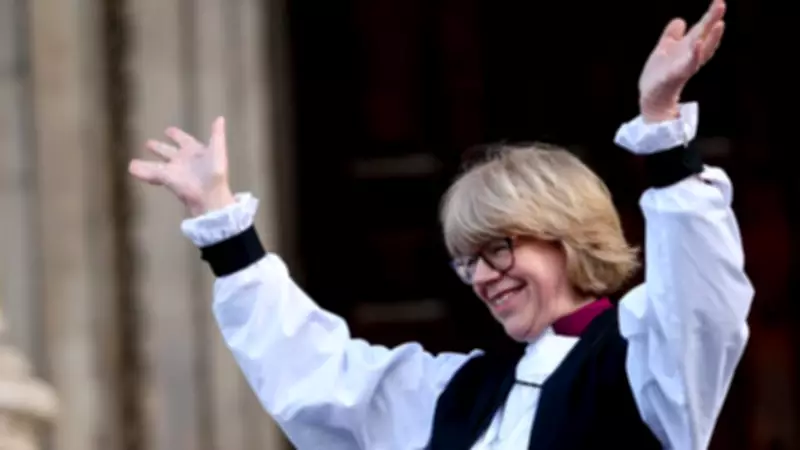
Historic Milestone: First Female Archbishop of Canterbury Enthroned
Dame Sarah Mullally has made history as the first woman to become Archbishop of Canterbury in the Church of England's 1,400-year existence. Her formal enthronement ceremony took place on Wednesday, March 25, 2026, at Canterbury Cathedral, marking a profound shift in the Anglican Communion's leadership.
A Ceremony of Significance and Symbolism
More than 2,000 attendees witnessed this groundbreaking event, including Prime Minister Rishi Sunak and the Prince and Princess of Wales. The ceremony represented the culmination of a pilgrimage from London, where Dame Sarah previously served as Bishop, to Canterbury, where she was "translated" to her new archbishopric role.
Royal commentator Alastair Bruce emphasized the occasion's importance, stating, "Who could fail to see that there is immense significance in this moment?" He highlighted Dame Sarah's remarkable career trajectory from nurse to England's top nurse, then to vicar, and now to England's top religious leader.
Overcoming Historical Barriers
The Very Reverend David Monteith, Dean of Canterbury, noted that a female archbishop "would have almost been unimaginable even 50 years ago." Bruce echoed this sentiment, recalling that during the last archbishop election just over a decade ago, a woman's selection seemed "unlikely" if not "fairly unimaginable."
Despite this progress, Dame Sarah faces unique challenges as the 106th Archbishop of Canterbury. Bruce observed that "the job she faces will probably be tougher in many ways" due to her gender, particularly because "there are parts of the worldwide Anglican Communion that don't recognise she is even a priest because she is a woman."
Navigating Division with Diplomacy
The selection has raised concerns about potential schisms within the Anglican Communion. Bruce noted "implicit rebellion from different parts of the church that are genuinely not happy" with a female archbishop. However, he praised Dame Sarah's diplomatic approach, citing her attendance at a service where the congregation didn't accept women priests.
"She understood that they would not want her to play a part, so she just went as an observer," Bruce explained. "That showed great understanding, sensitivity and leadership. She was still there, showing the congregation that she cared about them, even though they didn't respect the fact that she should hold the office she held."
Ceremonial Details and Personal Touches
The enthronement ceremony featured several significant elements:
- A mandate from King Charles III, as Supreme Governor of the Church of England, was read aloud, instructing Dame Sarah's installation
- Dame Sarah delivered her sermon while seated in the Chair of St Augustine, a stone throne dating to the early 13th century
- The ceremony included singing, dancing, readings, and prayers before she blessed the people of Canterbury
- Dame Sarah wore the silver buckle from her nurse's belt instead of a traditional bishop's morse, honoring her previous career
- She invited nurses and carers from Canterbury hospitals and hospices to attend
Royal Representation and Symbolic Timing
Prince William attended as the Royal Family's senior representative, since the King cannot be present while his mandate is read. Bruce noted the "profound" connection between the Prince of Wales and Archbishop of Canterbury, particularly since the archbishop traditionally crowns new sovereigns.
The ceremony date held special significance, occurring on March 25th—the Feast of the Annunciation, also known as Lady Day. Bruce suggested Dame Sarah "chosen it deliberately" as it commemorates the angel Gabriel's announcement to Mary about Jesus' birth, creating a connection between her role and Mary's acceptance of divine calling.
The Church of England stated the ceremony would reflect Mary's "yes" to God's calling and how this offers hope for both the church and the world today. This historic enthronement represents not just a personal achievement for Dame Sarah Mullally, but a potential turning point for one of England's oldest institutions.




