
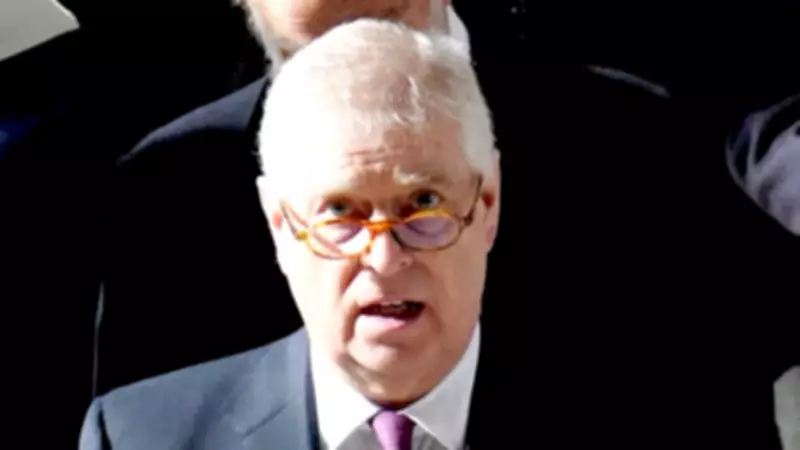
Commonwealth Nations Support Removing Andrew from Royal Succession
The governments of Australia and New Zealand have formally declared their support for removing Andrew Mountbatten-Windsor from the British royal line of succession. This significant intervention comes amid growing calls to prevent the former duke from ever ascending to the throne.
Official Backing from Down Under
Australian Prime Minister Anthony Albanese has written to UK Prime Minister Sir Keir Starmer confirming his government's agreement with any proposal to exclude Andrew from succession. "In light of recent events concerning Andrew Mountbatten-Windsor, I am writing to confirm that my government would agree to any proposal to remove him from the line of royal succession," Albanese stated in his letter.
New Zealand Prime Minister Christopher Luxon has similarly indicated his country's support through an official spokesperson, who confirmed New Zealand would back the UK government if it moves forward with legislative action.
Legal and Diplomatic Complexities
Changing the royal line of succession requires unanimous agreement from all fifteen Commonwealth realms where the British monarch serves as head of state. While Australia and New Zealand have now publicly backed the measure, securing approval from all remaining nations presents a significant diplomatic challenge.
Royal commentator Alastair Bruce noted that while Albanese's letter "must help the prime minister," obtaining universal agreement may prove difficult. "It takes a lot of time, and I think parliaments across the world who have the King as head of state will not be looking forward to having to find time to do this," Bruce explained.
Context and Timing
The developments follow Andrew's arrest and interview under caution on February 19th regarding allegations of misconduct in public office, which he strongly denies. The UK government is reportedly considering legislation to remove Andrew from succession, but any action would likely await the conclusion of ongoing police investigations.
Bruce observed that since Queen Elizabeth II's death, public attitudes toward institutions including the monarchy have shifted significantly. "We are living in a post-deferential age," he noted, adding that "the monarchy was suffering at the moment from the fact that its reputation is hugely damaged."
Republican Movements and Historical Context
Australia has maintained an active republican movement for over a century, with the Labor Party adopting republicanism as official policy in 1991. A 1999 referendum saw 55% of Australians vote to retain the constitutional monarchy versus 45% supporting a republic.
Despite his personal support for an Australian head of state, Prime Minister Albanese confirmed on Friday that his government has no current plans for another referendum. Recent polling shows similar divisions to the 1999 results, though republicanism enjoys stronger support among younger Australians.
Andrew Mountbatten-Windsor currently occupies eighth position in the line of succession, following Prince William and his three children, as well as Prince Harry and his two children. The coordinated support from two major Commonwealth nations represents a substantial development in what promises to be a complex constitutional process.




