
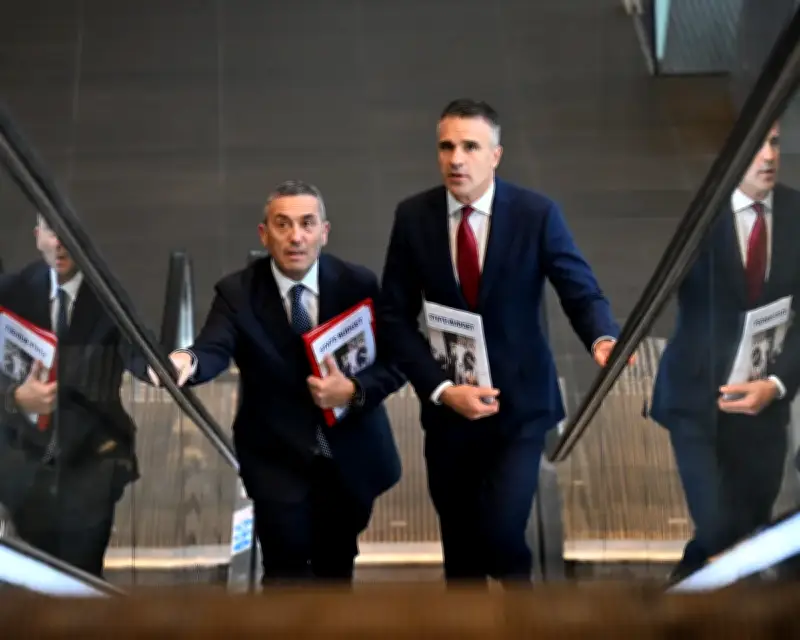
South Australian Premier Peter Malinauskas has announced a royal commission into artificial intelligence, the latest in a series of moves he frames as leveraging the state's smaller size for agility. The announcement, made upon his return from a two-day trip to the United States, has prompted scrutiny of his government's frequent use of the phrase "nation-leading."
Royal Commission into AI: Scope and Exclusions
The inquiry will examine the risks and benefits of AI in health, the public service, the workplace, and the energy grid. However, it will not investigate the role of datacentres, which Malinauskas describes as the "mines of the future" and a "physical manifestation" of AI. He also sees them as a ready-made "customer" for the state's renewable energy generation, stating, "By the end of next year, we're going to be 100% net renewables. The only reason a lot more renewables aren't being developed in SA is because there's no customer, there's no demand. Datacentres provide our source of demand."
This is the third "forward-looking" royal commission called by Malinauskas to propose policy rather than investigate specific incidents. Previous commissions include one into early childhood education and care, led by former prime minister Julia Gillard in 2023, and another into domestic, family and sexual violence, led by former Democrats leader Natasha Stott Despoja in 2024. The framework allows the appointment of expert commissioners, allocates extra resources, and grants the power to compel witnesses, including tech companies.
Record of 'Nation-Leading' Claims and Political Support
ABC state political reporter Thomas Kelsall found more than 50 government media releases using the phrase "nation-leading" in the past year and a half. Malinauskas says this is not a specific strategy but a function of being a more nimble state. "We have to turn our smaller size, our relative size, into a source of agility, which we can make a strength," he says. "The state's always had a bit of a history in trying to seize a first-mover advantage where we can … and if we can translate that into economic opportunity and better living standards, then that's the main game."
Labor kingmaker Don Farrell, who spotted Malinauskas's potential when he was a shelf-stacker at Woolies, says, "He's the standout politician of his generation." Former Liberal leader Peter Dutton once described him on Sky News as "the most honest of the Labor premiers." Podcast hosts Alastair Campbell and Rory Stewart have also praised him, particularly for his role in Australia's social media ban.
Controversies and Criticisms
Malinauskas has faced backlash on several fronts. He received strident criticism for his commentary on Adelaide Writers' Week plans to include author Randa Abdel-Fattah. In June, he voted alongside opposition leader Ashton Hurn and four One Nation MPs to restrict abortion access, a move defeated by 36 votes to nine. His government has also been criticized for its handling of a devastating algal bloom, exacerbated by bird flu spreading among coastal colonies, and an election promise to "fix" hospital ramping has not eventuated. Plans to redevelop a public golf course in Adelaide's parklands and host the MotoGP, requiring removal of hundreds of trees, sparked "stop the chop" protests.
His popularity has led critics to accuse him of arrogance. At a leaders' debate before the March state election, Hurn asked, "Do you even think you need to try at this election?" Malinauskas says he thinks "ad nauseam" about the right thing to do, and that he "overwhelmingly" votes on the progressive side, lamenting that nuance is lost in a polarized world.
Economic Credentials and Future Prospects
Rob Manwaring, a political scientist at Flinders University, says criticism over issues like the MotoGP is unlikely to damage him much, as much of Labor's core constituency favors such sporting events. He describes Malinauskas as thoughtful and "genuinely concerned about populism and democracy," adding, "He's got that Hawke thing where he can do highbrow and lowbrow at the same time." Manwaring notes the government's enormous majority helps keep peace between Labor's left and right factions, contributing to a "Teflon-ness."
The business sector likes him. In November last year, the Business Council of Australia named SA the best place to do business for the third time running. The SA economy is the fastest-growing in the nation, according to Malinauskas, though critics point to burgeoning state debt. Development at the Osborne shipyard continues apace thanks to Aukus and other defence projects. Renewable energy, advanced technologies, major events, and a booming copper industry bolster his economic credentials.
In February, on the cusp of the state election that gave Labor a 34-seat majority in the lower house (the Liberal party won five, One Nation four, and independents four), the Australian Financial Review described the "cult of Malinauskas" and "rampant speculation of his eventual move to federal politics." Malinauskas has consistently said he has no intention of going to Canberra. "Everyone always assumes that the main game is in federal parliament," he says. "But that discounts or misunderstands the amount of things that you can do at a state level." It's also personal: he has four children, and his wife, Annabel West, works full-time as a lawyer. Canberra would mean more than 20 weeks a year away from home. "This is enough," he says.




