In a stark departure from the political style of former President Donald Trump, New York City's newly inaugurated Mayor, Zohran Mamdani, has used his first week in office to issue a flurry of executive actions. The moves directly reverse key policies of his predecessor, Eric Adams, and signal a clear leftward shift for the governance of the Big Apple.
A New Style of Leadership
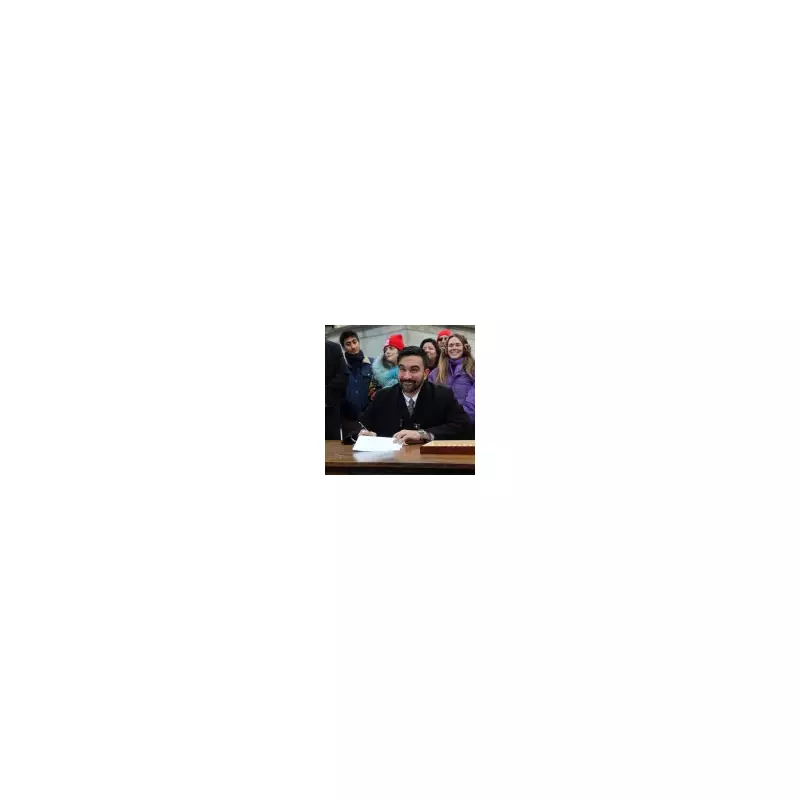
While Trump, since returning to the White House, has signed over 225 executive orders, Mayor Mamdani chose a different stage for his first official acts. On Friday, January 2nd, 2026, he braved the freezing cold at Brooklyn's Grand Army Plaza to sign orders alongside volunteers, symbolising a commitment to grassroots engagement from day one.
This public spectacle contrasted sharply with the traditional Oval Office signings, setting the tone for what Mamdani has promised will be a new era of transparent and participatory government for New Yorkers.

Reversing Course on Key Policies
Among the dozen orders signed was a formal revocation of a controversial measure by former Mayor Eric Adams. That policy had sought to grant federal workers permission to use facilities at the city's main jail, Rikers Island, as office space. Although blocked by a court, Mamdani has now officially rescinded it.
Furthermore, on Thursday, January 1st, Mamdani rolled back several steps Adams had taken to address antisemitism. This included withdrawing recognition of the International Holocaust Remembrance Alliance (IHRA) definition of antisemitism and repealing an order that banned city institutions from divesting from Israel.
The new Mayor, who has already faced criticism from the Israeli government, stated that protecting Jewish New Yorkers remains a focus of his administration, albeit through a different policy lens.
Building a "City Hall for the People"
Mamdani's executive actions were not solely about reversal. He also pledged to create a new Office of Mass Engagement at City Hall, aimed at improving public participation in local politics and embedding community feedback into policy decisions. The unit will be led by Tascha Van Auken, a key campaign figure.
This initiative aligns with the rhetoric of his inaugural speech, delivered just after midnight on New Year's Day upon being sworn in. He pledged to "reset expectations" and govern "without shame or insecurity," emphasising that "freedom has belonged only to those who can afford to buy it" for too long in New York.
"A moment like this comes rarely," Mamdani declared. "Seldom do we hold such an opportunity to transform and reinvent. Rarer still is it the people themselves whose hands are the ones upon the levers of change." His speech clearly prioritised working people over private sector solutions to the city's deep-seated issues.
The Mayor's symbolic gestures extended beyond paperwork. On his second day in office, he chose to travel to work via the subway, shaking hands with commuters, and his new policies include strengthened rights for tenants and a renewed push for housing development.
Together, these first actions by Mayor Zohran Mamdani sketch the blueprint of an administration intent on a profound and rapid break from the policies of both his immediate predecessor and the previous national political era.