
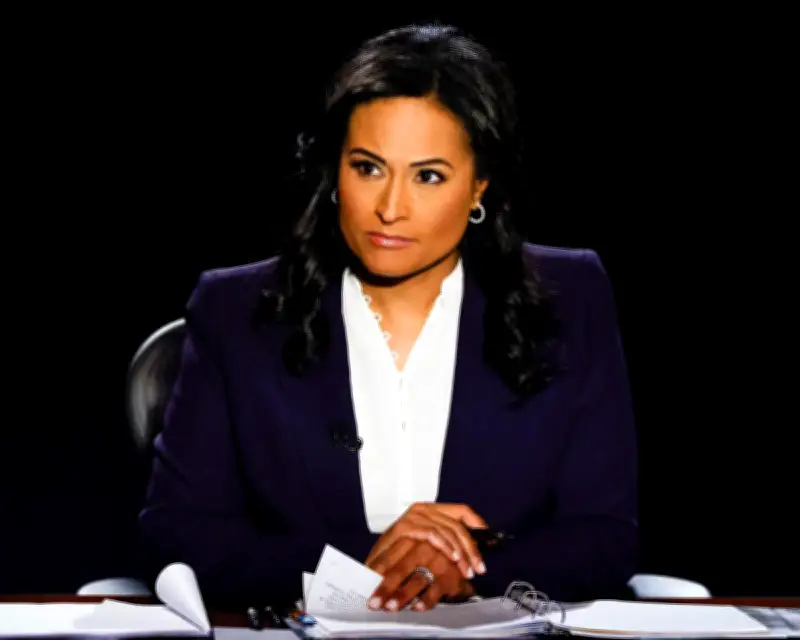
President Donald Trump on Sunday called for NBC's Kristen Welker, host of Meet the Press, to face "rebuke or punishment" from the Federal Communications Commission (FCC). The demand came after Welker described the success rate of candidates endorsed by the president as "mixed" during a live shot on NBC's Washington, D.C. affiliate, according to CNN media reporter Brian Stelter.
Trump's social media attack on Welker
In a social media post, Trump derided Welker as the "Unpopular 'Hostess' of … Meet the Fake Press," accused her of "purposeful inaccuracy," and warned that she would "be reported to the FCC for rebuke or punishment." The post also expressed hope that his appointed FCC chair, Brendan Carr, and his colleagues on the commission would "take this Threat to our Country very seriously."
Once Meet the Press aired on Sunday, a guest analyst on the show said "the single most important factor in who the Republican nominee will be in [the presidential election of] 2028 will be who Donald Trump endorses."
Endorsement record under scrutiny
Trump is estimated to have made more than 300 endorsements that resulted in the recipient winning. In the election cycle leading up to November's midterms, 214 of the 218 House candidates he endorsed won their primaries, including all 24 Republican Senate primaries. In gubernatorial primaries, five of the 21 candidates he endorsed lost, among them Mike Lindell, who finished a distant second in Minnesota to state House Speaker Lisa Demuth. The state's supreme court on Saturday effectively confirmed Lindell's 11-percentage-point defeat by rejecting his bid for a recount.
Despite these losses, Trump maintained in a 23 August social media post: "My Endorsements are stronger than ever. There has never been anything close!" In his attack on Welker, he touted recent primary victories by South Carolina Senate candidate Darline Graham and Oklahoma gubernatorial hopeful Mike Mazzei. He had said days earlier that any endorsed candidates who lost faced "impossible" races but had earned his support "out of loyalty."
History of tensions and FCC pressure
Welker and Trump have a contentious history. In June, he walked out of an hour-long interview after being asked about his pledge of "no new wars" during his campaign. Trump denied making such a guarantee, then said: "You're a one-sided crooked network. Let's call it quits because I've had enough. Thank you, darling. Have a good time." He added: "You ought to straighten out your press. A country can never be great with a dishonest press."
Trump's comments on Sunday are part of a broader pattern of using the FCC against media outlets. In September 2025, Carr reportedly pressured television station groups to pre-empt Jimmy Kimmel's show after a comment the ABC host made following the assassination of conservative influencer Charlie Kirk. Sinclair and Nexstar complied, and ABC "indefinitely" pulled the show before Kimmel returned a week later. Trump has also secured private settlements from ABC and CBS totaling more than $30 million during his second presidency.
Earlier in August, ABC sued the FCC, alleging it was illegally targeted after being forced to apply early to renew its eight local broadcast licenses. The network said in its lawsuit: "Acting through the Federal Communications Commission, the Administration has waged a retaliatory campaign against ABC for a single reason: it disapproves of what ABC broadcasts."
NBC is licensed by the FCC to directly operate 11 local stations. The network did not immediately respond to a request for comment. Stelter wrote that the FCC "can't punish Welker" because it has "limited power … by design," but noted that Carr has been "responsive" to Trump in the past, and "it's reasonable to think NBC will be targeted next."




