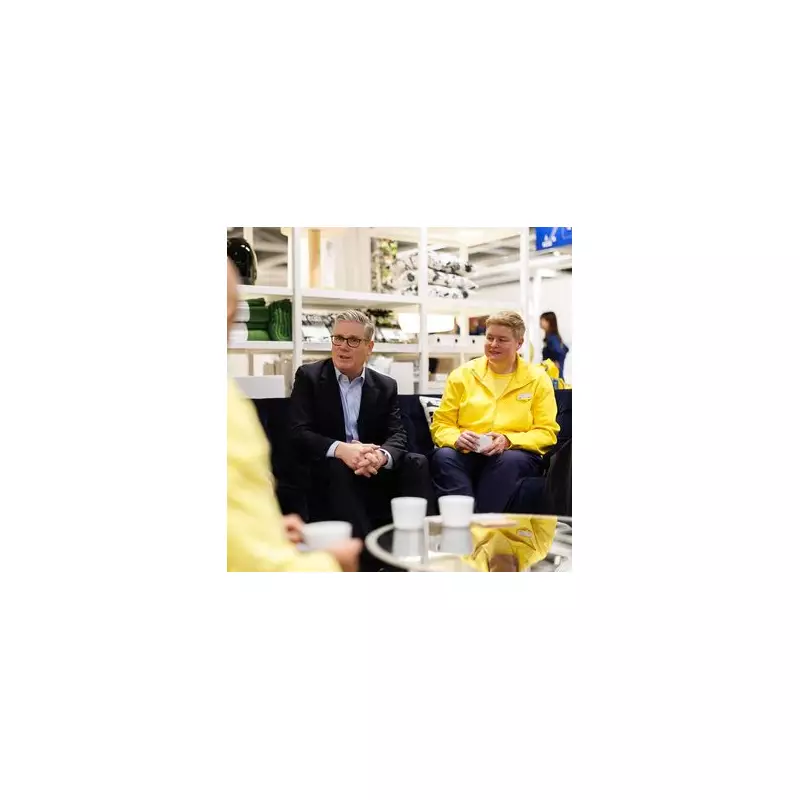
Prime Minister Sir Keir Starmer has declared that Croydon has been "underfunded for a very, very long time" as he unveiled new government measures designed to ease the borough's crippling financial burden. Speaking during a visit to Croydon's IKEA, the Labour leader outlined plans to inject millions into local services while acknowledging the deep-rooted challenges faced by the council.
Fair Funding and Multi-Year Settlements
In an interview with the Local Democracy Reporting Service (LDRS) on Monday, January 12, Starmer highlighted two key policy shifts aimed at stabilising councils like Croydon. The first is the long-awaited Fair Funding Review, which will recalibrate how central government money is allocated to local authorities.
This change is set to benefit outer London boroughs that have historically lost out. For Croydon, it translates into a significant cash injection of around £40 million extra per year for the next three years.
"We have put in record funding for local authorities," Starmer stated, though he conceded that significant challenges remain. Accompanying him, Croydon West MP Sarah Jones emphasised the impact: "Inner London boroughs have historically done better than outer London, but our need is greater."
The second measure is a move to multi-year financial settlements. Instead of councils receiving budgets annually, they will now get three-year blocks of funding. The government argues this will provide greater certainty, allowing for more effective long-term planning and service delivery.
The Shadow of £1.4 Billion Debt and EFS
Despite this new support, Croydon Council's colossal £1.4 billion debt continues to loom large. This debt has forced the sale of public assets, including car parks, and led to library closures. To manage, the Tory-run council has repeatedly relied on Exceptional Financial Support (EFS) from the government, receiving over £500 million in such support since 2021.
EFS permits 'capitalisation'—using borrowed money or asset sales to cover daily running costs—a practice widely criticised as a short-term fix that stores up long-term problems. When questioned on whether EFS remained a viable future option for Croydon, Starmer was cautious.
"We have to get the balance right here," he told the LDRS. "The extra funding formula and the long-term settlement, I think that is the right balance. We never close our minds, but I think that is the right balance for the time being."
A Political Blame Game Intensifies
The financial crisis has ignited a fierce political blame game. Labour's mayoral candidate for the 2026 elections, Rowenna Davis, welcomed the Fair Funding move but stressed that "we still need a deal on the debt."
In contrast, Croydon Mayor Jason Perry, a Conservative, squarely blamed the previous Labour administration for the borough's three bankruptcies. "No one in Croydon will forget that this council was bankrupted three times thanks to Labour," Mayor Perry said. "Residents are still living with the consequences of those failures."
He defended the use of EFS as necessary to address "the scale of the damage caused by Labour's mismanagement" and claimed his administration had restored fiscal discipline. The council is currently under the supervision of government-appointed commissioners, who will oversee its finances until at least July 2027.
Beyond Finances: Pride in Place for High Streets
Beyond the dire balance sheets, the Prime Minister also discussed plans to rejuvenate Croydon's high streets through the Pride in Place scheme. New Addington North is slated to receive up to £20 million over ten years for improvements, while a further £1.5 million over two years will fund community building refurbishments and green space enhancements.
"People want to see the place where they live and work doing well and flourishing," Starmer remarked, underscoring the government's focus on local regeneration. MP Sarah Jones also pointed to ongoing efforts to work with developers like Westfield to revitalise the town centre.
As Croydon navigates its path to recovery, the new funding offers a lifeline. However, with a debt mountain of £1.4 billion and political divisions running deep, the journey to long-term financial stability appears far from over.