Residents in the Lee neighborhood of South East London have launched serious accusations against Lewisham Council, claiming the local authority is effectively engaging in fly-tipping by failing to collect rubbish bags placed on public streets. This ongoing dispute has seen uncollected waste torn apart by scavenging foxes, leaving dangerous debris including broken glass, dog waste, and needles scattered across residential areas.
Long-Standing Dispute Over Uncollected Waste
The conflict between Lee residents and Lewisham Council dates back to 2024, with problems persisting throughout 2025 and continuing into 2026. Residents report that street cleaners regularly place bin bags along Woodyates Road, but the council's in-house waste team frequently fails to collect them on the same day, sometimes leaving bags overnight or for multiple days.
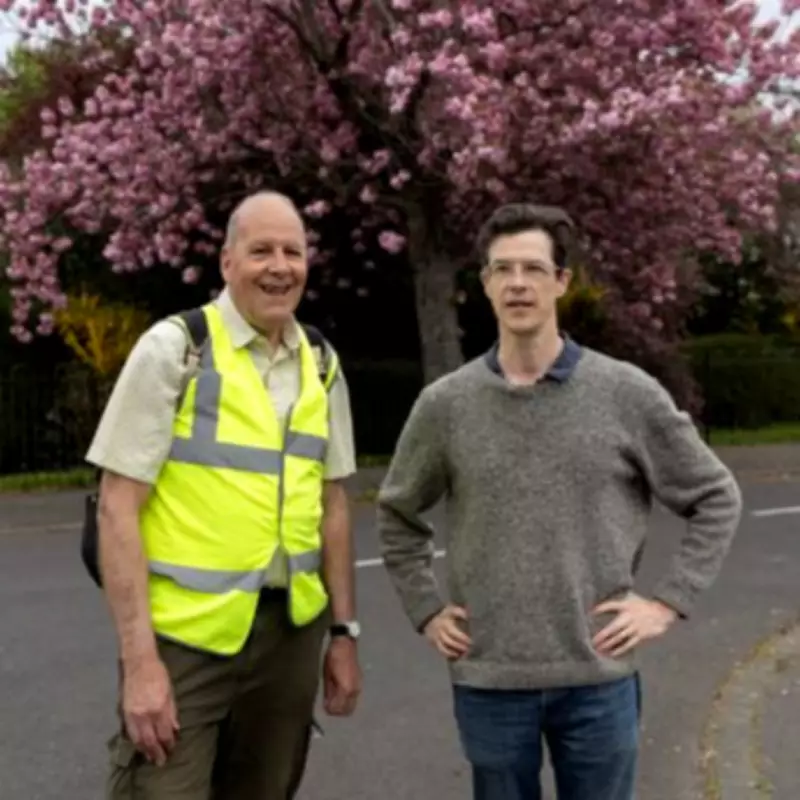
Matthew Richards, a local resident, described the situation as hypocritical, noting that while the council campaigns against fly-tipping and imposes £1,000 fines on offenders, they appear to be creating similar problems through their own operations. "They can't plead ignorance because we've been pointing this out for a long time," Richards told reporters, emphasizing that this is not an isolated incident but a persistent pattern of neglect.
Council Response and Resident Frustration
A spokesperson for Lewisham Council acknowledged awareness of the issue and stated they are responding to residents' concerns. The council claims their staff avoid placing bags on Woodyates Road where possible and ensure bags are not left on streets for extended periods. However, they admitted that bags may still need temporary placement before collection, asking for resident patience in these instances.
Richards countered this response, pointing to what he calls a "lack of leadership" and management failure that has prevented resolution for years. He recounted a period when communication improved briefly, with a council representative acknowledging the problem and promising changes, only for the situation to deteriorate again in 2026 after that staff member apparently left the council.
"Now that it's restarted, the attitude seems to be clearly different and worse," Richards said. "They're now denying it's fly-tipping and the message seems to be more sort of, 'tough, you have to put up with it' which we obviously don't agree with."
Broader Context of Fly-Tipping in Lewisham
The local dispute occurs against a backdrop of increasing fly-tipping incidents across the borough. According to Department for Environment, Food and Rural Affairs data, Lewisham recorded 33,471 fly-tipping incidents in 2024/25, making it the third worst-affected London borough. Only Camden (36,216 incidents) and Croydon (53,268 incidents) reported higher numbers.
In response to this growing problem, Lewisham Council increased maximum fines for fly-tipping from £400 to £1,000 last year as part of a major crackdown. This makes residents' accusations particularly pointed, as they argue the council should be setting an example rather than contributing to the very problem they're trying to combat through enforcement.
Resident Perspectives and Potential Actions
David Ford, another Lee resident, offered a nuanced perspective, praising the hard work of street cleaners while criticizing the system that fails to support their efforts. "The street sweepers work their socks off, they're really, really good," Ford said. "They're dependent upon the people coming from the depot with their trucks to collect it."
With frustration mounting, residents are considering more drastic measures. Richards revealed that if the council fails to resolve the issue, residents may pursue a private prosecution against the authority. This potential legal action underscores the seriousness with which residents view what they consider to be environmental negligence and hypocrisy from their local government.
The council spokesperson encouraged Lee residents to contact them through their waste and recycling web page with any concerns, but residents remain skeptical about whether this will lead to meaningful change after years of unfulfilled promises and recurring problems.