
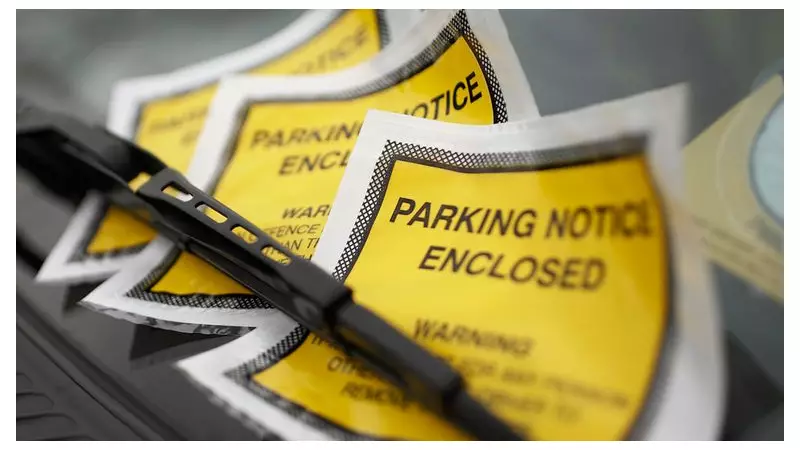
Have you ever received a parking fine despite genuinely paying for your stay? A recent case in Edinburgh shows that a simple typo on a parking app doesn't have to cost you £100. With the right approach, you can challenge the penalty and win.
The case of the costly typo
A former estate agency manager faced this exact dilemma after parking on Dublin Street in Edinburgh's New Town. He used the RingGo app to pay the £6 per hour charge, but entered the street code incorrectly. Even though he provided proof of payment, Edinburgh City Council rejected his initial appeal and upheld the Penalty Charge Notice (PCN).
He turned to consumer disputes expert Scott Dixon, known as The Complaints Resolver, for help. Dixon's advice was clear: escalate the matter as a formal complaint. "Mistakes happen, but councils and private parking operators are relentless and unforgiving," he noted. "They rarely show common sense - it's all about the money."
The legal leverage for your appeal
The successful challenge hinged on two powerful points. First, under the Equality Act 2010, service providers like councils have a duty to make reasonable adjustments for people with protected characteristics, including disabilities like dyslexia. Around 10% of the UK population, or 6.3 million people, are believed to be dyslexic, and they are not required to provide proof.
Second, guidance for Decriminalised Parking Enforcement (DPE) in Scotland, and similar rules for Civil Parking Enforcement (CPE) in England and Wales, state that enforcement must be "fair, reasonable and proportionate." Minor, foreseeable human errors where payment was clearly made should result in the fine being cancelled.
"In this case, he didn't deprive the council of any income; he simply made a keying error," Dixon emphasised.
How to fight your unfair parking ticket
The reader presented these arguments through the council's formal two-stage complaints procedure. The result? The complaints team accepted the payment, acknowledged the human error, and cancelled the fine, stating that failing to exercise discretion was not in the spirit of the law.
This principle applies across Britain. While the Equality Act 2010 covers Scotland, England, and Wales, Northern Ireland has similar duties under the Disability Discrimination Act 1995. Local authorities are generally risk-averse to accusations of discrimination.
If you find yourself in a similar situation, follow this process:
- Always follow the official appeals process first.
- If rejected, escalate to a formal complaint with the council.
- Cite the minor keying error and cross-reference the Equality Act 2010 and relevant parking enforcement guidance.
- Stress that the council was not deprived of revenue.
- Gather all evidence: photos, app screenshots, and bank statements.
In England, under the Traffic Management Act 2004, you have the right to take a rejected appeal to an independent adjudicator, such as the Traffic Penalty Tribunal. When doing so, select the ground stating "There has been a procedural impropriety by the authority," as failing to consider the Equality Act can constitute this.
The key takeaway is clear: if you paid to park and made a minor typo with your vehicle registration or street code, you have not committed an offence justifying a fine. Councils have the discretion to cancel such charges, and with a well-argued case, they often will.
Councillor Stephen Jenkinson, responsible for transport in Edinburgh, told the Money blog that parking enforcement is "essential for keeping Edinburgh moving" and income is reinvested. He encouraged anyone who believes they've been ticketed wrongly to report it via the council's website, adding: "Each case is considered individually on its own merits."




