
Vermont Dairy Industry Workers Confront Immigration Crackdown and Isolation
In the rural landscapes of northern Vermont, close to the US-Canada border, dairy farm workers are living under a shadow of fear and confinement. A dramatic tenfold increase in immigration detentions has fundamentally reshaped daily life for undocumented laborers in the state's $5.4 billion dairy industry. Many workers now barely leave the farms where they work, trapped by the escalating threat of arrest and deportation under the Trump administration's intensified enforcement policies.
A Life-Altering Raid at Pleasant Valley Farms
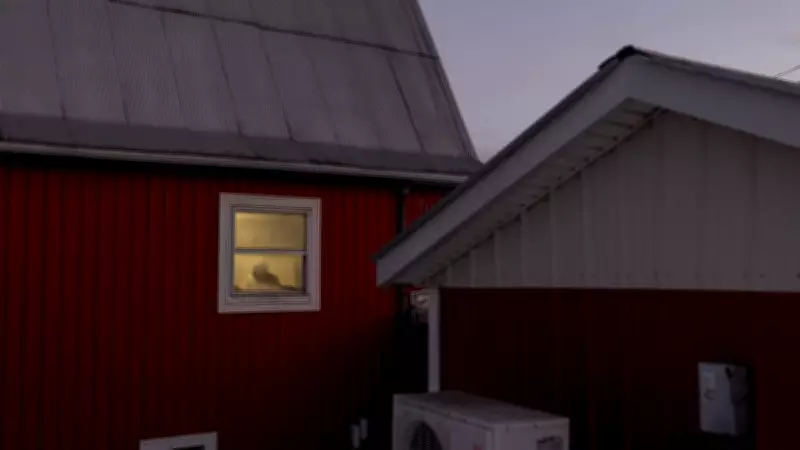
Last spring, José Edilberto Molina-Aguilar, a 37-year-old dairy worker from Chiapas, Mexico, was resting in his bedroom at Pleasant Valley Farms when a co-worker burst through the front door with alarming news. Through his window, Molina-Aguilar spotted the olive green uniforms of immigration enforcement officials who had pursued a worker onto the farm property. The farm manager instructed Molina-Aguilar and five co-workers to come outside, assuring them there wouldn't be problems.
US Customs and Border Protection officials questioned the men about their legal residency status. Molina-Aguilar held immigration paperwork showing he had applied for asylum when crossing the southern border over a year earlier. Despite this documentation, his paperwork was confiscated, and all six men were handcuffed, placed into federal vehicles, and driven off Vermont's largest dairy farm in Berkshire, just three miles from the Canadian border.
After more than a month of detention in Vermont and Texas facilities, Molina-Aguilar was released on a $10,000 bond. Six of his co-workers were deported to Mexico. This incident has been described by immigrant rights advocates as the largest single immigration arrest of farm workers in recent Vermont history. Vermont Governor Phil Scott responded by acknowledging that "migrant workers are an essential part of our communities," calling them "neighbors and friends." Pleasant Valley Farms declined to comment on the incident.
Escalating Detentions Create Climate of Fear
Immigration enforcement has transformed Vermont's dairy farms into sites of both employment and confinement. As federal arrests have surged, workers along the Vermont-Canada border describe a pervasive climate of fear that keeps them isolated on farm properties. Even brief trips for medical appointments or grocery shopping now feel dangerously risky.
Molina-Aguilar represents hundreds of dairy workers in Vermont whose lives have grown increasingly precarious during the second Trump administration. Immigration detentions in the state have soared dramatically: at least 107 immigrants were detained within Vermont in 2025, representing a more than tenfold increase compared to 2024, according to records maintained by Migrant Justice, a Vermont-based immigrant rights group. This number excludes individuals who illegally crossed the northern border or were arrested for criminal offenses.
Federal Response and Worker Perspectives
Hilton Beckham, assistant commissioner for Customs and Border Protection, claimed in a May statement that the April action at Pleasant Valley Farms was not a raid. She stated the agency was responding to a call from a concerned citizen. "This was not a special operation or a worksite enforcement operation," Beckham wrote. "However, when agents encounter individuals who are in the country illegally, they will take them into custody and determine their immigration disposition."
Teresa Mares, a University of Vermont anthropologist who works closely with immigrant farm workers, strongly disagreed with this characterization. "When you go on a farm and pick up as many people as you can, I don't know what else to call it," Mares said this summer, describing the incident unequivocally as a raid.
Regional Enforcement Context
Vermont exists within a northeastern pressure cooker of immigration enforcement. Half of New England's six states were included on a Justice Department list of jurisdictions that impede immigration enforcement. Connecticut, Rhode Island, and Vermont made the list, along with Boston and counties offering sanctuary protections. More than 1,400 people were arrested in neighboring Massachusetts during a September crackdown, while over 200 were detained during January's "Operation Catch of the Day" in Maine.
In March, three individuals were detained by Immigration and Customs Enforcement outside Burlington, Vermont's largest city, in an hours-long confrontation that drew hundreds of local protesters. While these represented more urban enforcement actions, at least 50 raids have occurred on farms, food production facilities, and restaurants across the United States since last June, including operations in California, Florida, New York, and Vermont, according to Civil Eats, an agriculture-focused publication.
Essential Workers in a Struggling Industry
"They play an essential role in the dairy industry," said Vermont's agriculture secretary, Anson Tebbetts, referring to farm workers without permanent legal status. "There's tremendous pressure, labor shortages and the demands on the industry." Vermont has lost hundreds of dairy farms while simultaneously scaling up production over the last decade, creating increased reliance on immigrant labor.
For many dairy workers along the border, the escalating risk of detention has effectively confined them to their farm properties. One Franklin County farm worker, who requested anonymity due to safety concerns, described seeing immigration enforcement vehicles regularly patrol near the concrete pillar marking the US-Canada border while cooking in his kitchen. "Before Trump, I left and visited friends, the store, and then things got harder, and I don't go out," he explained through a Migrant Justice interpreter last summer.
Personal Stories of Confinement and Resilience
Until November, this Franklin County worker hadn't left his farm for nearly two years, fearing detention by immigration officials. A severe toothache finally forced him to visit a dentist, passing a border patrol vehicle during the journey. "I was nervous," he admitted. "But that's just how it is. You feel scared."
The worker obtained his job through an uncle, who wired him money to pay a $20,000 coyote debt—the price some pay to cross the US border outside legal ports of entry. His journey to Vermont involved three days of walking and four nights sleeping under trees and bushes before arriving in Houston with a small group. They were loaded into the back of a truck and driven to the northeast stacked on top of each other.
Although it took a year to pay off his debt, in the three years since, he saved enough to purchase land in Mexico. He maintains contact with his youngest daughter, born after he left for the United States, communicating with her between work shifts.
The Milk With Dignity Program
This Franklin County worker is employed by a Milk With Dignity farm, part of a program created by Migrant Justice. Participating farms receive premium payments for their milk from corporations like Ben & Jerry's in exchange for improved living and working conditions for staff. While his bedroom remains tiny, he and his co-workers each have private space—a significant improvement over standard conditions. The six workers share a single bathroom, though Vermont's farm worker standards only require one bathroom for every ten people.
He earns $950 weekly—hundreds more than other farm workers interviewed for this story—and receives five vacation days annually plus a weekly rest day. When he developed an infected tooth, he used his weekly day off to visit the dentist, then took two paid sick days to recover. However, he rarely utilizes paid days off because leaving the farm feels too dangerous. On Thursdays, his designated rest day, he cooks for fellow workers, speaks with his two children in Mexico, and practices songs on a keyboard placed beside his closet-sized bedroom door.
Peril Beyond the Farm Gates
Even visiting farms has become perilous for immigrant workers and their supporters. This summer, José Ignacio "Nacho" De La Cruz, a 30-year-old former dairy worker, was delivering Mexican food like birria and pozole to farms in northern Vermont. While driving home on Route 105 in Richford with his 18-year-old stepdaughter, Heidi Perez, Customs and Border Protection agents stopped their vehicle, smashed their car window with a baton, and handcuffed them both without providing a reason for the arrest, according to De La Cruz and court documents.
A CBP spokesperson stated in an email that "the passengers refused to comply with lawful commands from the agents, which resulted in them being forcibly removed from the vehicle." Brett Stokes, De La Cruz's attorney (who also represents Molina-Aguilar), argued the stop constituted racial profiling because it was based on physical observations rather than suspicious behavior. CBP disputed this claim, with Paul Allen, a CBP deputy patrol agent, insisting from his Swanton, Vermont office that "they don't profile, no, they don't racially profile by any means."
Both De La Cruz and Perez alleged they were physically harmed and threatened during the stop and subsequent processing at CBP's Richford station. They paid a collective $14,000 bond through the Vermont Freedom Fund, an independent nonprofit established with support from Migrant Justice, and were released on July 11 and 12 respectively.
Broader Impacts and Legal Challenges
For a period following the incident, De La Cruz would find Perez crying in her room. She has since begun college, and the trauma has eased somewhat. De La Cruz served as a lifeline to farm workers, many of whom rarely leave their farm premises, providing not only Mexican food that reminded them of home but also connection to the outside world. He felt guilty about discontinuing his delivery service but hasn't returned to distributing food. "It's hard because people ask, 'Are you abandoning me?'" De La Cruz explained.
In March, federal agents detained De La Cruz over allegations of helping people cross the border and producing false documents. He pleaded not guilty and was released on a $5,000 bond, now facing up to fifteen years in prison if convicted.
An Uncertain Future
While milking cows and delivering calves, the Franklin County farm worker dreams of the house he's building in Mexico with money sent home. It's a regal, one-story rancho with deep purple walls and arched entryways. Paintings of grape vines climb three white pillars at the front. From thousands of miles away, he coordinated the planting of nearly 4,000 coffee plants around his property so he can manage the small farm upon returning.
Dairy workers often remain in Vermont longer than initially intended, according to Will Lambek, a Migrant Justice staff member. While many hope to stay just a few years, save money, and return to their families, the wages prove difficult to abandon. Additionally, crossing the border to return home has grown increasingly challenging, transforming what was once a circular journey into a far more linear, uncertain path.
"After another year or a year and a half, then I will return to my town," the farm worker said in October. "This is the plan and the goal that we have, but maybe it will take more time, I don't know."
Molina-Aguilar's Ongoing Struggle
Molina-Aguilar now faces limited options. He's one of nearly 180,000 people across the United States wearing an ICE ankle monitor as of February, according to TRAC, a Syracuse, New York-based data tracking center. The bulky device proves uncomfortable, forcing him to wear a sneaker rather than the muck boots typically used for farm work.
His removal proceedings will continue in the Chelmsford, Massachusetts immigration court. Next, the court will formally consider his asylum application. Asylum provides protection for individuals fleeing to the US who fear persecution or face danger returning to their home country. Over the last year, asylum approval rates have been cut in half. "The Trump administration has done a lot to make it all the more difficult for people seeking asylum," Stokes noted. Regarding Molina-Aguilar's case, he added, "It's a tough road ahead, but it's certainly worth it."
Molina-Aguilar fled Chiapas, Mexico, where organized crime was rampant and he feared forced recruitment into gangs. He had scheduled an appointment with the Vermont Asylum Assistance Project to apply for asylum just days after his detention last year. "I was scared they were going to send me back to my country," Molina-Aguilar said in July. "I had to leave there, and I didn't want to go back."
He continues working at a Franklin County dairy, earning $12.50 hourly while awaiting his court case resolution. Molina-Aguilar misses Mexico, including his 13-year-old daughter who discusses math homework and soccer with him. During time off, he plays soccer with co-workers on the farm. Recently, they relocated their playing field farther from the main road, well out of sight of immigration agents who might cruise by.
This story was co-published and supported by the journalism nonprofit the Economic Hardship Reporting Project. Anna Watts interpreted and contributed reporting.




