
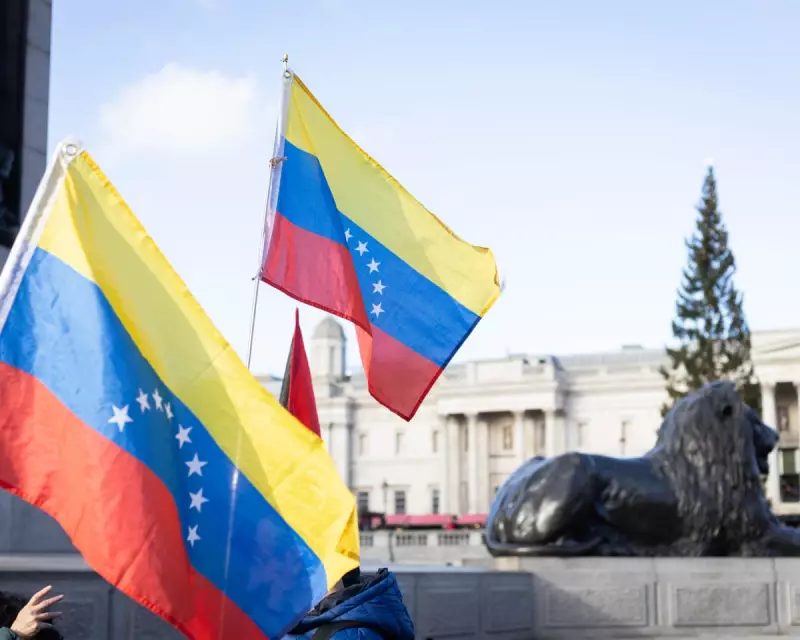
The dramatic capture of Venezuelan President Nicolás Maduro by United States forces has sent shockwaves through Britain's Venezuelan community, sparking a complex mix of relief, fear, and profound unease about the future of their homeland.
A Community's Mixed Emotions
For Cinzia de Santis, chair and founder of the UK-based charity Healing Venezuela, the news prompted conflicting feelings. "My first reaction was he’s gone, which is kind of good news," she admitted. The 69-year-old, who has lived in Britain for 22 years, described the oppressive system built on "fear, hunger, tortures, repression" that is now collapsing.
However, the method of Maduro's removal—a US military operation in Caracas with dubious legal authority—caused her deep concern. "No one who loves their country is happy to see foreign troops on its land. War and invasions are always a tragedy," she stated. Yet, she concluded, "it’s also impossible not to feel relief."
From Forced Exile to Cautious Hope
De Santis's own journey to the UK was a form of forced exile. Her name appeared on the infamous Tascón List in 2004, a register of those who signed a petition for a recall referendum against the late President Hugo Chávez. The list was later used to bar signatories from state employment and benefits. "I wanted to stay," she recalled, describing a life where her daughter went to school with an emergency kit containing food, water, and pills in case of teargas attacks.
She is part of a growing diaspora. The 2021 census recorded over 21,000 Venezuelan-born residents in Britain. The community is now closely watching events, with De Santis expressing a shared sentiment: "We’re all very shaken and very moved. I hope this next chapter is going to be peaceful."
Humanitarian Crisis Overshadows Legal Debate
For many, the staggering humanitarian catastrophe in Venezuela contextualises the shocking political event. Under Maduro's 12-year rule, nearly eight million Venezuelans—a quarter of the population—have fled the country, creating the largest displacement crisis in Latin American history, surpassing even Syria.
Dr Alejandro Arenas-Pinto, 55, articulated this difficult balance. "I think it’s very difficult to justify the methods," he said, "but it’s very clear to me that the humanitarian crisis... makes people believe that perhaps this activity from a foreign government is justifiable." He has been in touch with family in Venezuela who are "still reeling."
He fears the instability that often follows such interventions, pointing to the fates of Iraq, Libya, and Syria. "The humanitarian crisis is likely to get worse. Casualties... can be measured in lives," he warned.
Breaking a Status Quo Built on Repression
Others within the community focus on the nature of the regime that has been removed. Domingo Lapadula, 58, acknowledged concerns about the US breaking international "rules of engagement" but expressed "some happiness that the status quo has broken."
He reframed the event not as the invasion of a country, but the removal of "a regime that has somehow kidnapped the country." He noted the apparent lack of military resistance to the US operation as an indicator of Maduro's diminished support.
Maduro had extended his rule despite widespread allegations of electoral fraud in the 2024 presidential vote. Arenas-Pinto reflected on the failure of democratic avenues: "For many years, there have been a lot of people incarcerated for political reasons... They failed mostly because the repression from the government has been brutal."
As the initial shock subsides, Britain's Venezuelan community is united in its hope for a peaceful and prosperous future for Venezuela, but remains deeply divided and anxious about the unprecedented and violent means by which this new chapter has begun.




