
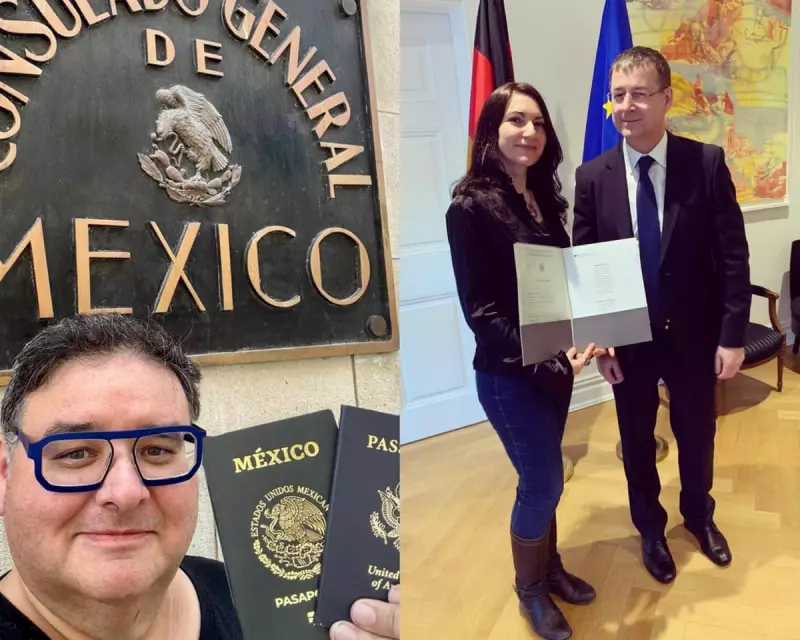
American families who hold passports from more than one country are confronting a wave of uncertainty as former President Donald Trump proposes a significant shift in how the United States views dual citizenship. The potential policy changes, which could be implemented if Trump wins the 2024 presidential election, have sent ripples of concern through expatriate communities and binational families worldwide.
The Proposed Policy Shift and Its Legal Basis
Central to the discussion is a reinterpretation of the 14th Amendment to the US Constitution, specifically the clause that states "all persons born or naturalized in the United States, and subject to the jurisdiction thereof, are citizens of the United States." Trump and his advisers have indicated they may seek to challenge the long-standing interpretation of "subject to the jurisdiction thereof." Their argument posits that children born in the US to parents who are not citizens or permanent residents should not be granted automatic citizenship, a move that would fundamentally alter the principle of birthright citizenship.
While the primary focus has been on children of undocumented migrants, legal experts warn that the ambiguity of such a policy shift could create collateral damage. Families where one parent is a US citizen and the other holds another nationality, or where American citizens have obtained a second passport, could find themselves in a newly precarious position. The policy could be extended to scrutinise the citizenship status of those who voluntarily acquire and use another country's citizenship, potentially viewing it as a dilution of primary allegiance to the United States.
Immediate Impact on US-UK Binational Families
For the significant number of families spanning the Atlantic between the United States and the United Kingdom, the proposals are causing deep anxiety. Many such families have structured their lives around the rights conferred by dual nationality, facilitating travel, work, and property ownership in both countries. A change in the US stance could disrupt education plans, career trajectories, and even family unity.
Sarah Bennett, a London-based mother of two who holds both US and British passports, expressed her worry. "My children were born in the UK but are US citizens through me. We travel to the States every summer to see family. The idea that their right to that citizenship could be questioned, or that my own status could be complicated because I also use my British passport, is terrifying," she said. Her sentiment is echoed by numerous families in major UK cities like London, Edinburgh, and Manchester, where large American expatriate communities reside.
Broader Consequences and Diplomatic Friction
The ramifications extend beyond individual family concerns into the realm of international relations and diplomacy. The United Kingdom, along with many other allied nations like Canada, Australia, and EU member states, recognises and permits dual citizenship. A unilateral move by the US to delegitimise or penalise the practice could create unprecedented bureaucratic and legal conflicts.
Individuals could be forced into impossible choices between their nationalities, potentially severing deep cultural and economic ties. Furthermore, such a policy might discourage skilled migration and investment, as globally mobile professionals often rely on dual citizenship for stability. The potential for a spike in complex legal cases is high, as individuals challenge any revocation or questioning of their status in the courts.
As the 2024 election campaign intensifies, the topic of citizenship and national identity remains a potent political tool. For the hundreds of thousands of Americans living abroad and the families connected to them, the outcome will have very real and personal consequences. The proposed crackdown on dual citizenship under a potential second Trump term represents not just a shift in immigration policy, but a redefinition of what it means to be American in an interconnected world.




