
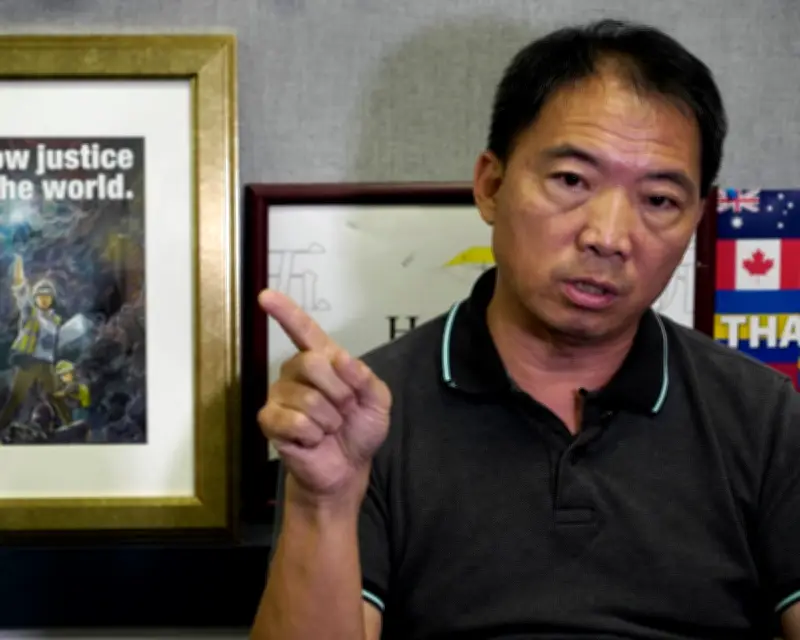
Britain promised to protect Hongkongers from China, but now seems ready to sacrifice them, according to pro-democracy activist and former Hong Kong legislator Nathan Law. In an opinion piece, Law argues that the UK government is not living up to expectations in making political dissidents feel safe, despite having specific units to counter transnational repression.
Real threats and immigration obstacles
Law highlights that Hongkongers have received threats from the Chinese regime, including threatening letters, deepfaked sexual content, and family members being questioned and arrested in Hong Kong. Many have used the British National (Overseas) visa route, opened on 31 January 2021, which has granted over 230,000 visas. However, high-profile critics of China are now facing obstacles in the UK immigration system, casting doubt on the government's commitment.
Cases of delayed approvals
In May, Chloe Cheung, who has a HK$1 million (£100,000) bounty from Hong Kong authorities, applied for indefinite leave to remain. The Home Office withheld approval while approving her family's applications, asking her to explain her 'criminality'—a term that echoes Beijing's characterization of political dissent. After public backlash and parliamentary pressure, her leave was granted.
Finn Lau, also with a bounty, applied for citizenship in June 2025. The Home Office spent over eight months assessing his 'good character,' exceeding the six-month target for 95% of applications. His application was approved only after public campaigns.
Wu Chi-wai's detention at Heathrow
Law describes the case of Wu Chi-wai, 63, former chair of Hong Kong's Democratic party and an elected legislator for eight years, who was jailed for over five years for safeguarding Hong Kong's freedom. After serving his sentence, he flew to the UK, where his family has settled. The British consulate in Hong Kong had told him he could apply for a BN(O) visa once inside the UK.
At Heathrow, Wu was refused entry, his passport confiscated, and told he would be removed to Hong Kong within seven days. The Home Office called it an administrative issue and suggested it was not a personal visit but an asylum bid. Only after media coverage was his stay extended to six months with his family.
Call for humanity and promise-keeping
Law questions the humanity of the situation, noting that Wu had done nothing wrong—he did not enter illegally or lie about his intentions. His political persecution should be a reason to help, not a barrier. Law urges the UK to remove unjustifiable hurdles for persecuted Hongkongers, emphasizing that Britain's promise of humanitarian assistance should not be compromised for warmer relations with China.




