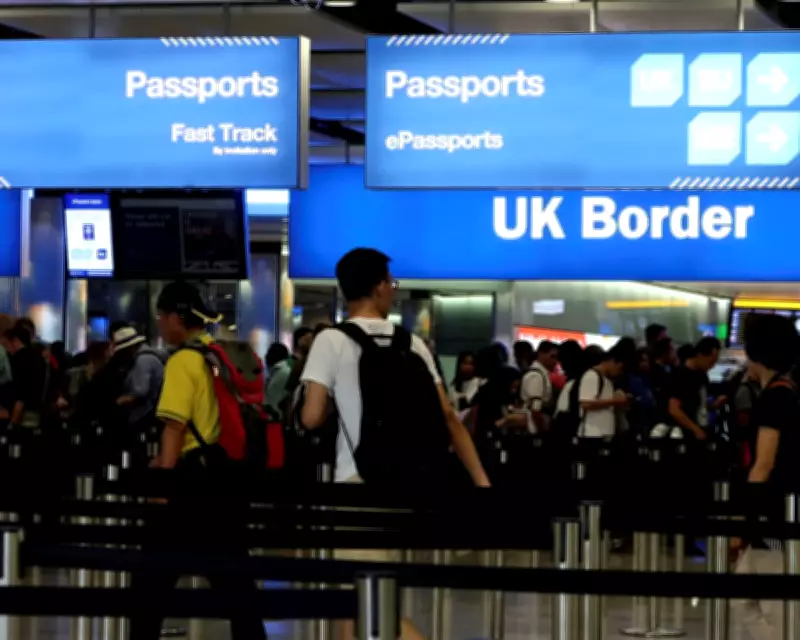
New UK Border Rules Spark Outrage Among Dual Nationals Abroad
British dual nationals living overseas are expressing profound anger and distress over new border regulations that could prevent them from entering the United Kingdom. The controversial rules, which become effective on February 25, mandate that all dual British citizens must present either a valid British passport or a costly certificate of entitlement when traveling to the UK.
Stricter Requirements Catch Many by Surprise
The policy change has blindsided approximately 1.2 million British citizens residing abroad, who now face the prospect of being denied boarding on flights, ferries, or trains if they attempt to enter the UK using their non-British passport alone. The certificate of entitlement, which serves as proof of British citizenship, carries a substantial fee of £589, creating significant financial barriers for many affected individuals.
Some dual nationals have declared they may cease visiting the UK entirely or even renounce their British citizenship in response to what they perceive as unfair and discriminatory treatment. The Home Office has defended the policy, stating it aligns with practices in other nations like the United States, Canada, and Australia, and is necessary for carriers to verify citizenship status.
Personal Stories Highlight Widespread Frustration
Sandra, 78, a former civil servant who has lived in Australia for five decades, expressed her disgust at the bureaucratic hurdles she now faces. Having not held a British passport since the 1980s, she must navigate complex paperwork as a first-time applicant, including obtaining her long birth certificate and full marriage certificate from her deceased ex-husband. "I'm 78 and all this bullshit for one last trip home is ridiculous," she stated angrily.
John, a British-born man now living permanently in France with his French wife and dual-citizen daughter, faces paying £1,178 for certificates for himself and his daughter. "I am not paying £1,178 to the UK government for us to visit family," he declared. "So there is only one solution: renounce our British citizenship. Is this really what the government wants?"
Jacqueline Ossig, 79, who has resided in Germany since 1968 and became a German citizen over thirty years ago, feels betrayed by her own country. Planning what might be her final visit to London to see her childhood area, she now confronts a £589 fee that her German husband doesn't face. "I feel I have been shut out of my own country," she lamented. "This coming on top of never having been allowed to vote. In my opinion this is insulting, scandalous and unacceptable."
Logistical Challenges Compound the Problem
Margaret, living in France, described the passport renewal process as "insurmountable red tape" after her British passport expired. The requirement to travel to Paris for document translation by an official translator proved impossible, causing her to lose €120 in fees. The digital certificate of entitlement presents additional obstacles, demanding biometric appointments in distant cities like Paris or Marseille with no regional centers within 300 kilometers of her home. "I will therefore not be applying and have decided not to travel back to the UK again," she resolved.
Rachel fears her son and grandson from Australia may miss their Easter visit because her son's passport has lapsed and her grandson faces delays with a new application. "My husband and I are elderly and unable to travel to Australia and so we cherish their annual visits to the UK," she shared, highlighting how the rules disrupt family connections.
Broader Implications and Official Response
Campaigners have criticized the new regulations as particularly discriminatory against women, who may face greater difficulties obtaining necessary documentation due to name changes or lost records. The policy has also raised concerns about accessibility for elderly citizens and those with limited mobility who cannot easily travel to distant application centers.
A Home Office spokesperson reiterated the government's position, emphasizing that without proper documentation, carriers cannot verify British citizenship, potentially leading to travel delays or refused boarding. The requirement applies uniformly to all British citizens regardless of other nationalities, mirroring international standards.
As the February 25 implementation date approaches, many dual nationals continue to voice their frustration, with some contemplating the drastic step of relinquishing their British citizenship entirely rather than navigating what they view as an unjust and burdensome system.