
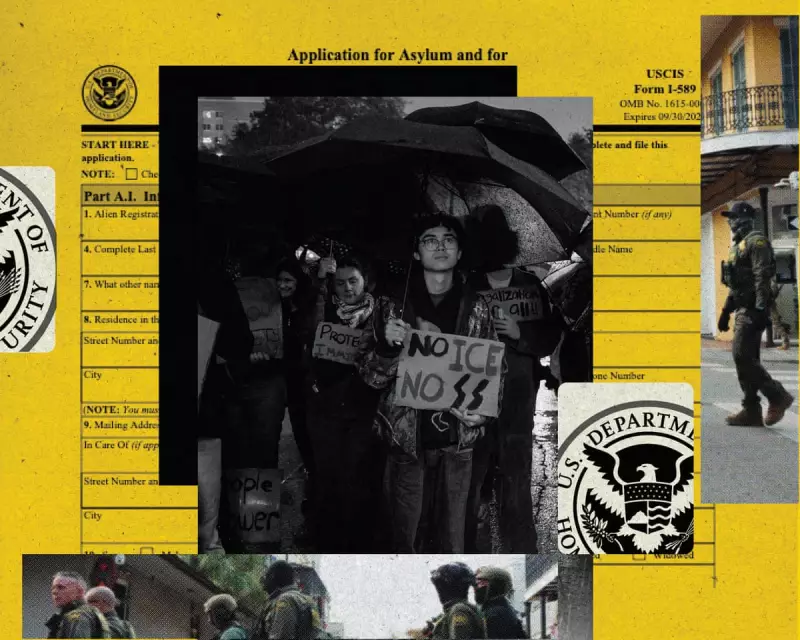
Any lingering belief that President Donald Trump's hardline immigration rhetoric would remain just talk has been decisively shattered in recent days. A tragic shooting incident has catalysed an extraordinary escalation in policy and vitriol, directly targeting immigrant communities across the United States.
A Shooting Ignites a Firestorm of Rhetoric
The catalyst was a violent attack on 26 November 2025, the eve of Thanksgiving. A lone gunman shot two West Virginia national guardsmembers, Sarah Beckstrom, 20, and Andrew Wolfe, 24, as they patrolled outside Washington DC's Farragut West metro station. Beckstrom tragically died from her injuries the following day, while Wolfe remains in recovery from critical wounds.
However, President Trump's focus swiftly shifted from the fates of the guards he had deployed to combat a perceived crime wave, to the origins of the suspected assailant. The man charged with murder is Rahmanullah Lakanwal, 29, a recent immigrant from Afghanistan. Lakanwal had served with a CIA-linked Afghan force before arriving in the US in 2021 under a resettlement programme created by the Biden administration. He was granted asylum by Trump's own administration this year after vetting, but is reported to have faced acute mental health problems.
From Rhetoric to Policy: A Sweeping Pledge and Racist Outbursts
On Thanksgiving Day, Trump issued a social media statement devoid of sympathy for the guards or gratitude to Afghan allies. Instead, he vowed to "permanently pause migration from all Third World Countries", terminate millions of "Biden illegal admissions", and remove anyone not deemed a "net asset". He further pledged to denaturalise citizens who "undermine domestic tranquility" and deport "foreign nationals" considered incompatible with "Western Civilization".
This was followed by a series of explicitly racist diatribes. Trump turned his focus to the US Somali community, concentrated in Minnesota. In a cabinet meeting, he referred to Somalians and Congresswoman Ilhan Omar as "garbage", stating, "I don't want them in our country... Let them go back to where they came from." Shamefully, his cabinet members applauded the outburst.
Stephen Miller, the White House deputy chief of staff and architect of Trump's immigration agenda, defended the approach, framing mass migration as importing failed societies. "No magic transformation occurs when failed states cross borders," he wrote, rebutting claims of collective punishment.
Tangible Fear and Escalating Enforcement
The impact of this rhetoric has been immediate and chilling. Larry Jacobs, a political professor at the University of Minnesota, reported Somalis are now afraid to leave their homes, attend school, or go to work, fearing abduction by Immigration and Customs Enforcement (ICE).
ICE actions have intensified. Operation Catahoula Crunch launched in New Orleans with a target of 5,000 arrests, following similar crackdowns in Chicago and Los Angeles. Local leaders warned such targets would necessitate arresting people without criminal records. Raids also hit Minneapolis and St Paul.
Homeland Security Secretary Kristi Noem announced a recommended "full travel ban" on 32 unspecified countries, a move far exceeding Trump's first-term Muslim ban. The fallout is already affecting legal residents, with reports of green card holders having their naturalisation appointments cancelled.
Legal experts like Amanda Frost, a law professor at the University of Virginia, argue aspects of the crackdown are illegal, noting presidential authority to suspend entry does not extend to cancelling green cards or denaturalising citizens based on origin alone.
Former Republican congressman Joe Walsh, now a Democrat, suggests Trump's escalating demagoguery is a response to sinking approval ratings and recent GOP election defeats. "What they're going to do is get uglier and uglier and more racist to appeal to their base," he warned, calling it a "very scary moment" that incites violence against immigrants.




