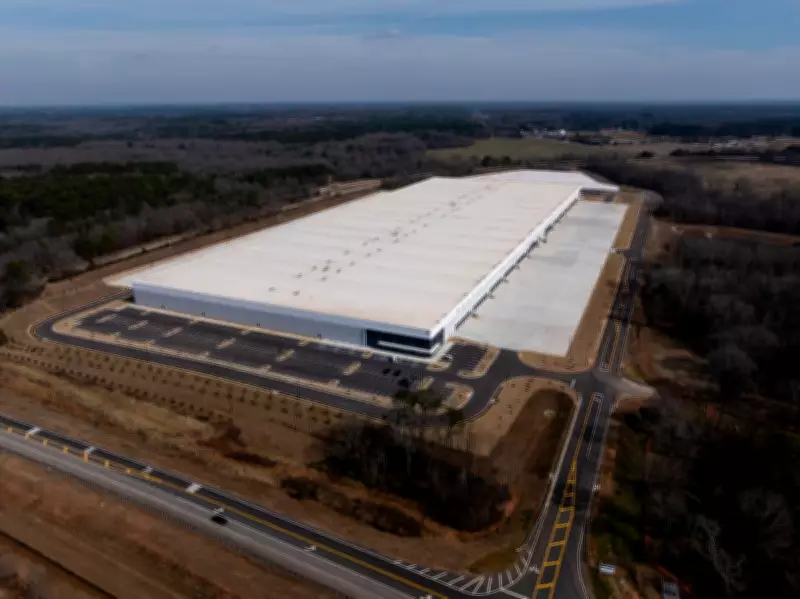
Trump Administration Converts Warehouses into Vast Immigrant Detention Camps
The Trump administration is aggressively expanding its immigration enforcement by purchasing and converting massive warehouses into detention camps across the United States. These facilities, some capable of holding up to 9,000 people, are being acquired with billions in congressional funding, raising alarms about human rights abuses and inhumane conditions.
Massive Warehouse Purchases for Detention
In recent months, Immigration and Customs Enforcement (ICE) has spent hundreds of millions of dollars on industrial warehouses in states like Arizona, Texas, Pennsylvania, and Maryland. For instance, a $70 million building in Surprise, Arizona, spans the size of seven football fields, while a $102 million facility in Williamsport, Maryland, covers nearly 54 acres. These spaces, originally designed for storing goods, are drafty, difficult to heat, and ill-suited for human habitation, yet they are being repurposed to detain immigrants as part of a broader mass deportation agenda.
ICE currently incarcerates about 70,000 people nightly across 224 detention facilities, a number that has nearly doubled in the past year. With $45 billion in new funding from Congress, the agency aims to significantly increase this capacity. ICE Director Todd Lyons has likened the operation to "Amazon Prime, for human beings," highlighting the rapid and systematic approach to detention.
Inhumane Conditions and Lack of Oversight
Reports from existing detention centers paint a grim picture of widespread illness, abuse, and neglect. At facilities like the Krome detention center in Miami and the Dilley camp in Texas, immigrants, including children, face unsafe and unsanitary conditions. One detainee in California smuggled out a note describing cold temperatures, inadequate food, and constant sickness, stating, "We can’t see any grass or trees. We’re constantly sick."
The Department of Homeland Security (DHS) has actively limited oversight, refusing congressional access to camps and blocking reporters from full investigations. This secrecy has fueled concerns about what is being hidden, with critics arguing that ICE operates a network of concentration camps where immigrants are subjected to degrading treatment despite claims of "national detention standards."
Growing Resistance and Local Opposition
Communities near the newly purchased warehouses are organizing powerful protests to block the camps. In Maryland, Senator Chris Van Hollen joined demonstrations against a proposed Hagerstown facility, calling it part of a "cruel and inhumane immigration agenda." Similarly, Salt Lake City Mayor Erin Mendenhall warned warehouse owners that ICE use would violate local ordinances, denouncing enforcement operations as "utterly deplorable."
In Kansas City, a viral video of federal officers harassing a county legislator led to a six-year moratorium on detention facility approvals. Even some Republicans, like Oklahoma City Mayor David Holt and Senator Roger Wicker of Mississippi, have opposed the camps, citing economic strains and community backlash rather than humanitarian concerns. This resistance underscores a broader national rejection of the administration's policies.
Conclusion: A Test of American Values
The expansion of warehouse detention camps represents a significant escalation in the Trump administration's immigration strategy, with potential consequences of mass illness, abuse, and death. As local and national opposition grows, the fight against these facilities highlights a critical moment for American values, challenging the normalization of inhumane treatment and ethnic cleansing policies. The ongoing protests serve as a small ember of hope, demonstrating that many Americans refuse to remain silent in the face of injustice.