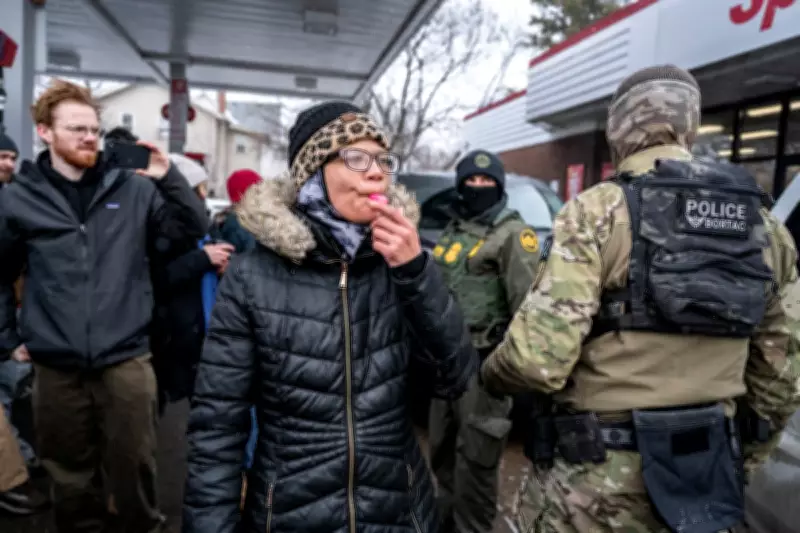
In a striking display of public dissent, widespread protests have erupted across the United States, characterized by the piercing sound of whistles and loud chants, as citizens voice their opposition to former President Donald Trump's immigration enforcement policies implemented by Immigration and Customs Enforcement (ICE). These demonstrations, which have drawn thousands of participants, underscore a deep-seated frustration with the administration's approach to immigration, sparking debates over civil liberties and human rights.
Escalating Tensions and Public Response
The protests, organized by various activist groups and community organizations, have taken place in major cities and towns, with participants using whistles as a symbolic tool to amplify their message. This tactic, reminiscent of historical protest movements, aims to disrupt the status quo and draw attention to what many perceive as harsh and inhumane ICE practices. The outcry reflects a broader societal divide on immigration issues, with critics arguing that the policies have led to family separations and increased deportations.
Impact on Communities and Political Landscape
Beyond the immediate demonstrations, the protests have had a tangible impact on local communities, fostering a sense of solidarity among immigrant populations and their allies. Political analysts note that this unrest could influence upcoming elections, as voters express their discontent through grassroots activism. The use of whistles, in particular, has become a rallying cry, symbolizing resistance and a call for policy reform.
As the situation continues to evolve, authorities are monitoring the protests closely, balancing public safety concerns with the right to peaceful assembly. The ongoing debate highlights the complex interplay between national security, immigration enforcement, and civil rights, with no clear resolution in sight. This article delves into the facts and implications of these events, providing a comprehensive overview of the current climate.