
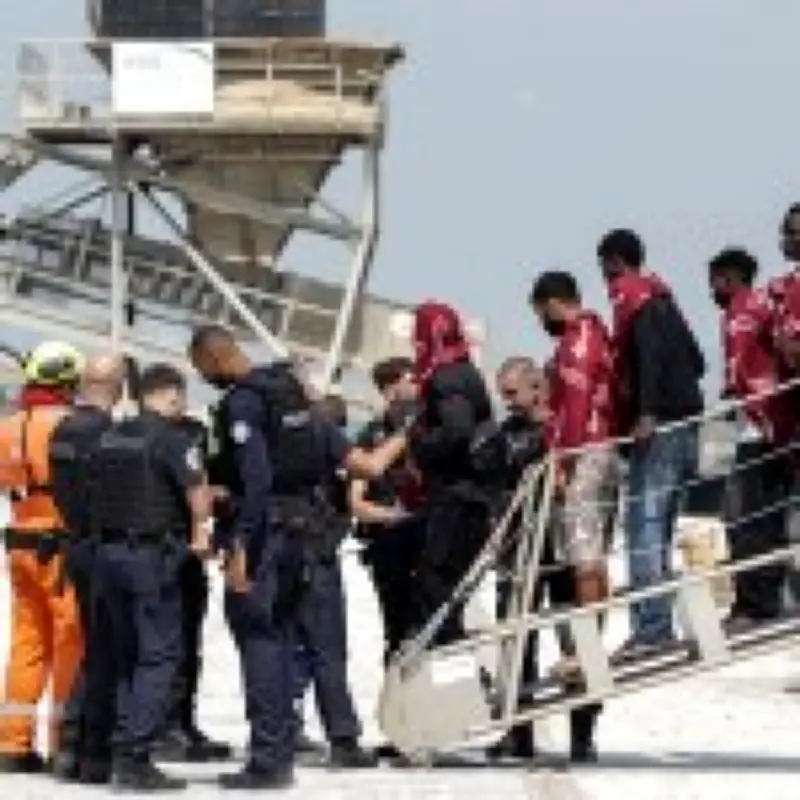
The number of people arriving in the UK via small boats across the English Channel has fallen by approximately 45% compared to the same period last year, according to recent data. This significant decline has shifted the political debate from how to reduce crossings to what is actually causing the reduction, with politicians and experts offering divergent explanations.
Political Reactions to the Decline
Shadow home secretary Chris Philp has attributed the drop to weather conditions, specifically increased wave heights in the Channel, rather than government action. Speaking to BBC Breakfast, Philp cited a fishing boat skipper, stating: 'The reason the numbers are down is because of the increased wave height in the Channel, it's not because of the action the government has taken.'
In contrast, Andy Burnham, the current prime minister, argued that government measures such as engine seizures and arrests of smugglers are making a difference, though he acknowledged his administration is 'not complacent.' Nigel Farage, leader of Reform UK, downplayed the significance of lower numbers, warning that 'it only takes one or two Iranian terrorists to come into Britain and commit a mass atrocity for this to be a disaster.'
Expert Analysis: A Complex Picture
Dr Mihnea Cuibus, a senior researcher at Oxford University's Migration Observatory, who specializes in unauthorised migration, told Metro that pinpointing a single cause is impossible. 'We're never going to be able to point to an exact reason, simply because essentially we have one set of numbers and we have a very large set of factors that all operate at the same time,' he explained.
The 14,531 people who have arrived on small boats this year each have unique circumstances influencing their decision to leave, their ability to secure a place on a vessel, and whether their journey was intercepted. Dr Cuibus noted that government policies, such as cooperation with European police to disrupt smuggling networks and prevent launches from French beaches, may play a role. Simultaneously, developments in countries like Syria could reduce the number of people embarking on the dangerous journey, and EU agreements with neighbouring nations have also curbed migration flows into Europe.
Evidence from Vessel Sizes
One potential clue lies in the changing size of boats used by smugglers. In 2018 and 2019, boats typically carried 20 to 30 people, but now vessels carrying 80 to 90 are common, with one recent incident involving a dinghy carrying 157 people that capsized. Dr Cuibus suggested this could indicate that smugglers are 'struggling to secure enough boats and enough equipment,' though he cautioned that this is not definitive.
Weather Ruled Out
Despite Philp's claims, the Migration Observatory has identified weather as 'unlikely to have had a significant impact' on the numbers. This directly contradicts the shadow home secretary's assertion, adding another layer to the ongoing political wrangling over the issue.
As the debate continues, the complexity of migration dynamics ensures that no single factor can fully explain the decline, leaving room for continued disagreement among politicians and experts alike.




