
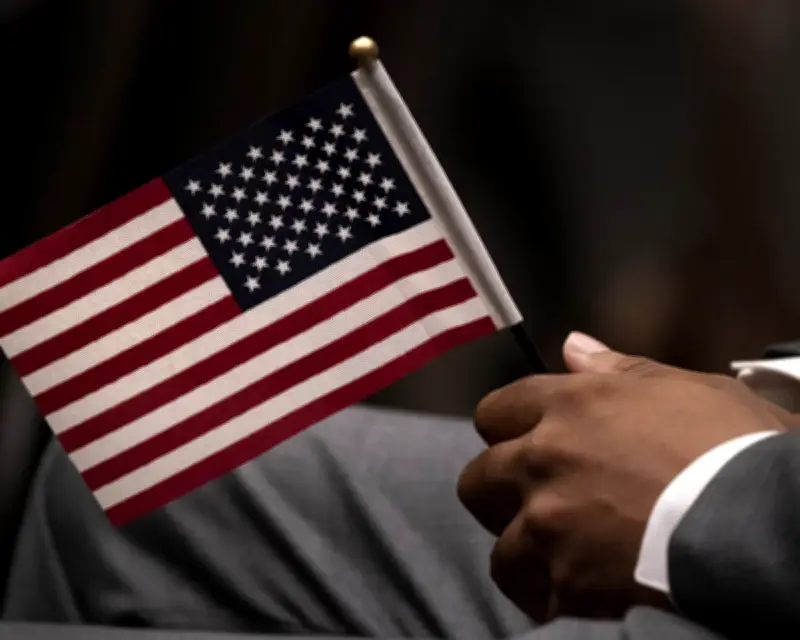
Lok Darjee, a former refugee from Bhutan who grew up in a Nepali camp, now a naturalized US citizen and journalist, reflects on his journey and what it means to love a country with profound contradictions. He argues that true patriotism is not about ignoring flaws but holding together the ideals and the reality.
From a refugee camp to America
In spring 2009, Darjee, then a child in a refugee camp in Nepal, saw his family's case number posted on a bamboo wall by the International Organization for Migration. Their destination: Cleveland, Ohio. He ran home shouting, 'We're going to Umerica.' His mother, who had buried four children and lost everything in Bhutan, saw both a new beginning and a painful departure from her past.
After two years of medical screenings and security interviews, the family was resettled not in Cleveland but in Twin Falls, Idaho—a small town Darjee had never heard of. More than 15 years later, he is a journalist covering immigration, including the death of a Rohingya refugee abandoned by US border patrol, mothers separated from their children, and the refugee program that brought his family nearly grinding to a halt.
Two Americas: kindness and contradiction
Darjee describes two Americas. The first: neighbors in Idaho who taught him to drive, change a tire, and apply for college, welcoming his family before they had anything to offer. Many later voted for Donald Trump, whose immigration policies Darjee now investigates. 'Holding those two truths together... has never been easy,' he writes. 'But democracy has never asked us to choose between honesty and grace. It asks us to practice both.'
The second America emerged through his reporting: volunteers and teachers opening doors, alongside government decisions separating families and turning refugees away. He cites America's history of slavery and recent politics of exclusion as examples of 'extraordinary compassion and profound contradiction.'
Patriotism as ongoing work
Darjee concludes that the measure of patriotism is not pretending the promise is fulfilled but continuing the work. 'This is my country, too,' he says, despite being told to 'go home.' He believes democracy depends on seeing fellow citizens as capable of growth. 'We preserve it by refusing to give up on one another.'
As the 75th anniversary of the 1951 refugee convention approaches, he hopes America remembers its capacity to welcome the stranger. 'Somewhere, another child is standing outside a refugee camp office... I hope that when they whisper the word “America”, even if they cannot yet pronounce it, they are still whispering the name of a country that believes impossible beginnings can become ordinary lives.'




