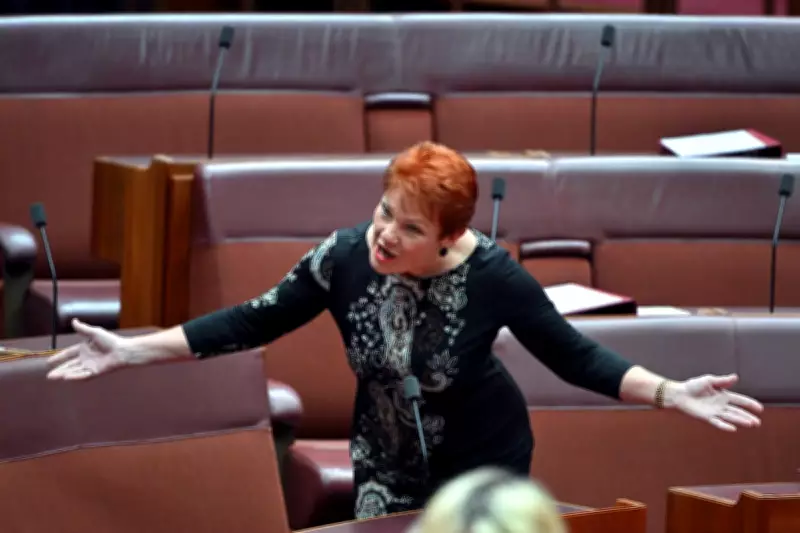
One Nation's Growing Influence Disrupts Australian Immigration Debate
The resurgence of Pauline Hanson's One Nation party in national opinion polls, with primary votes reaching as high as 26%, is significantly altering the political landscape in Australia. This rise coincides with an increase in anti-immigration rhetoric, which is now distorting policy discussions and threatening to lead the country down a contentious path.
Political Realignment Amidst Rising Tensions
With the next federal election approximately two years away, a notable realignment is unfolding within Parliament House. Following a challenging post-election period for the Liberals and Nationals, Angus Taylor has assumed leadership of the Coalition, injecting new energy into opposition efforts, particularly on economic issues. Meanwhile, Prime Minister Anthony Albanese, having surpassed John Curtin and Scott Morrison in tenure, continues to hold office after his 2025 re-election victory.
However, One Nation stands out as the primary disruptive force in contemporary Australian politics. Hanson, who will mark 30 years in politics next month, is demanding that her party be recognized as a mainstream political entity. Even if this surge in support proves temporary, her policies and divisive tactics are already skewing public discourse.
Hanson's Controversial Statements and Their Impact
In a manner reminiscent of Donald Trump, Hanson's most inflammatory remarks often dominate political conversations for days. She exhibits a shameless approach, interpreting even mild criticism as personal attacks. Recently, she made racist comments about Australia's Islamic community on Sky News, questioning the existence of "good Muslims" and refusing to offer a sincere apology unless certain conditions were met.
Despite her history of controversial statements, including warnings about Asian migrants in the 1990s and derogatory remarks about Indigenous Australians, mainstream political leaders have struggled to effectively counter her rhetoric. Prime Minister Albanese initially hesitated to label her comments as racist but later connected them to threats against Sydney's Lakemba mosque during Ramadan. Opposition leader Angus Taylor, while rejecting Hanson's claims, awkwardly cited examples of Muslims in his electorate who met One Nation's criteria, drawing criticism from figures like Jason Clare for potentially following a "racist rabbit hole."
Immigration Policy Distortions and Expert Analysis
One Nation's ascent in the polls is partly attributed to economic hardships faced by working Australians, but it also aligns with the party's escalating anti-immigration stance. James Ashby, a close adviser to Hanson, has advocated for policies such as blocking visas from up to 75 countries and pursuing "net zero migration," aiming to stabilize population growth. The party's published immigration policy includes proposals to deport 75,000 illegal migrants and reduce international arrivals by over 570,000, alongside measures to restrict skilled visa rorting and student visa loopholes.
Immigration policy expert Abul Rizvi provides a critical analysis of these proposals. He highlights the complexity and cost of deporting visa overstayers and dismisses the plan to cut arrivals as "nonsense," challenging One Nation to specify which categories would be affected. Rizvi is particularly scathing about the proposal to reintroduce temporary protection visas, calling it "complete crap" and labeling the overall policy as thought bubbles developed by racists.
Major Parties' Responses and Future Implications
In response to One Nation's influence, Labor has already begun reducing immigration, including cuts to international student numbers, while Taylor has started categorizing migrants into "good" and "bad" groups. The debate has also intersected with issues such as the government's refusal to assist Australian women and children linked to IS fighters in Syria, with Albanese citing his mother's wisdom to justify the stance.
If One Nation's rise persists leading up to the next election, major parties and the media will need to adjust their approach to Hanson and her supporters, including figures like Barnaby Joyce. Allowing her to dictate immigration policy could lead to significant failures, emphasizing the need for a more balanced and informed public discourse.