
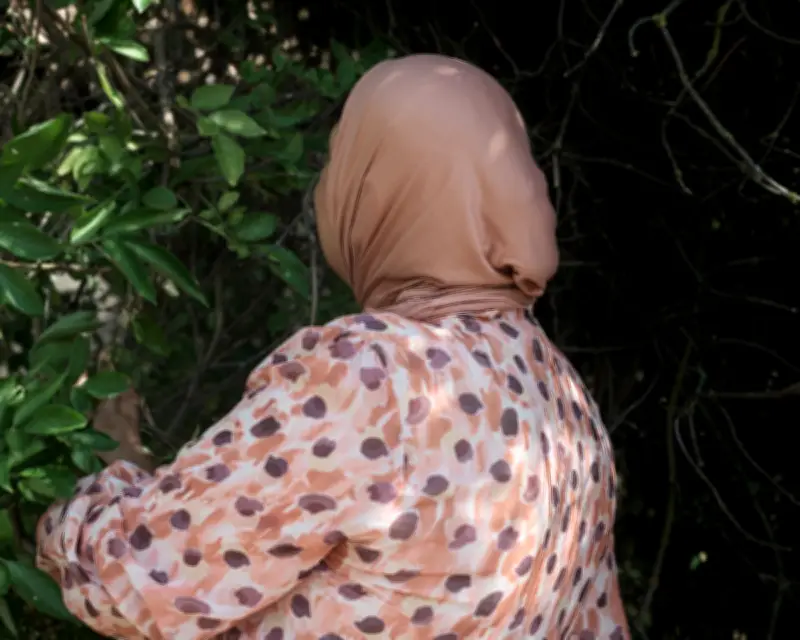
Woman forced to work 19-hour days without pay
Fatima, a 50-year-old Moroccan national, endured nearly two years of forced labour and abuse on a farm in the northwestern Spanish region of Castile and León, working up to 19 hours a day, seven days a week, without pay. She was housed in an unheated shack where night-time temperatures fell as low as –6°C (21°F), and was physically assaulted by the farm owners. Fatima was rescued in late 2023 after police received a tip-off and conducted a raid.
From seasonal worker to exploitation
Fatima first came to Spain as a seasonal agricultural worker in 2020, planning to pick strawberries and send money home to her husband and four children. When the pandemic led to the cancellation of her work visa, she stayed in Spain irregularly, taking unofficial jobs caring for children and the elderly, baking bread, and sewing shoes. Some employers paid her; others did not. She was vulnerable due to language barriers—she spoke little Spanish or Arabic, only Berber—and illiteracy, having been pulled out of school at age six to work on the family farm in Morocco.
The nightmare begins
Initially, Fatima stayed with her brother, but his wife worried about the risks of harbouring an undocumented person. Through him, she learned of a farm in Castile and León seeking a worker. At first, the family who owned the farm treated her and another Moroccan woman well, even helping in the fields. However, she never received a contract. For the first three months, she was paid €300 per month—far below the Spanish minimum wage of about €1,425. After that, payments stopped entirely, with the family citing the cost of securing her residency as the reason.
Abuse escalates after co-worker leaves
About 18 months into her employment, the other Moroccan woman obtained her papers and left. Fatima was left to do all the work alone: hauling animal feed, milking sheep, planting and harvesting. The son of the family, who had been sleeping with the other woman, began pressuring Fatima for sex and became violent when she refused. Both the son and his father physically assaulted her, hitting her and threatening worse. In one incident, the son ran over her foot with a tractor, saying, 'You deserve this' and 'I run this tractor over you and crush you.'
Squalid living conditions
Fatima lived in a shack without heating, electricity, or running water. She used a hose meant for livestock as a shower and a hole in the ground as a toilet. A small heater given to her by a Moroccan milk buyer was taken by the family. After she asked about her unpaid wages and residency status, the father and son smashed the windows and doors of the shack, leaving her sleeping 'on a mountain of ice.' She had no access to drinking water and only left the farm once every two weeks to go to a small supermarket, always accompanied by the owners, who warned her that any contact with police would result in deportation.
Rescue and recovery
In late 2023, police were tipped off about a woman being exploited on a sheep farm. After two months of investigation, anti-trafficking agents from Burgos and Valladolid, along with labour inspectors, raided the farm. They found Fatima living in appalling, unsanitary conditions without electricity. Three men were arrested on suspicion of human trafficking for labour exploitation; a trial is expected soon.
Rebuilding life with support
Since her rescue, Fatima has been helped by the Adoratrices, a Catholic religious order that supports victims of human trafficking. The organisation paid for her hostel stay, helped her find work and housing, and facilitated reunification with her children. Consuelo, head of Adoratrices in Burgos, said: 'When we met her, she was downcast, quiet and had this sad look on her face... Now she’s completely different. She enters a room and lights it up.' Fatima now has legal right to work in Spain and hopes to bring her family to live with her. She stated: 'I’m super-proud to have endured that. Now I’m happy and eager to start a new life.'




