
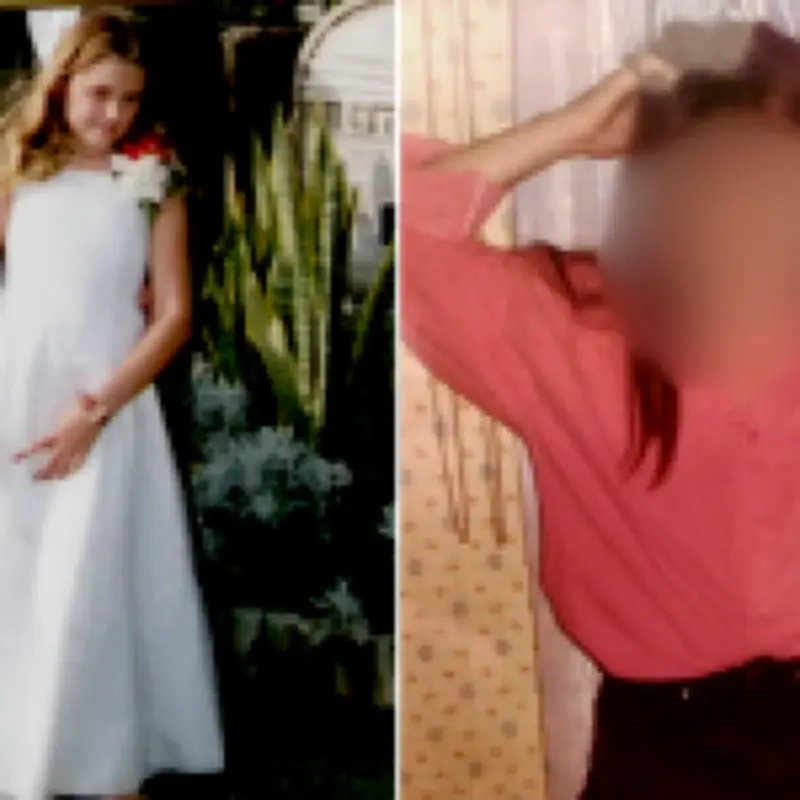
Katya Suvorova, now 33, grew up as the daughter of a mail-order bride. Her mother, Yulia, fled Moscow in 1997 with ties to the mafia, and after divorcing Katya's father, she submitted herself to a mail-order bride catalogue to escape Russia. Katya has now penned her experiences in her debut memoir Ungrateful Immigrant Daughter, available September 29.
In the 1990s, before the internet, mail-order bride services operated through printed magazines. Women would go to a brokerage and ask to be included in the magazine, and men could request the catalogue, flip through it, and ask for a woman's contact information, Katya explains to Metro. Some women even paid to have their photos placed towards the front of the catalogue to increase their chances of being chosen.
A childhood marked by instability and abuse
Katya's mother married several men in pursuit of a green card for permanent US residence. The first, Joe, answered her ad and promised to get her across the US border and arrange a marriage visa. But plans fell apart, and Katya suspects Joe never intended to apply for the green card.
Yulia then moved to Nevada and married Jerry in the late 1990s. Katya claims Jerry was abusive, locking her in cupboards when she cried. Her mother insisted they stay until they got their green cards, but it never happened. Katya describes this as dehumanising: 'He held it over our head and it didn't happen, so she decided we had to get out of there.'
After moving to Houston, Yulia placed another advert, this time saying 'I'm a Russian woman looking for a husband'. She found Chris, who was 'nice at first' but also refused to apply for their documents, so that marriage lasted about two years. Yulia then met Adam, the last ex-husband, who finally applied for their green card.
Green card process and power dynamics
In the US, marrying a citizen does not automatically grant a green card; the citizen must file an application on the bride's behalf, and the marriage must remain intact throughout the process. Katya notes that men often withhold the application to keep women undocumented and afraid. 'It's a power move, especially if they're not rich, and they hold it above women's heads,' she says.
Katya became documented through Adam, and she felt relief that her family wouldn't be separated. Her mother's marriage to Adam also ended, and Yulia has not remarried since. Katya no longer speaks to her mother, but she respects her: 'I feel very awed by her that she was able to take attraction out of the equation because she married some really disgusting-looking men.'
Changing perceptions of mail-order brides
Katya wants to challenge the stigma attached to mail-order brides. She grew up hearing people call her mother 'a Russian whore', but she argues that these women are often trying to escape bad situations. 'So what if a green card or visa is part of the attraction,' she says. 'I want people to treat these men who are buying these women with the same disdain they treat a woman who is trying to get out of a bad situation.'
Katya is now married to her partner of 14 years, and she reflects on the privilege her mother's sacrifice gave her: 'Because my mum made the decision to come here through a catalogue, I can marry for love. She gave me that privilege.'




