
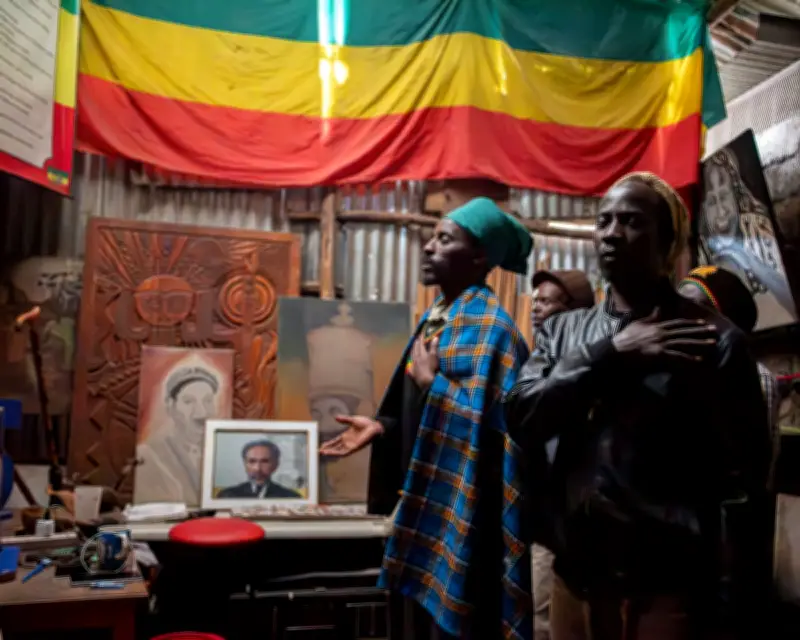
About a dozen members of the House of Nyabinghi, a major Rastafari denomination, gathered in a dimly lit room in Nairobi's Kibera neighborhood on 18 July, 2026, for their weekly 'groundation' – a communal meeting. For over an hour, they sang songs filled with references to Ethiopia, Jah, Zion, and Haile Selassie I, while the scent of marijuana filled the air. The gathering came just three days after Kenya's High Court dismissed a petition to decriminalize the use of cannabis for spiritual purposes, a decision that has galvanized the community to fight back.
Court Ruling and Appeal Plans
On 15 July, the court rejected a petition filed by the Rastafari Society of Kenya in 2021, which sought to exempt Rastafarians from arrest and prosecution for cultivating, possessing, and using marijuana as a sacrament. The court said the society failed to prove that the law unconstitutionally violated their rights. Ras Ndeto, 56, the spokesperson for the Rastafari Society of Kenya and a prophet in the faith, said the decision marginalizes followers. 'We still feel that we are a minority group in this country, because even our culture is still looked down upon,' he said. 'We are living like terrorists in our own country.' Ndeto confirmed plans to appeal to a higher court.
The Sacred Role of Marijuana
Marijuana, derived from the Cannabis sativa plant, is a sacrament in Rastafari. Believers say it induces a meditative state that deepens their connection with the divine. The movement, which emerged in the 1930s among marginalized Afro-Jamaican communities, centers on the belief that Haile Selassie I, the former Ethiopian emperor, is the messiah and God incarnate. It also views Black people as oppressed by 'Babylon,' a metaphor for Western capitalism and imperialism. In Kenya, the population of Rastafarians is unknown, but the faith gained legal recognition in 2019 when a court ruled it a protected religion after a student was expelled for wearing dreadlocks.
Community Voices and Global Context
Ras Orudi, 38, a herbalist who joined Rastafari in the mid-2000s inspired by reggae artists like Peter Tosh, said the community seeks integration, not rejection. 'Rastafarians are not rejecting the system,' he said. 'They are trying to integrate into the system while defending their rights.' Ras Dimo, 43, a priest who often leads prayers, added that the faith empowers Black people. 'I was inspired to know that Black people are not cursed as imperialists tried to make us think,' he said. Ras Masinde, 50, who began growing dreadlocks in the 1990s, urged a return to African roots: 'We fyah bun (denounce) colonialism and imperialism, and we say that every man and woman and child … is equal before the eyes of the almighty the creator.' He added a rallying call: 'Free up the herb. Free up the ganja seed.'
Global Decriminalization Efforts
Rastafarians worldwide are pushing for decriminalization. In 2023, Antigua and Barbuda approved allowing Rastafarians to grow cannabis and smoke marijuana. The Kenyan court's decision, however, means that for now, followers face legal risks for practicing their faith. The Rastafari Society of Kenya argues that the law violates rights to freedom of religion and equality, a claim the court did not accept. As the community prepares its appeal, they continue to gather, sing, and pray, holding onto their belief that their cause is just.




