
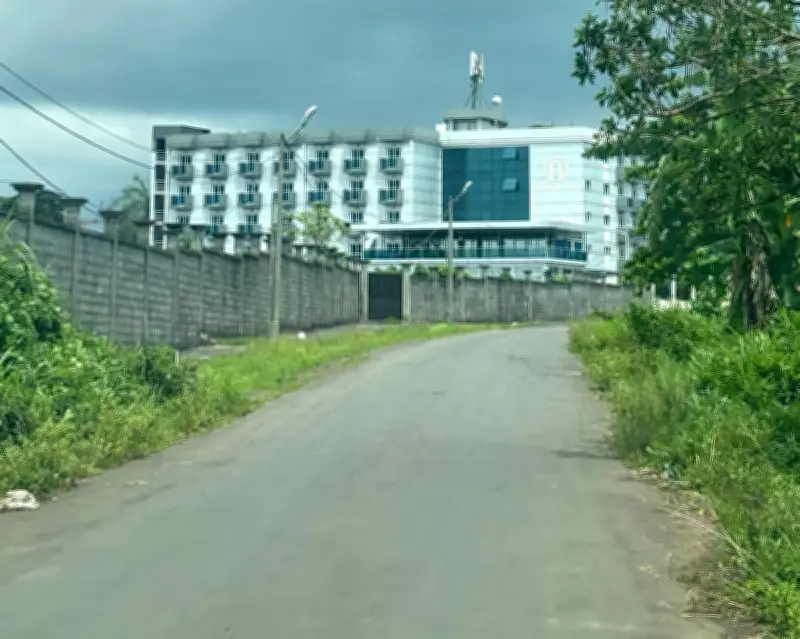
Inside the luxury hotel at the center of Trump’s deportation deal with Equatorial Guinea
At first glance, the Bamy hotel on the tropical island of Bioko appears like any other resort, with its palm tree-lined driveway, marble-floored foyer, and a portrait of the oil-rich country's president hanging behind a mahogany reception desk. Yet this hotel is not a haven for tourists. Since late last year, it has been converted into a detention center for asylum seekers deported from the United States under a secretive $7.5 million deal with the Trump administration.
Equatorial Guinea's president, Teodoro Obiang Nguema Mbasogo, has turned the hotel, owned by his family, into a prison for migrants. At least 32 people have been held there since November, all of whom had previously been granted protection by US judges, according to their lawyers. Of these, 25 have been forced to return to their home countries across Africa, where they face potential danger. The remaining individuals are under pressure to leave.
“Government people would come all the time and say, ‘Where is your passport? You need to go back to your own country,’” said a 26-year-old man from an east African country, speaking on condition of anonymity for fear of retaliation. The Trump administration uses deportations to third countries as a legal loophole to indirectly force asylum seekers back to their home countries, immigration lawyers say.
Equatorial Guinea, run by an authoritarian government, makes it difficult for foreign journalists to report on conditions there. The Associated Press (AP) visited the island during a recent trip by the first American pope and is the only international news organization to have entered the hotel detaining migrants.
Earlier this month, United Nations human rights experts issued a rare public appeal urging Equatorial Guinea to halt plans to return US deportees to their home countries, where they face political violence, torture, and death. The statement, co-signed by a representative of the African Commission on Human and Peoples’ Rights, adds diplomatic pressure on one of the world's most repressive regimes to comply with international human rights standards and avoid refoulement.
Trapped in a country many had never heard of before, men and women from Angola, Eritrea, Ethiopia, and Mauritania wander the hotel’s long corridors and gaze out at the shimmering pool they are not allowed to use. They have not faced physical abuse, but they feel intense psychological pressure knowing they are likely headed back to home countries they fear. “I am scared and depressed,” said the east African man, who believes he would be imprisoned or killed if forced to return due to his ethnicity and the fact he fled.
Under a series of murky and often secret agreements, the Trump administration has deported thousands of people to nearly two dozen countries that are not their own, according to advocates. These countries are mostly in the developing world, including roughly a dozen in Africa. Experts say countries accepting deportees may be doing so to earn goodwill in negotiations with the US over trade, migration, or aid. The Trump administration declined to comment on the details of its deal with Equatorial Guinea, but a State Department spokesperson said: “We remain unwavering in our commitment to end illegal and mass immigration.” The Obiang administration did not respond to a request for comment.
Representatives of the UN’s International Organization for Migration and its refugee agency visited the hotel in November and promised to return, but they have not done so.




