
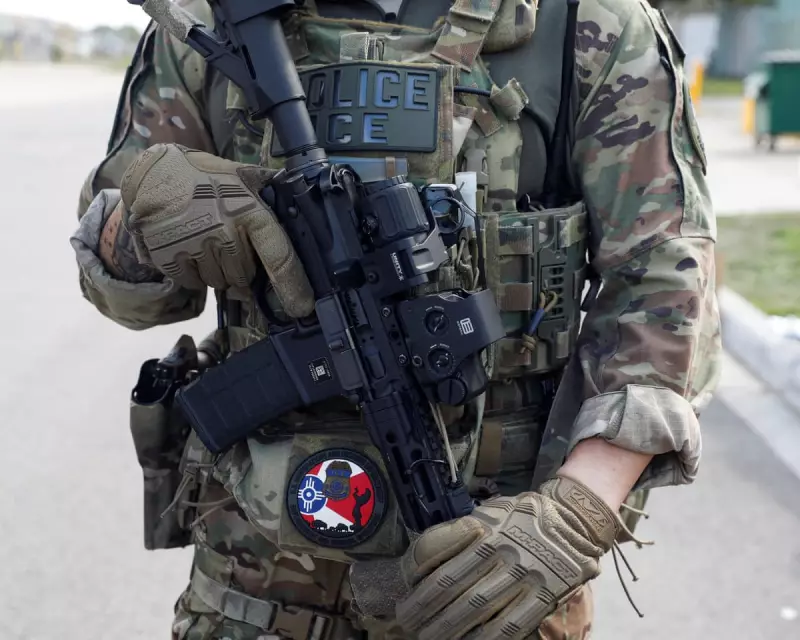
An elementary school principal in Chicago has delivered a powerful testimony of the fear gripping his students and their families during months of aggressive Immigration and Customs Enforcement (ICE) operations in the city.
The Lingering Shadow of Operation Midway Blitz
While the snow settles and the immediate intensity of Operation Midway Blitz has quieted, the psychological scars remain deeply etched within the community. For months, federal officers conducted what were described as targeted stings, but their effect was anything but precise. Principal Seth Lavin describes a city blanketed in apprehension, where parents who had been in hiding are only now tentatively emerging.
"Children holding their breath since September are beginning to exhale," Lavin writes, noting the temporary respite as Commander Gregory Bovino's strike force moved on. Yet the danger, he stresses, is merely displaced—shifting from Chicago to cities like Charlotte, New Orleans, and Minneapolis.
‘Targeted’ Operations and Childhood Trauma
Despite official rhetoric from the Department of Homeland Security framing the raids as targeting "the worst of the worst"—gang members and violent criminals—the reality in Chicago's schools tells a different story. Lavin recounts specific, harrowing incidents that reveal the human cost.
A third-grade boy stopped eating because he was terrified to type his lunch code, fearing ICE could trace it. In another school, agents entered the schoolyard during the day and detained a landscaper while lessons continued inside. Reports indicate that agents detained children, arrested US citizens, used chemical agents like teargas 49 times, and in one instance, shot a woman and killed a man.
"What does it feel like for your child to ask who cares for them if you are taken?" Lavin asks. He describes a student who barricaded his bedroom door nightly and a mother whose eyes filled with tears simply at the greeting, "How are you?"
A City’s Defiance and an Uncertain Future
Chicago, a city built by immigrants where one in five residents is foreign-born, has mounted significant resistance. The mayor and governor remained defiant, while community leaders and allies built a model of support through lawsuits, warning networks, and practical aid like grocery runs and school lifts.
However, Lavin refuses to offer false comfort. "You don’t tell a child ‘it’s OK’ when it isn’t, and it won’t be," he states. The appropriate response, he argues, is to acknowledge the awfulness, apologise, and commit to making things better.
The scale of the operation is stark: since September, over 4,000 people have been arrested in Chicago and nearby towns. Yet a report from early in the month identified only a fraction of those detained as having criminal arrests or convictions.
Reflecting on writer Nelson Algren's famous line about loving Chicago being like "loving a woman with a broken nose," Lavin now interprets it not as a comment on imperfection, but on resilience after violence. "That’s what this was... a fist thrown out. A beating," he writes. "But Chicago is still here." The long-term effect of this trauma on the city's children, however, remains a reckoning yet to come.




