Trump Administration's ICE Detains Five-Year-Old Boy in Minneapolis, Signalling Hardline Immigration Shift
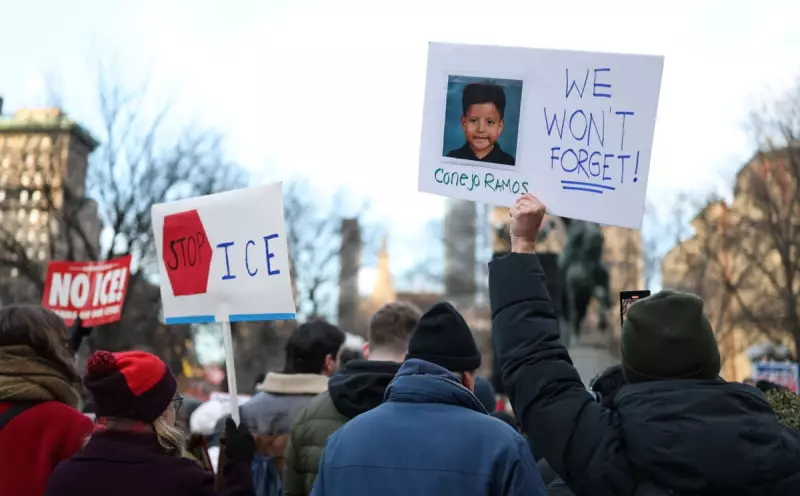
The detention of five-year-old Liam Conejo Ramos by Immigration and Customs Enforcement (ICE) officers in the Minneapolis suburb of Columbia Heights has sparked widespread outrage, becoming a stark symbol of the Trump administration's intensified immigration policies. Critics, including numerous local politicians, have condemned the incident as evidence that the administration's deportation efforts are increasingly focused on terrorising children and families rather than addressing criminal activity.
Details of the Incident and Broader Policy Context
According to a homeland security spokesperson, ICE officers took Liam into custody after a foot chase ensued during an attempt to arrest his father. However, this event is not an isolated case. It represents part of a uniquely aggressive push to detain more unauthorised immigrant families, effectively turbocharging a policy that was discontinued five years ago.
A Guardian analysis of records obtained by the Deportation Data Project reveals that from January to October 2025, ICE booked approximately 3,800 minors into immigrant family detention, including children as young as one or two years old. More than 2,600 of these minors were apprehended by ICE officers inside the United States, rather than at the border, marking a significant departure from previous practices.
Legal Protections and Current Enforcement Trends
Historically, family detention was primarily used by past administrations to detain parents and children crossing into the United States together by land. Minors in ICE custody are afforded special legal protections under the 1997 Flores Settlement, which generally requires ICE to release them if deportation cannot be swiftly executed. However, the Trump administration is increasingly locking up families detained in high-profile immigration sweeps across major cities.
Becky Wolozin, an attorney with the National Center for Youth Law, emphasised that this policy shift targets individuals living in the United States with permission, including those with refugee status. "This is not people showing up at the border at this point," Wolozin stated. "It's people being arrested who live in the United States, who have permission to live in the United States. Now, they're starting to re-interview people who have refugee status. There's no status that protects people anymore. Even US citizens are getting arrested."
Conditions and Impact on Detained Families
Most children detained with a parent end up at the South Texas Family Residential Center in Dilley, Texas, managed by the private prison contractor CoreCivic. This facility, constructed during Barack Obama's second term, has 2,400 beds and is the largest family detention centre in the country. Liam Ramos and his father are currently detained there, according to their lawyer.
Wolozin, who has toured the Dilley centre, noted that many detainees have pending asylum claims and work authorisations, yet are arrested regardless. "It is as horrible as it looks," she said. "He's coming home from school and now he can get abducted and detained for who knows how long and sent to somewhere he might not be safe. It's making the United States worse than wherever they came from the first place."
Historical Background and Legislative Efforts
Family detention policies date back to the George W. Bush administration, with Barack Obama scaling them back initially before increasing capacity in response to a surge in Central American families in 2014. The first Trump administration attempted to overturn the Flores Settlement in court and implemented a short-lived family separation policy. The Biden administration halted family immigrant detention in 2021.
Now, Trump and Republicans in Congress are seeking to scrap the Flores Settlement's restrictions through legislative measures. Last year's spending bill directed ICE to hold families until removal, contradicting the settlement, and quadrupled ICE's detention budget to $45 billion, allowing funds to be used for family detention.
Wolozin concluded, "These are just families. They're not dangerous. They are really trying, by and large, to follow the ever-changing rules. This is totally, 100% unnecessary and 100% designed to hurt kids."