
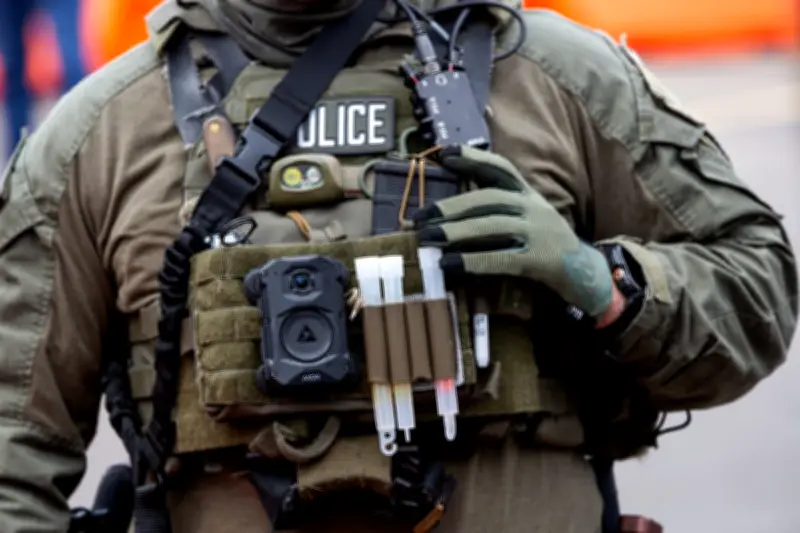
The U.S. Immigration and Customs Enforcement (ICE) will equip officers with body-worn cameras by the end of next month, according to reports on Friday. The long-delayed rollout comes after a series of fatal encounters involving immigration agents, but a policy permitting the ICE director to restrict public release of footage unless it's in the agency's 'best interests' has drawn criticism from transparency advocates.
Deployment Timeline and Funding
Tom Homan, Trump's border czar, stated last month that ICE officers must have at least one body camera recording during future vehicle stops. The policy for body-worn cameras was established in a February 2025 ICE directive, but funding was delayed by this year's partial government shutdown, Homan said. The devices are now expected to be deployed by the end of June 2026.
The initiative aims to increase transparency and accountability, according to David Venturella, ICE's acting director. However, the accompanying release policy may undermine these goals, experts warn.
Fatal Incidents Prompt Urgency
Pressure on the Trump administration mounted after two men were shot and killed by ICE agents in Texas and Maine last month, in circumstances similar to the death of another man during a traffic stop in Illinois last September. In all three cases, no officer wore a camera. Civilian cellphone footage of the deaths of protesters Renee Good and Alex Pretti in separate January incidents in Minneapolis also fueled public demand for accountability.
Selective Release Policy Criticized
Christopher Schneider, a sociology professor at Brandon University in Canada and co-author of Police Body-Worn Cameras: Media and the New Discourse of Police Reform, told the Associated Press that the ICE director's discretion could allow selective release of footage. 'In some ways, ICE is saying the quiet part out loud,' Schneider said. 'Body-worn cameras are being used as contemporary image-work tools to present the police to the public in the most favorable way possible.'
Taxpayers have funded over $30 million for the cameras, yet they may remain in the dark about high-profile confrontations, at least initially. The policy states ICE will promptly release video of shootings or serious injuries only after determining it is in the agency's best interests.
Policy Details and Review Process
Officers are required to activate cameras during routine enforcement activities, including arrests, search warrants, and emergencies. After shootings or other serious incidents, a committee of top ICE officials and lawyers will review footage and recommend release. However, the ICE director can block or indefinitely delay release if 'specific and compelling circumstances' justify it.
Supporters and Critics Respond
Homan welcomed the rollout on Fox & Friends, saying, 'They exonerate more law enforcement than they convict, and I want officers to wear body cameras because I want the American people to see what the officers saw when they took that action.'
Despite this, critics argue the release policy undermines transparency. The Associated Press contributed to this report.




