
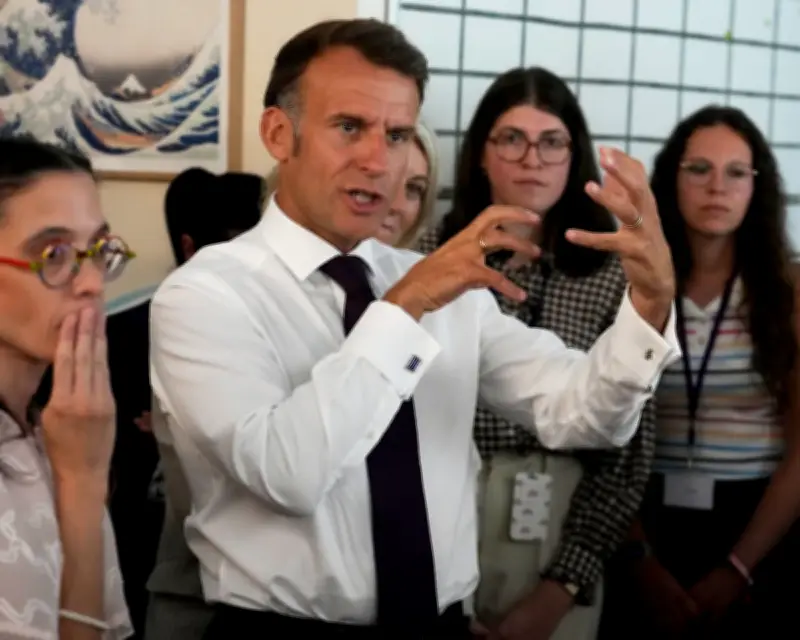
France's parliament has approved a bill banning social media access for children under 15, making it the first EU country to bar children from apps such as TikTok. The legislation, championed by President Emmanuel Macron, passed the National Assembly by 279 votes to 81 after Senate approval earlier on Tuesday.
Macron Hails 'Major Step Forward'
Macron posted a video on social media hailing the ban as 'a major step forward' and thanked lawmakers for backing the measure. 'The Constitutional Council must now rule on it, and then it will be time to take action to make this measure a reality and protect our children online,' he added on X.
Two-Phase Implementation
The ban will be introduced in two stages. From 1 September, under-15s will be blocked from creating new accounts. Existing accounts must be removed by January 2027, according to the legislation. Digital Minister Anne Le Hénanff said the timeline is realistic because age-verification tools already exist and others are under development. 'For four months, all of us in France will have to prove our age. If someone is under 15, the account will be closed,' she told journalists.
Enforcement and Exceptions
The onus is on platforms to enforce the rule. Exceptions include online encyclopedias and educational platforms. The bill does not impose penalties on children or parents. The minister assured that users' personal data would be protected. Enforcing the measure by September ensures a related provision banning mobile phones in high schools takes effect at the start of the school year.
Growing Global Trend
France's move follows growing warnings about social media's harmful effects on children. Last December, Australia became the first country to require platforms like TikTok, YouTube, and Snapchat to remove accounts held by under-16s or face heavy fines. The European Commission has been considering a social media ban after a push by member states including France, Greece, and Spain. Commission President Ursula von der Leyen said children should have 'phased and gradual access' to social media.
Parliamentary Debate
Lawmakers agreed on the need for regulation but disagreed on the approach. Senators had opted for a two-tier system distinguishing blacklisted platforms from those accessible with parental consent, but the lower house's blanket ban prevailed. Critics on the left raised concerns about age verification, implementation speed, circumvention risks, and privacy. Centrist senator Catherine Morin-Desailly said the blacklisting system would have taken more time and carried a 'small risk' of non-compliance with EU law.




