
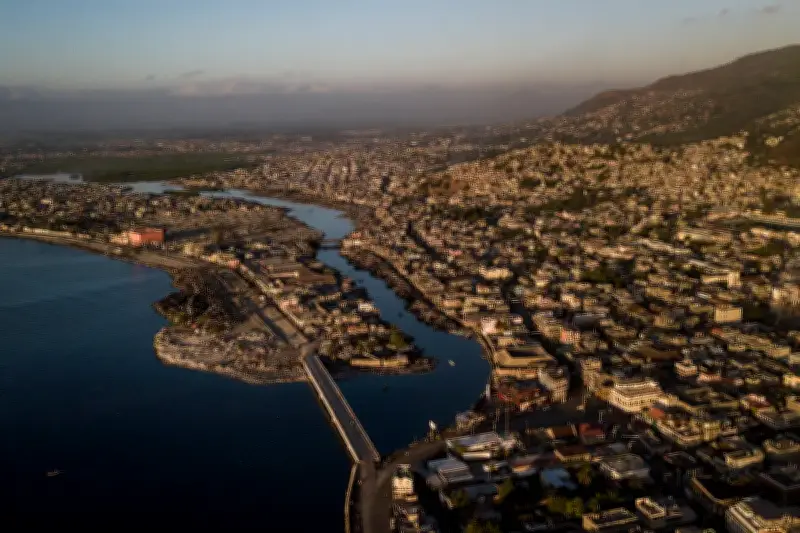
The first deportation flight to Haiti since the US supreme court upheld Donald Trump’s power to strip 350,000 Haitians of Temporary Protected Status (TPS) landed in Cap-Haïtien on Thursday, carrying more than 160 Haitian nationals aboard an Immigration and Customs Enforcement (ICE) charter.
The flight arrived in Haiti’s second-largest city, Cap-Haïtien, because the main international airport in the capital, Port-au-Prince, is considered too dangerous due to ongoing gang violence. The US government currently bans US commercial flights to Haiti’s capital through early September.
Deportees fear gang violence
The deportees, clad in white, covered their faces as journalists filmed their arrival, citing safety concerns. Nearly all declined to speak with the media, with some indicating they fear being targeted by gangs that control an estimated 70% of Port-au-Prince and surrounding areas.
The US Department of State’s travel advisory for US citizens is at the highest alert level, stating: “Do not travel to Haiti for any reason. US citizens are at risk due to crime, terrorism, kidnapping, unrest, and limited health care.”
TPS program ends for Haitians
The deportation flight was the first since the Trump administration ended TPS for Haitians living and working in the US. US officials had warned Haitian authorities to expect an increase in removals. ICE is believed to have carried out eight flights from the US to Haiti so far this year, including a 16 July flight carrying deportees with criminal records.
Jean Négot Bonheur Delva, director general of Haiti’s national office of migration, told the Miami Herald that the flight also included people born in Chile and the Dominican Republic but sent to Haiti because they had a Haitian parent.
The deportees were reportedly given the equivalent of US$76.40 to get home – less than the price of a ticket to Port-au-Prince from Cap-Haïtien but enough to get through some gang-controlled roads.
Legal and moral concerns
The end of TPS status for Haitian nationals came earlier this month when Washington DC district judge Ana Reyes removed a stay on deportations, following a supreme court decision backing the Trump administration’s efforts to end the program. Enacted by Congress in 1990, TPS protects people already in the US when a natural disaster, epidemic, armed conflict, or other extraordinary circumstance affects their country of origin.
Krish O’Mara Vignarajah, president and CEO of the immigrant-serving non-profit Global Refuge, called it a “stunning contradiction” that an administration advising Americans against all travel to Haiti would “compel hundreds of thousands of Haitians into such dire circumstances is an unconscionable abdication of our moral responsibility”.
Critics also highlight the contributions of Haitian TPS holders. “We work hard, we pay our taxes, we give back to our communities and we are a big part of the engine that keeps the United States workforce in many essential industries moving,” Josiane Valsaint, a Haitian who had TPS, wrote for the Guardian. “We deserve to stay here, with our families and loved ones.”
Amid the crackdown, Department of Homeland Security (DHS) secretary Markwayne Mullin said earlier this month: “These individuals can either self-deport or we’ll arrest you and send you back. It’s that simple.” The flight marks a concrete step in the administration’s enforcement of the TPS termination, with more removals expected.




