
Within hours of the first pictures of tens of thousands of migrants swimming from Morocco to the Spanish enclave of Ceuta on 30 July, 22 European Union leaders, the Trump administration and Israel criticized Madrid. The incident exposed deep divisions within the EU and triggered a tit-for-tat dispute between Italy and Spain, with leaders like Vladimir Putin and Recep Tayyip Erdoğan taking note of Europe's panicked reaction.
EU Leaders' Reaction and Accusations
The outbreak of hysteria and recrimination was a case study in 21st-century politics, driven by real-time images in a media echo chamber where populists set the agenda on migration. The kneejerk reactions undermined trust between European allies and dealt a setback to EU efforts to jointly manage migration, counter people-smuggling, and resist the weaponisation of migrants by non-EU countries.
Donald Trump and JD Vance accused Spanish prime minister Pedro Sánchez of inviting the mass influx by allowing more than 1 million irregular migrants already working in Spain to apply for legal status. European leaders who signed a letter to the European Commission, criticizing Spain and demanding an emergency meeting of interior ministers, faced charges of hypocrisy, since Germany and Italy have regularised hundreds of thousands of undocumented migrant workers at the request of employers.
Double Standards in EU Response
There was a monstrous foreign policy double standard in the initial EU response. When Poland and Lithuania faced a sudden influx of irregular migrants from Belarus in 2021, the EU rallied behind its eastern members and imposed sanctions on Minsk. The previous year, the EU sent Frontex to help Greece repel a surge of migrants from Turkey. Yet this time, EU governments quickly fell into a divisive blame game, terrified by images that recalled the loss of control over borders in 2015, when more than 1 million mostly Syrian refugees entered the bloc.
Neither the EU leaders nor the European Commission dared question the role of Morocco, whose border guards apparently stood aside as more than 72,000 Moroccans, mostly young men, risked their lives swimming to Ceuta after seeing viral social media claims that “Spain is open”. The incident occurred on Morocco's annual Throne Day when King Mohammed VI, who does not recognise Spanish sovereignty over Ceuta and Melilla, was visiting the nearby city of Tétouan.
Geopolitical and Party Politics
Some commentators called the stampede a “Blue March”, in reference to the Green March launched by the king's father, Hassan II, in 1975 to claim Western Sahara. “In Morocco, nothing happens by chance,” says Anna Terrón Cusí, senior fellow at the Migration Policy Institute and former Spanish secretary of state for immigration. She believes “this was a multi-actor, multi-factor event. It was more a geopolitical than a migration crisis.”
Intra-European party politics played a big role. Italian prime minister Giorgia Meloni led the assault on Sánchez, heading the hard-right Brothers of Italy movement and facing a domestic challenge from a further-right party. Some Spanish and UK anti-immigration politicians rushed to Ceuta to take selfies, one from Reform UK doing a standup interview on the beach. Danish prime minister Mette Frederiksen, a centre-left leader, co-initiated with Meloni the letter to Commission president Ursula von der Leyen, suggesting suspending Spain from the Schengen area.
Aftermath and Damage
A facade of European solidarity was restored after EU interior ministers held a hastily arranged videoconference. By that time, almost all the migrants had left Ceuta and returned to Morocco after realising they had no chance of reaching Europe. Irregular migrant arrivals in Spain fell sharply last year, and across the EU they're down for the second successive year, far below the 2015 peak. But the damage was done.
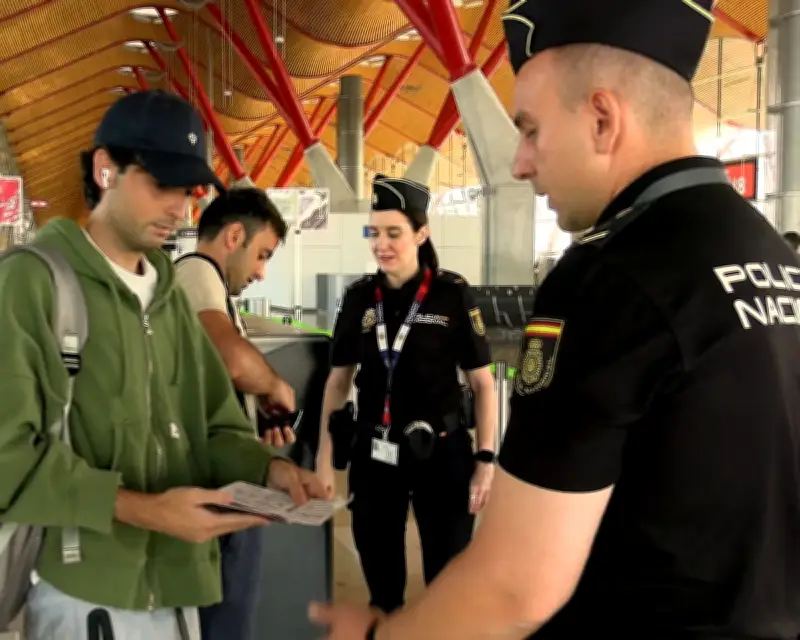
Italy and Spain are now engaging in tit-for-tat passport and nationality controls on each other's travellers. Some EU ministers distorted the nature of the Spanish amnesty, labelling it a “pull factor”. Italy's foreign minister, Antonio Tajani, claimed migrants were being granted Spanish and therefore European citizenship, rather than simply being given a chance to apply for temporary work visas.
Europe faces a “prisoners' dilemma”, as EU countries have a shared interest in preserving the Schengen zone, but they keep undermining cooperation due to a short-term political interest in anti-migration grandstanding. Paul Taylor is a senior visiting fellow at the European Policy Centre.




