
Canada's Liberal government is advancing controversial new legislation that experts warn could dramatically reshape the country's approach to asylum seekers, importing elements of stringent US border policy.
What is in the Strengthening Canada’s Immigration System and Borders Act?
Bill C-12, known formally as the Strengthening Canada’s Immigration System and Borders Act, was fast-tracked through the House of Commons. It passed its third reading on 11 December, just before MPs adjourned for the holidays. The bill now awaits Senate approval in February, after which it could become law.
The legislation introduces sweeping changes to border security and establishes new rules that would render many refugee claimants ineligible for a full hearing. A key provision states that asylum claims made more than one year after the claimant's arrival in Canada will not be referred to the Immigration and Refugee Board. Instead, they will be sent to an immigration officer for a Pre-Removal Risk Assessment (PRRA).
Critics, including 40 legal practitioners who wrote in the Toronto Star, argue this process is deeply flawed. It relies on a single officer reviewing a file and has a notoriously high rejection rate, effectively seeking to remove individuals swiftly without a fair hearing.
Unprecedented Powers and Alarming Historical Echoes
Professor Idil Atak, an expert in refugee law at Toronto Metropolitan University, calls the bill "very regressive." She highlights its unprecedented expansion of executive power, granting authorities broad abilities to share information between agencies and to control, cancel, or alter immigration documents at will.
Audrey Macklin, a professor at the University of Toronto, points out the myriad reasons someone might delay an asylum claim. A student from a persecuted sexual minority, for instance, may only realise the danger of returning home after living openly in Canada. With new restrictions on international student numbers, such individuals may have no choice but to claim asylum, yet would face significant new barriers under Bill C-12.
The legal experts' op-ed draws disturbing parallels, suggesting the law evokes exclusionary policies from Canada's past that targeted specific racial groups, including South Asians, Chinese, and Japanese immigrants at the turn of the 20th century.
Pressure from the South and Domestic Scapegoating
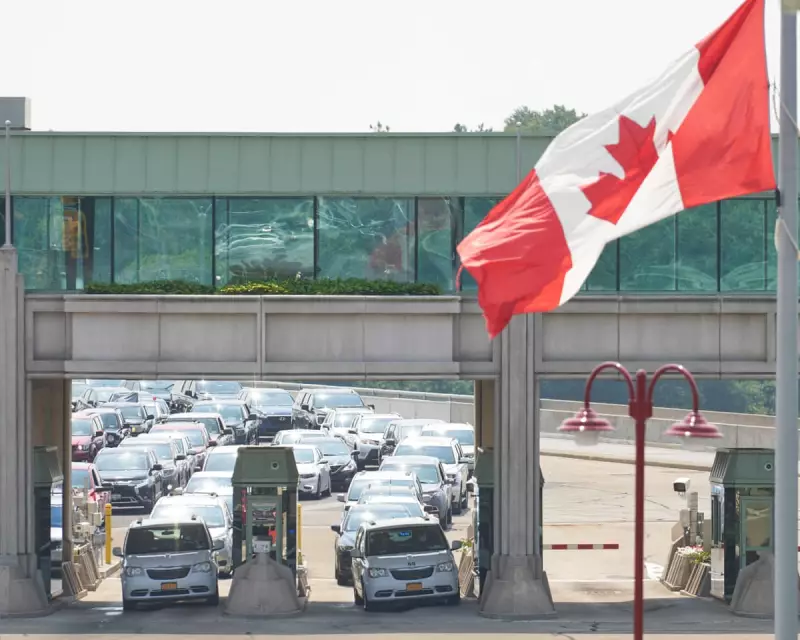
Another contentious element targets asylum claims made at the US land border. Under the new rules, claims filed there after 14 days would also be denied a board hearing. This interacts critically with the Safe Third Country Agreement with the US, which requires refugees to claim asylum in the first safe country they reach.
Professor Macklin asserts the US has never truly met the "safe" country requirement and is now "flagrantly unsafe" due to ICE raids that fast-track deportations without due process. It is unjust, she argues, to turn people away simply because they feared seeking protection in the US.
Some observers, like Professor Atak, suggest the bill may be an attempted capitulation to a potential future Trump administration, aimed at appeasing the US president amid ongoing trade negotiations by appearing to "secure" the shared border.
Domestically, advocates like Syed Hussan of the Migrant Workers Alliance for Change see the legislation as a product of political rhetoric that scapegoats migrants for Canada's affordability crisis. "We're all being tricked into blaming migrants," he stated, instead of corporate and political leaders.
The overarching fear is that these measures will erode Canada's global reputation as a welcoming nation and shirk its international and moral obligations to protect those fleeing persecution. As Professor Atak concluded, "We do have an obligation, a moral obligation, to protect refugees."




