
The Australian government is refusing to issue travel documents to allow the repatriation of its citizens from detention camps in north-east Syria, despite a direct offer of assistance from the United States and warnings that leaving them there fuels security risks.
A 'Militarised' Environment and Dire Threats
Fewer than 40 Australians, the vast majority of whom are young children, remain detained in the Roj and al-Hawl camps. These individuals are the wives, widows, and children of deceased or imprisoned Islamic State fighters. They are being held without charge or facing any arrest warrants.
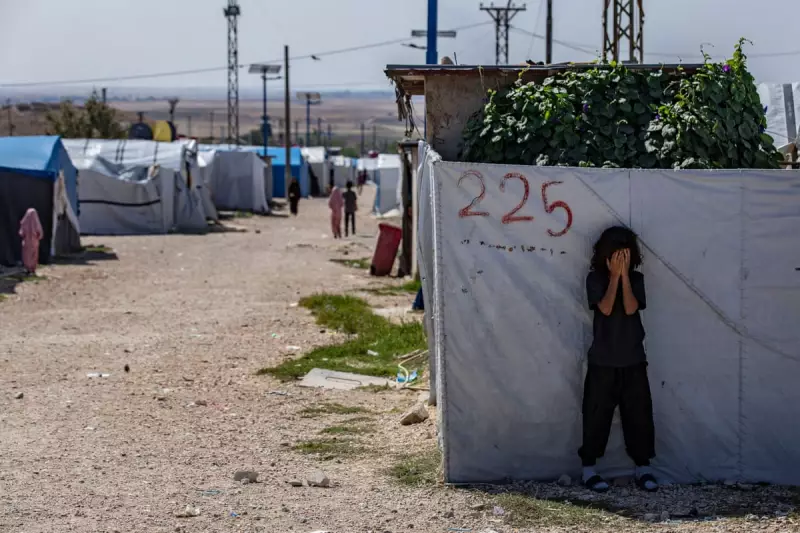
Conditions in the camps, particularly Roj near the Turkish border, are described as increasingly severe. Contemporaneous notes from a government meeting reveal that the camps are "becoming more militarised, intrusive and securitised." Children have been weaponised against their mothers, with warnings that they will be shot if they attempt to breach the perimeter fences. A Syrian source characterised the security directive as "shoot first and ask questions later."
Life in the camps is perilous. Dysentery outbreaks are common, latrines fail in freezing winters where temperatures plummet below zero, and influenza spreads rapidly among malnourished children living in dilapidated tents. Heating fuel is scarce, and one Australian child has previously suffered frostbite.
US Offer Rejected by Australian Government
The United States, which funds much of the security in the region, has repeatedly urged all nations to repatriate their citizens. It argues that the camps act as incubators for radicalisation, allowing Islamic State to regenerate. US Central Command commander, Admiral Brad Cooper, stated in September that "every day without repatriation compounds the risk to all of us."
In a significant move, the US government offered to facilitate the safe extraction of the remaining Australians on the condition that Australia first issue them with passports or travel documents. However, this offer has been declined.
Notes from a June 2024 meeting between Home Affairs Minister Tony Burke, Save the Children, and advocates record that Minister Burke responded, "this is not something the government is considering at this time." He later told The Guardian the notes simply confirmed the government's refusal to assist.
Political Sensitivities and Abandoned Plans
Internal government discussions, revealed in handwritten notes tendered to Senate estimates, highlight the political calculations behind the stance. One note attributed to "TB" – understood to be Tony Burke – stated "politics harder at this end of term" and "Can't see way to navigate earlier."
There were reported concerns about a potential backlash in marginal western Sydney electorates, despite many of the detained families being from Victoria. A government source indicated before the May 2024 election that "The government will not revisit the issue before the next election."
Consequently, a repatriation plan being prepared by former Home Affairs Minister Clare O'Neil was delayed and ultimately abandoned. Australia has successfully repatriated citizens on two prior missions: eight orphaned children in 2019, and four women and 13 children in 2022.
In a separate incident in October 2024, two women and four children managed to escape the al-Hawl camp independently, travelling to Lebanon where they received passports from the Australian embassy before flying home commercially.
Human Rights Watch has condemned the indefinite detention of the women and children as unlawful, describing the conditions as "inhuman, degrading, and life-threatening." As the US seeks to draw down its involvement in Syria, the pressure on Australia and other nations to resolve the fate of their citizens continues to mount.




